
Why low gearing is not always the low-risk strategy landlords think it is
 admin
admin 

Property118

Why low gearing is not always the low-risk strategy landlords think it is
There is a recurring assumption within the landlord community that reducing debt is the safest course of action, and that is an understandable position. Many landlords have spent years paying down mortgages, often with the intention of reaching a point where their properties are owned outright or close to it, but like many widely held assumptions, it is worth asking whether it tells the full story, because in practice, low gearing can introduce a different set of risks that are often less visible, but no less significant.
Equity does not generate cashflow
A portfolio with low or no borrowing can look exceptionally strong on paper. High equity, low loan-to-value ratios, and significant unrealised gains all point towards financial stability, but those numbers do not pay the bills.
Equity is not income, nor is it liquidity, and equity does not fund unexpected costs or create flexibility when circumstances change.
Unless that equity is accessed, it remains largely dormant.
This creates a position many landlords recognise, even if they do not always describe it in these terms, asset rich, but cash constrained.
Liquidity is what creates optionality
The practical difference between equity and liquidity becomes most apparent when decisions need to be made.
Liquidity allows you to act.
It allows you to: 1) reduce borrowing if interest rates move against you, 2) take advantage of investment opportunities, 3) support family members or respond to changing personal circumstances and 4) manage periods of reduced rental income without stress.
Without liquidity, those same decisions become constrained, delayed, forced, or in some cases avoided altogether.
From a commercial perspective, the question is not whether borrowing exists, but whether it is being used efficiently.
Borrowing at a cost of 5% to deploy capital into opportunities returning 8% or more is not an abstract concept. It is a widely understood financial principle, provided it is approached with care and discipline.
What happens when the market turns?
Property values do not move in a straight line. That is not controversial, but it is often overlooked when thinking about risk.
If property values fall by 10% or 20%, equity reduces quickly, and in some cases significantly, yet two things remain unchanged: 1) the nominal balance of interest-only borrowing, and 2) any liquidity already held.
This creates a position where equity is variable, but liquidity is stable, and in that context, the landlord with no borrowing but no liquidity may find themselves with fewer options than expected.
By contrast, the landlord who has already rebalanced part of their equity into accessible capital may be better placed to respond, meaning the perception of safety and the reality of control are not always aligned.
The inheritance tax exposure attached to equity
There is another dimension to this that is often overlooked. Equity in rental property is not just idle, it is exposed.
Residential investment property forms part of your estate for inheritance tax purposes and does not benefit from Business Relief in the way that qualifying trading businesses can.
The consequence is straightforward. Significant levels of equity can give rise to significant inheritance tax exposure.
A portfolio with £millions of equity could, in broad terms, face a 40% inheritance tax liability on that value above available allowances. That is not a theoretical risk, it is a known outcome if no planning takes place.
Importantly, that exposure is attached to an asset which is: a) relatively illiquid, b) concentrated in a single sector, and c) not necessarily producing income in proportion to its value.
Why this matters in practice
Taken together, these factors point to a broader issue.
Low gearing can create a position where:
- cashflow flexibility is limited
- decision-making becomes constrained
- equity remains exposed to market movements
- a growing inheritance tax liability sits in the background
None of these points suggest that debt is inherently good, or that reducing it is inherently bad either. They simply highlight that the absence of debt does not automatically remove risk, and in some cases, it changes the nature of that risk.
Rebalancing, not maximising
The purpose of raising these points is not to promote borrowing for its own sake, it is to encourage a more balanced view.
Many established landlords have built substantial equity over time, often without a deliberate strategy to manage how that equity is used. The more relevant question is not how much equity exists, but whether it is working effectively.
If equity is not contributing to cashflow, flexibility, or long-term planning, it may be worth considering whether part of it should be repositioned.
That could involve refinancing, diversification, or simply creating a liquidity buffer.
A conversation worth having?
If you are weighing up your own strategy, whether that involves holding, restructuring, or reducing your portfolio, it is worth stepping back and reviewing how everything fits together.
Our consultancy does not start with a recommendation. It starts with understanding what you are trying to achieve, and whether your current structure supports that.
These conversations are typically most useful for landlords with established portfolios and relatively modest borrowing who are beginning to think about how their assets will serve them over the next phase.
/* “function”==typeof InitializeEditor,callIfLoaded:function(o){return!(!gform.domLoaded||!gform.scriptsLoaded||!gform.themeScriptsLoaded&&!gform.isFormEditor()||(gform.isFormEditor()&&console.warn(“The use of gform.initializeOnLoaded() is deprecated in the form editor context and will be removed in Gravity Forms 3.1.”),o(),0))},initializeOnLoaded:function(o){gform.callIfLoaded(o)||(document.addEventListener(“gform_main_scripts_loaded”,()=>{gform.scriptsLoaded=!0,gform.callIfLoaded(o)}),document.addEventListener(“gform/theme/scripts_loaded”,()=>{gform.themeScriptsLoaded=!0,gform.callIfLoaded(o)}),window.addEventListener(“DOMContentLoaded”,()=>{gform.domLoaded=!0,gform.callIfLoaded(o)}))},hooks:{action:{},filter:{}},addAction:function(o,r,e,t){gform.addHook(“action”,o,r,e,t)},addFilter:function(o,r,e,t){gform.addHook(“filter”,o,r,e,t)},doAction:function(o){gform.doHook(“action”,o,arguments)},applyFilters:function(o){return gform.doHook(“filter”,o,arguments)},removeAction:function(o,r){gform.removeHook(“action”,o,r)},removeFilter:function(o,r,e){gform.removeHook(“filter”,o,r,e)},addHook:function(o,r,e,t,n){null==gform.hooks[o][r]&&(gform.hooks[o][r]=[]);var d=gform.hooks[o][r];null==n&&(n=r+”_”+d.length),gform.hooks[o][r].push({tag:n,callable:e,priority:t=null==t?10:t})},doHook:function(r,o,e){var t;if(e=Array.prototype.slice.call(e,1),null!=gform.hooks[r][o]&&((o=gform.hooks[r][o]).sort(function(o,r){return o.priority-r.priority}),o.forEach(function(o){“function”!=typeof(t=o.callable)&&(t=window[t]),”action”==r?t.apply(null,e):e[0]=t.apply(null,e)})),”filter”==r)return e[0]},removeHook:function(o,r,t,n){var e;null!=gform.hooks[o][r]&&(e=(e=gform.hooks[o][r]).filter(function(o,r,e){return!!(null!=n&&n!=o.tag||null!=t&&t!=o.priority)}),gform.hooks[o][r]=e)}});
/* ]]> */
Enquire about a free initial discussion with a Property118 consultant
-
Mr.Mrs.MissMs.Dr.Prof.Rev.
-
-
 Important Notice – Scope of Planning Support
Where our recommendations touch on areas requiring regulated input, we refer clients to appropriately authorised professionals for advice and implementation.
-
-
-
/* = 0;if(!is_postback){return;}var form_content = jQuery(this).contents().find(‘#gform_wrapper_585′);var is_confirmation = jQuery(this).contents().find(‘#gform_confirmation_wrapper_585′).length > 0;var is_redirect = contents.indexOf(‘gformRedirect(){‘) >= 0;var is_form = form_content.length > 0 && ! is_redirect && ! is_confirmation;var mt = parseInt(jQuery(‘html’).css(‘margin-top’), 10) + parseInt(jQuery(‘body’).css(‘margin-top’), 10) + 100;if(is_form){jQuery(‘#gform_wrapper_585′).html(form_content.html());if(form_content.hasClass(‘gform_validation_error’)){jQuery(‘#gform_wrapper_585′).addClass(‘gform_validation_error’);} else {jQuery(‘#gform_wrapper_585′).removeClass(‘gform_validation_error’);}setTimeout( function() { /* delay the scroll by 50 milliseconds to fix a bug in chrome */ }, 50 );if(window[‘gformInitDatepicker’]) {gformInitDatepicker();}if(window[‘gformInitPriceFields’]) {gformInitPriceFields();}var current_page = jQuery(‘#gform_source_page_number_585′).val();gformInitSpinner( 585, ‘https://www.property118.com/wp-content/plugins/gravityforms/images/spinner.svg’, true );jQuery(document).trigger(‘gform_page_loaded’, [585, current_page]);window[‘gf_submitting_585′] = false;}else if(!is_redirect){var confirmation_content = jQuery(this).contents().find(‘.GF_AJAX_POSTBACK’).html();if(!confirmation_content){confirmation_content = contents;}jQuery(‘#gform_wrapper_585′).replaceWith(confirmation_content);jQuery(document).trigger(‘gform_confirmation_loaded’, [585]);window[‘gf_submitting_585′] = false;wp.a11y.speak(jQuery(‘#gform_confirmation_message_585′).text());}else{jQuery(‘#gform_585′).append(contents);if(window[‘gformRedirect’]) {gformRedirect();}}jQuery(document).trigger(“gform_pre_post_render”, [{ formId: “585”, currentPage: “current_page”, abort: function() { this.preventDefault(); } }]); if (event && event.defaultPrevented) { return; } const gformWrapperDiv = document.getElementById( “gform_wrapper_585″ ); if ( gformWrapperDiv ) { const visibilitySpan = document.createElement( “span” ); visibilitySpan.id = “gform_visibility_test_585″; gformWrapperDiv.insertAdjacentElement( “afterend”, visibilitySpan ); } const visibilityTestDiv = document.getElementById( “gform_visibility_test_585″ ); let postRenderFired = false; function triggerPostRender() { if ( postRenderFired ) { return; } postRenderFired = true; gform.core.triggerPostRenderEvents( 585, current_page ); if ( visibilityTestDiv ) { visibilityTestDiv.parentNode.removeChild( visibilityTestDiv ); } } function debounce( func, wait, immediate ) { var timeout; return function() { var context = this, args = arguments; var later = function() { timeout = null; if ( !immediate ) func.apply( context, args ); }; var callNow = immediate && !timeout; clearTimeout( timeout ); timeout = setTimeout( later, wait ); if ( callNow ) func.apply( context, args ); }; } const debouncedTriggerPostRender = debounce( function() { triggerPostRender(); }, 200 ); if ( visibilityTestDiv && visibilityTestDiv.offsetParent === null ) { const observer = new MutationObserver( ( mutations ) => { mutations.forEach( ( mutation ) => { if ( mutation.type === ‘attributes’ && visibilityTestDiv.offsetParent !== null ) { debouncedTriggerPostRender(); observer.disconnect(); } }); }); observer.observe( document.body, { attributes: true, childList: false, subtree: true, attributeFilter: [ ‘style’, ‘class’ ], }); } else { triggerPostRender(); } } );} );
/* ]]> */
|
★★★★★
|
Help other landlords find Property118If you have found Property118 useful, a short Trustpilot review would make a meaningful difference. It helps other landlords decide whether our research is worth following. |


The post Why low gearing is not always the low-risk strategy landlords think it is appeared first on Property118.
View Full Article: Why low gearing is not always the low-risk strategy landlords think it is
Councils get £41m to enforce Renters’ Rights Act
Property118

Councils get £41m to enforce Renters’ Rights Act
Councils in England will receive £41 million to pay for their new enforcement powers under the Renters’ Rights Act, the government has announced.
The cash is part of a wider £60 million allocation across 317 authorities and includes £18.2 million provided last autumn.
From May, councils will have a statutory duty to ensure compliance with measures banning Section 21 evictions and rent bidding wars.
The investigatory reach of councils also widens, allowing officers to enter premises without prior notice and obtain financial data from third parties, including banks and accountants.
There’s also £5 million each year to boost housing legal aid fees for those facing eviction.
Preparing councils
Housing secretary Steve Reed said: “It’s less than a month until the Renters’ Rights Act begins to transform our private rented sector – a huge manifesto commitment.
“We’ve been preparing councils to use their new powers on the minority of landlords who rip off their tenants and this new funding will help councils carry out their duties.”
He added: “Stronger powers and fines will help deter wrongdoing in the first place, as we work towards a better rental system that’s fairer to tenants and good landlords.”
Fines for serious or repeat breaches rising to £40,000 from £30,000, while Rent Repayment Orders will extend from one year’s rent to two.
Tenants will also be able to pursue claims over a two-year window rather than one.
Cash for courts
Separate funding has been confirmed for the courts system with £50 million for modernisation, including a digitised housing processes.
Courts minister Sarah Sackman said: “The Renters’ Rights Act is historic, and our courts and tribunals must stand ready to deliver justice.
“That’s why we’re investing millions to modernise and digitise court processes.”
She added: “Access to justice is crucial, so we’re also keeping court fees low and providing free legal aid advice to those who need it most.”
No place for rogue landlords
Ben Beadle, the chief executive of the National Residential Landlords Association, said: “Rogue landlords have no place in the private rented sector and every effort should be made by local authorities to drive them from the market.
“This announcement demonstrates that the government is serious about tackling those who bring the sector into disrepute and supporting those responsible landlords who provide decent and secure homes for renters.”
Ben Twomey, the chief executive of Generation Rent, said: “The Renters’ Rights Act is a vital step in addressing the power imbalance between tenants and landlords.
“But the law will only reach into people’s homes and make a positive difference to their lives if councils are able to take actions against landlords who don’t follow the new rules.
“Therefore, we’re pleased to see the government commit further funding for councils, boosting their ability to make sure renters feel the benefit of the changes from May 1st.”
The post Councils get £41m to enforce Renters’ Rights Act appeared first on Property118.
View Full Article: Councils get £41m to enforce Renters’ Rights Act
Your rent review clause is void. Here is the only legal way to increase rent in England now
Property118
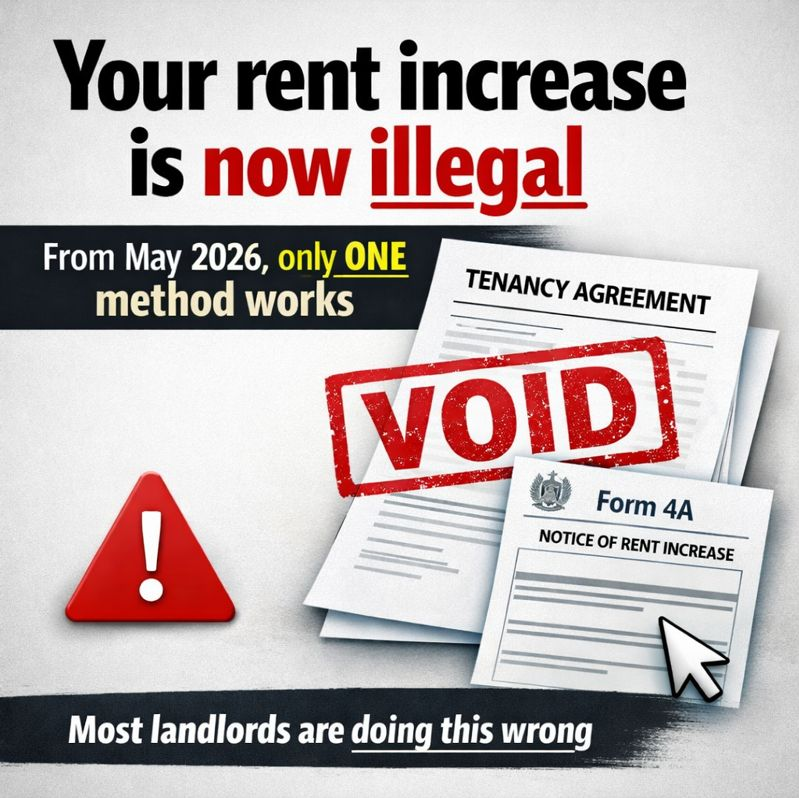
Your rent review clause is void. Here is the only legal way to increase rent in England now
Picture this. You have a tenancy agreement you have been relying on for years. It has a clause saying you can increase rent every twelve months. You send your tenant the usual letter in April. The rent goes up in June. Simple.
Except from 1st May 2026 that process is unlawful. The clause in your agreement is void. Your letter carries no legal weight. Your tenant owes you nothing above the old rent. And you have no mechanism to force the issue.
This is not an edge case or an interpretation argument. The Renters’ Rights Act 2025 is explicit. Every contractual rent review clause in every private residential tenancy agreement in England stopped working on 1st May 2026. Full stop. The only lawful way to increase rent now is through a statutory process most landlords have never used.
Why contractual rent review clauses stopped working
Thirty years of landlord practice built around one assumption: if it is in the tenancy agreement, it is enforceable. Rent review clauses were standard. Solicitors drafted them. Letting agents included them in their templates. Landlords relied on them without question.
The Renters’ Rights Act 2025 ended that assumption overnight. Section 7 of the Act removes the legal basis for any contractual term that purports to increase rent outside the Section 13 process. The clause does not become unenforceable in some circumstances. It ceases to have effect entirely, as though it was never there.
What catches landlords particularly hard is the transitional position. If you agreed a rent increase with your tenant in February, perhaps they signed something, perhaps they just acknowledged your letter, and that increase was due to kick in after 1st May, it does not happen. The agreement you made is irrelevant. The mechanism you used no longer exists in law and the increase it produced falls with it.
There is no workaround. There is no grandfathering. The transition was clean and total by design.
What Section 13 is and why it now matters
Section 13 of the Housing Act 1988 has always existed as a mechanism for increasing rent on periodic tenancies. Under the old system it sat alongside contractual rent review clauses as an alternative route that some landlords used and others ignored. Under the Renters’ Rights Act 2025 it is no longer an alternative. It is the only route.
The Section 13 process requires a landlord to serve a written notice on the tenant using Form 4A, the prescribed government form. The notice must state the current rent, the proposed new rent, and the date from which the increase is to take effect. The tenant must receive it at least two months before that date. And the date itself must fall on the first day of a rental period, not mid-month, not a random date, the first day of the period on which rent is due.
Get any of those elements wrong and the notice is defective. A defective notice means no enforceable increase. The tenant continues paying the old amount and the landlord cannot claim arrears based on the difference.
What makes this particularly important for self-managing landlords is that there is no court to fall back on if you get it wrong. Under the old system, a landlord who made a procedural error with a Section 21 notice could often remedy it and start again relatively quickly. A defective Section 13 notice means starting the entire process from scratch, waiting for the new two month period to expire, and losing whatever months passed in the meantime. On a £1,200 per month tenancy, a notice error that costs you three months of an attempted £100 increase is a £300 mistake. Not catastrophic, but entirely avoidable.
The first year rule that catches landlords out
There is an additional restriction that a surprising number of landlords are unaware of. On any tenancy created on or after 1st May 2026, landlords cannot increase rent at all during the first twelve months. Not at all. A Section 13 notice served before the tenancy is twelve months old has no legal effect regardless of how correctly it was prepared.
This matters practically in several ways. Landlords who let properties at below-market rents initially with the intention of adjusting early in the tenancy can no longer do so. The twelve month protection is absolute and begins from the start of the tenancy, not from the first rent payment date.
It also matters for landlords who plan to let a new property in May or June 2026. If you take on a new tenant next month, you will not be able to increase the rent until May or June 2027 at the earliest. Factor that into your initial rent-setting decision, because you will be locked in for a full year.
The protected period does not apply to existing tenancies that converted to periodic on 1st May 2026. Those tenancies can have rent increased through Section 13 immediately, subject to the twelve month frequency restriction described below, because they were not new tenancies created under the new regime.
How often you can increase rent
Once per year is the maximum. The twelve month clock runs from the date the last increase took effect, not from the date you served the notice. So if you serve notice in June and the new rent kicks in from 1st August, your next eligible increase date is 1st August the following year, not June.
This distinction matters more than it might appear. Landlords who serve early and allow a long gap before the increase takes effect are effectively delaying their next eligible increase date. If you want to maintain maximum flexibility, serve notice as close to two months before the intended start date as possible.
The frequency restriction also applies to increases that happened before May 1st. If your tenant’s rent went up in January 2026 under a contractual review clause, you cannot increase it again until January 2027 at the earliest, even though contractual clauses are now void going forward. The Act looks back at when the last increase took effect, not at how it was implemented.
This catches landlords who assumed that switching to the new system meant they could reset the clock. It does not. If you increased rent six months ago you are locked out for another six months regardless of the method you used.
What Form 4A is and where to get it
The government publishes a prescribed form for Section 13 notices called Form 4A. It replaced the previous Form 4 which applied under the old rules. The new form is available free from GOV.UK and must be used for every rent increase served on or after 1st May 2026.
What landlords need to understand about Form 4A is that it is not a template you can replicate. It is not a format you can copy into a letter. If you serve your own document, however clearly written, however complete the information, you have not served a valid Section 13 notice. The legal requirement is the prescribed form itself, completed in full.
Download it from GOV.UK fresh before every use. Forms are updated and a version saved to your desktop from months ago may no longer be current. Given that it takes thirty seconds to download and the cost of using an outdated form could be months of delayed rent increase, there is no rational argument for not doing this every time.
How to serve it correctly
Three methods of service are valid under the Act: in person, by post, or by email where your tenancy agreement explicitly permits electronic service. That last condition matters. Email is not automatically valid. If your agreement does not say notices can be served by email, post or personal delivery is the safe choice.
Whichever method you use, the evidence question is the one landlords consistently underestimate. If a tenant later claims they never received the notice, what can you produce? A memory that you sent something proves nothing. A certificate of posting from the Post Office, a tracked delivery confirmation, or a read receipt on an email are all far better than nothing. They cost almost nothing to obtain. Keep them permanently alongside your copy of the completed Form 4A.
The one method that categorically does not work is a messaging app. WhatsApp, text messages, and similar channels are not valid service methods for legal notices. If you serve Form 4A this way and the tenant disputes it, you have no notice.
What happens if the tenant disagrees with the amount
A tenant who believes your proposed rent is above the current open market rate can apply to the First-tier Tribunal before the increase takes effect. The application must be made before the date specified in the notice as the start of the new rent. If the tenant misses that deadline, their right to challenge lapses and the new rent takes effect automatically.
The Tribunal will assess the market rent for the property based on comparable lettings in the same area. It will look at what similar properties are currently being advertised for, not what they were renting for several years ago. Current Rightmove and Zoopla listings for comparable properties in the same street or immediate area are the most useful evidence a landlord can bring to a Tribunal hearing.
Under the rules introduced by the Renters’ Rights Act 2025, the Tribunal cannot set a rent higher than what you proposed. This is a new protection for landlords that did not exist under the old system. If the Tribunal determines that the market rent is actually above your proposed figure, the determination is still capped at your original amount. There is no risk of the process backfiring and resulting in a higher increase than you asked for.
The increase also takes effect from the date of the Tribunal determination rather than the date in your notice. This means there is no backdating of the increase to the notice date where a tenant has exercised their right to challenge. The landlord does not receive the higher rent for the period between the notice date and the Tribunal determination.
In practice the vast majority of tenants do not apply to the Tribunal. The process exists as a safeguard against above-market increases, not as a routine obstacle for landlords proposing reasonable rents. If your proposed rent is broadly in line with comparable properties in your area you are very unlikely to face a challenge.
The transitional trap most landlords have already walked into
Here is the one that has already caught people out before May 1st even arrived. Any rent increase agreed under a contractual clause before 1st May 2026 but scheduled to take effect after that date is not permitted. The transition is clean and complete. There is no grandfathering of pre-agreed contractual increases across the line.
If you told your tenant in February that rent was going up in June under the terms of the agreement, that increase is void. The fact that you agreed it before May 1st makes no difference. The fact that the tenant did not object makes no difference. The mechanism you used to agree it ceased to have legal effect on 1st May 2026 and any increase relying on it fell with it.
If you still want to increase the rent from June, you need to serve a fresh Form 4A. Check whether you are within the twelve month frequency restriction. Calculate the correct two month notice period from today. Specify a start date that falls on the first day of a rental period. Serve it by a valid method. Keep the evidence. That is the process, in full, every time.
The seven mistakes landlords are already making
Based on what is already appearing in landlord forums and advice threads since May 1st, these are the errors coming up most frequently.
Still sending annual rent review letters citing the tenancy agreement. That letter is worthless from May 1st. The tenant has no legal obligation to pay a penny more than the existing rent and you cannot enforce the difference.
Assuming a rent increase you arranged with your tenant before May 1st will still go through. It will not. If the mechanism you used was a contractual clause, the increase dies with the clause. It does not matter that the tenant agreed. It does not matter that it felt settled. Serve a fresh Form 4A or the increase does not happen.
Dating the notice period from when you wrote the form rather than when the tenant actually received it. A form completed on the 1st of May and posted on the 7th runs from the 7th. If your proposed start date does not allow two full months from the actual date of service, the notice is invalid.
Picking a convenient start date without checking whether it falls on the first day of a rental period. The 15th of the month feels clean. If rent is not due on the 15th, that date is defective regardless of everything else being correct.
Using a Form 4A downloaded before the Act came into force. Government forms get updated. A version sitting in your downloads folder from three months ago may no longer be the current prescribed form. The thirty seconds it takes to download a fresh copy from GOV.UK is worth taking every single time.
Serving notice on a new tenancy that has not yet reached its first anniversary. The twelve month protected period is absolute on tenancies created from May 1st onwards. The notice has no legal effect, full stop, regardless of how urgent the increase feels.
Sending Form 4A by WhatsApp or text because it felt quicker. It is not valid service. If the tenant disputes receipt you have nothing. Post it, hand it over in person, or email it only if your tenancy agreement explicitly allows email service of notices.
Any one of these errors means the increase does not exist in law. The tenant keeps paying the old rent and you have no route to recover the difference for the period the invalid notice covered.
What this means for your broader compliance position
The shift from contractual to statutory rent increases is part of a much broader pattern in the Renters’ Rights Act. The paperwork now matters in a way it did not before. Under Section 21, landlords needed their compliance documents in order to serve a valid notice. Under the new Section 8 regime, courts scrutinise a landlord’s entire compliance history when assessing discretionary possession grounds.
Courts assessing discretionary Section 8 grounds will look at the full picture. Expired certificates, unprotected deposits, missed prescribed information, all of it gets scrutinised in a way it never was under Section 21. A clean compliance record used to be good practice. Under the new regime it is your evidence. Compliance has stopped being an administrative inconvenience and started being a litigation asset.
The landlords best placed under the new regime are not necessarily the ones with the most properties or the longest track record. They are the ones who have their paperwork in order, their certificates renewed on time, their deposits properly protected, and their processes updated to reflect the new rules. Everything else flows from that.
If you want to see exactly where you stand right now, I built a free compliance checker at llcr.uk/compliance-checker.html — no payment card, no commitment. Run through it in a few minutes and see the gaps before they become a problem.
About the author
Tauhid Islam is a property law paralegal with experience in property law, civil litigation and compliance. He is the founder of LLCR — Landlord Compliance Register, a compliance management platform built for self-managing landlords in England. Platform at llcr.uk
The post Your rent review clause is void. Here is the only legal way to increase rent in England now appeared first on Property118.
View Full Article: Your rent review clause is void. Here is the only legal way to increase rent in England now
Longer notice periods could push landlords to sell up in Northern Ireland
Property118

Longer notice periods could push landlords to sell up in Northern Ireland
The Northern Ireland government must “strike the right balance” under proposed rental reforms or risk landlords leaving the market, Propertymark warns.
The Department for Communities in Northern Ireland has proposed introducing some of the longest Notice to Quit periods in the UK, increasing standard notice periods for tenants to up to six months.
The current minimum notice to quit for tenancies in Northern Ireland of 12 months or less is four weeks.
Landlords leaving the sector
In response to a consultation on the reforms, Propertymark said Northern Ireland policymakers must allow landlords to regain possession of their properties.
The industry body said on its website: “With notice periods potentially rising from eight weeks to six months, Propertymark stresses that landlords must retain confidence in the possession process, particularly in cases involving rent arrears, anti-social behaviour or breaches of tenancy agreements.
“Failure to strike the right balance could see landlords leave the sector altogether.
“Landlords who experience negative experiences of evicting tenants may end up selling their property rather than face lengthy void periods where they cannot collect rent.
“This risk is particularly acute in Northern Ireland, where landlords are more likely to own smaller portfolios, making them more vulnerable to lost rental income.”
Unintended consequences
The industry body also warns that increasing notice periods without robust exemptions could have unintended consequences.
Propertymark says that while it supports shorter notice periods in specific circumstances, such as serious rent arrears, anti-social behaviour and criminal offences, it is calling for several key changes to make the system work in practice.
These include lowering the rent arrears threshold to allow earlier action against non-paying tenants. It also calls for clearer definitions of anti-social behaviour to prevent misuse and support evidence-based decisions.
The organisation is also proposing changing the threshold for criminal behaviour from “convicted” to “charged”, due to lengthy court timelines. It wants evidence requirements to be practical and consistent, particularly in partnership with the Police Service of Northern Ireland.
The post Longer notice periods could push landlords to sell up in Northern Ireland appeared first on Property118.
View Full Article: Longer notice periods could push landlords to sell up in Northern Ireland
Property118 highlights HMRC manual SDLTM07700 in ongoing FTT debate
Property118

Property118 highlights HMRC manual SDLTM07700 in ongoing FTT debate
There is a recurring assumption in recent commentary that tax consequences only arise once legal ownership of property has formally transferred. It is an understandable assumption, but it is also, in many cases, incomplete.
As the ongoing First-tier Tribunal in the DOTAS case of Property118 vs HMRC examines the interaction between incorporation, financing, and tax treatment, it is worth revisiting what HMRC’s own guidance actually says about when a transaction is recognised for tax purposes.
What HMRC says about “substantial performance”
HMRC’s Stamp Duty Land Tax Manual confirms that a transaction can be treated as having taken place before legal completion, where a contract has been substantially performed.
The guidance is set out here: https://www.gov.uk/hmrc-internal-manuals/stamp-duty-land-tax-manual/sdltm07700
In simple terms, where substantial performance occurs, the contract itself is treated as the effective transaction for tax purposes, even if legal title has not yet transferred.
HMRC goes on to explain that substantial performance can arise where, for example:
- possession of the property is taken, or
- rents or income begin to flow to the acquirer (e.g. tenant begins paying rent into the acquiring company bank account), or
- consideration has been paid in a way that reflects the economic reality of the arrangement (e.g. issue of shares or share premium)
This is not an obscure or newly developed concept; it has been part of the UK tax framework for many years.
Why this matters in the current debate
The relevance of this guidance is not that it proves any particular structure is effective, it is that it highlights a broader and well-established principle: tax law does not always wait for legal title to catch up with economic reality.
That distinction between legal ownership, and beneficial or economic entitlement runs through multiple areas of UK tax legislation.
It also explains why HMRC manuals, case law, and professional guidance have long recognised situations where tax consequences arise at a different point in time to legal completion.
Connecting the dots with BIM45700
In a previous article, we looked at HMRC’s Business Income Manual at BIM45700, which confirms that business owners may withdraw capital and replace it with loan funding, with interest relief available where the borrowing supports the business.
That article can be read here: https://www.property118.com/property118-puts-hmrc-manual-bim45700-under-ftt-scrutiny/
Taken together, BIM45700 and SDLTM07700 illustrate a consistent theme within HMRC’s own published material:
- commercial transactions are often recognised based on their economic substance
- financing and ownership do not always move in perfect legal alignment, and
- tax legislation accommodates that reality
Why Property118 is currently advising caution
None of this changes the position we set out previously.
As explained here, Property118 is not currently recommending Section 162 incorporation for landlords with mortgages. That is not because the underlying commercial or tax principles are considered invalid, it is because HMRC’s current interpretation, particularly in relation to mortgage liabilities and potential consideration, introduces uncertainty that has yet to be tested in the Tribunal.
A question of interpretation, not invention
The purpose of the ongoing Tribunal proceedings is not to establish something entirely new, it is to determine how established principles, many of which are reflected in HMRC’s own manuals, should be applied in practice where incorporation and financing interact. The inclusion of SDLTM07700 in this discussion is therefore not about stretching legislation, it is about recognising that the relationship between legal form and tax treatment has always been more nuanced than a simple transfer of title.
Where this leaves landlords and advisers
For landlords, accountants, and advisers, the position remains one of careful consideration.
The commercial drivers behind incorporation remain unchanged. These include:
- long-term business continuity
- improved lender stress-testing
- ring-fencing of some liabilities
- holding profit for reinvestment or repayment of debt
- succession planning
However, until there is greater clarity on HMRC’s current interpretation, particularly in relation to mortgaged property, a cautious approach to s162 incorporation is appropriate.
A conversation worth having?
If you are weighing up your own strategy, whether that involves holding, restructuring, or reducing your portfolio, it is worth stepping back and reviewing how everything fits together.
Our consultancy does not start with a recommendation. It starts with understanding what you are trying to achieve, and whether your current structure supports that.
These conversations are typically most useful for landlords with established portfolios and relatively modest borrowing who are beginning to think about how their assets will serve them over the next phase.
/* “function”==typeof InitializeEditor,callIfLoaded:function(o){return!(!gform.domLoaded||!gform.scriptsLoaded||!gform.themeScriptsLoaded&&!gform.isFormEditor()||(gform.isFormEditor()&&console.warn(“The use of gform.initializeOnLoaded() is deprecated in the form editor context and will be removed in Gravity Forms 3.1.”),o(),0))},initializeOnLoaded:function(o){gform.callIfLoaded(o)||(document.addEventListener(“gform_main_scripts_loaded”,()=>{gform.scriptsLoaded=!0,gform.callIfLoaded(o)}),document.addEventListener(“gform/theme/scripts_loaded”,()=>{gform.themeScriptsLoaded=!0,gform.callIfLoaded(o)}),window.addEventListener(“DOMContentLoaded”,()=>{gform.domLoaded=!0,gform.callIfLoaded(o)}))},hooks:{action:{},filter:{}},addAction:function(o,r,e,t){gform.addHook(“action”,o,r,e,t)},addFilter:function(o,r,e,t){gform.addHook(“filter”,o,r,e,t)},doAction:function(o){gform.doHook(“action”,o,arguments)},applyFilters:function(o){return gform.doHook(“filter”,o,arguments)},removeAction:function(o,r){gform.removeHook(“action”,o,r)},removeFilter:function(o,r,e){gform.removeHook(“filter”,o,r,e)},addHook:function(o,r,e,t,n){null==gform.hooks[o][r]&&(gform.hooks[o][r]=[]);var d=gform.hooks[o][r];null==n&&(n=r+”_”+d.length),gform.hooks[o][r].push({tag:n,callable:e,priority:t=null==t?10:t})},doHook:function(r,o,e){var t;if(e=Array.prototype.slice.call(e,1),null!=gform.hooks[r][o]&&((o=gform.hooks[r][o]).sort(function(o,r){return o.priority-r.priority}),o.forEach(function(o){“function”!=typeof(t=o.callable)&&(t=window[t]),”action”==r?t.apply(null,e):e[0]=t.apply(null,e)})),”filter”==r)return e[0]},removeHook:function(o,r,t,n){var e;null!=gform.hooks[o][r]&&(e=(e=gform.hooks[o][r]).filter(function(o,r,e){return!!(null!=n&&n!=o.tag||null!=t&&t!=o.priority)}),gform.hooks[o][r]=e)}});
/* ]]> */
Enquire about a free initial discussion with a Property118 consultant
-
Mr.Mrs.MissMs.Dr.Prof.Rev.
-
-
Important Notice – Scope of Planning Support
Where our recommendations touch on areas requiring regulated input, we refer clients to appropriately authorised professionals for advice and implementation.
-
-
-
/* = 0;if(!is_postback){return;}var form_content = jQuery(this).contents().find(‘#gform_wrapper_585′);var is_confirmation = jQuery(this).contents().find(‘#gform_confirmation_wrapper_585′).length > 0;var is_redirect = contents.indexOf(‘gformRedirect(){‘) >= 0;var is_form = form_content.length > 0 && ! is_redirect && ! is_confirmation;var mt = parseInt(jQuery(‘html’).css(‘margin-top’), 10) + parseInt(jQuery(‘body’).css(‘margin-top’), 10) + 100;if(is_form){jQuery(‘#gform_wrapper_585′).html(form_content.html());if(form_content.hasClass(‘gform_validation_error’)){jQuery(‘#gform_wrapper_585′).addClass(‘gform_validation_error’);} else {jQuery(‘#gform_wrapper_585′).removeClass(‘gform_validation_error’);}setTimeout( function() { /* delay the scroll by 50 milliseconds to fix a bug in chrome */ }, 50 );if(window[‘gformInitDatepicker’]) {gformInitDatepicker();}if(window[‘gformInitPriceFields’]) {gformInitPriceFields();}var current_page = jQuery(‘#gform_source_page_number_585′).val();gformInitSpinner( 585, ‘https://www.property118.com/wp-content/plugins/gravityforms/images/spinner.svg’, true );jQuery(document).trigger(‘gform_page_loaded’, [585, current_page]);window[‘gf_submitting_585′] = false;}else if(!is_redirect){var confirmation_content = jQuery(this).contents().find(‘.GF_AJAX_POSTBACK’).html();if(!confirmation_content){confirmation_content = contents;}jQuery(‘#gform_wrapper_585′).replaceWith(confirmation_content);jQuery(document).trigger(‘gform_confirmation_loaded’, [585]);window[‘gf_submitting_585′] = false;wp.a11y.speak(jQuery(‘#gform_confirmation_message_585′).text());}else{jQuery(‘#gform_585′).append(contents);if(window[‘gformRedirect’]) {gformRedirect();}}jQuery(document).trigger(“gform_pre_post_render”, [{ formId: “585”, currentPage: “current_page”, abort: function() { this.preventDefault(); } }]); if (event && event.defaultPrevented) { return; } const gformWrapperDiv = document.getElementById( “gform_wrapper_585″ ); if ( gformWrapperDiv ) { const visibilitySpan = document.createElement( “span” ); visibilitySpan.id = “gform_visibility_test_585″; gformWrapperDiv.insertAdjacentElement( “afterend”, visibilitySpan ); } const visibilityTestDiv = document.getElementById( “gform_visibility_test_585″ ); let postRenderFired = false; function triggerPostRender() { if ( postRenderFired ) { return; } postRenderFired = true; gform.core.triggerPostRenderEvents( 585, current_page ); if ( visibilityTestDiv ) { visibilityTestDiv.parentNode.removeChild( visibilityTestDiv ); } } function debounce( func, wait, immediate ) { var timeout; return function() { var context = this, args = arguments; var later = function() { timeout = null; if ( !immediate ) func.apply( context, args ); }; var callNow = immediate && !timeout; clearTimeout( timeout ); timeout = setTimeout( later, wait ); if ( callNow ) func.apply( context, args ); }; } const debouncedTriggerPostRender = debounce( function() { triggerPostRender(); }, 200 ); if ( visibilityTestDiv && visibilityTestDiv.offsetParent === null ) { const observer = new MutationObserver( ( mutations ) => { mutations.forEach( ( mutation ) => { if ( mutation.type === ‘attributes’ && visibilityTestDiv.offsetParent !== null ) { debouncedTriggerPostRender(); observer.disconnect(); } }); }); observer.observe( document.body, { attributes: true, childList: false, subtree: true, attributeFilter: [ ‘style’, ‘class’ ], }); } else { triggerPostRender(); } } );} );
/* ]]> */
|
★★★★★
|
Help other landlords find Property118If you have found Property118 useful, a short Trustpilot review would make a meaningful difference. It helps other landlords decide whether our research is worth following. |
The post Property118 highlights HMRC manual SDLTM07700 in ongoing FTT debate appeared first on Property118.
View Full Article: Property118 highlights HMRC manual SDLTM07700 in ongoing FTT debate
Temporary accommodation costs have tripled since 2016 in line with Property118 predictions
Property118

Temporary accommodation costs have tripled since 2016 in line with Property118 predictions
The housing cost that almost nobody expected.
In 2018, Property118 contributor, the now late David Knox FCA, writing under the pseudonym Appalled Landlord, examined a statistic that seemed extraordinary at the time.
Manchester City Council’s spending on temporary accommodation had risen from roughly £2.25 million to almost £13 million in just five years.
The increase, around 478%, suggested something unusual was happening in the local housing system.
At the time it appeared to be a regional issue. Manchester was struggling with rising homelessness pressures and expensive short-term accommodation placements, but the numbers David highlighted now look less like an anomaly and more like an early warning.
Across England, councils are now estimated to be spending close to £3 billion every year on temporary accommodation for homeless households.
More than 110,000 households are currently living in temporary accommodation, the highest figure recorded since comparable statistics began.
What once appeared to be a local financial problem has become a national housing crisis, and looking back at David Knox’s article today, one conclusion is difficult to ignore; he saw the trajectory years before most policymakers noticed it.
Looking back at David Knox’s warning
Looking back at David Knox’s work today, it is difficult not to notice how often his analysis identified trends before they became widely recognised. In article after article he examined official statistics, local authority spending and housing policy decisions, often highlighting consequences that were still years away from becoming visible nationally. In hindsight, some readers have joked that he was the “Nostradamus of the private rented sector”. What he was actually doing was something far simpler, and far more valuable. He was reading the data carefully and asking where the trajectory might lead.
| Year | Households in Temporary Accommodation | Estimated Cost to Taxpayers | Context |
|---|---|---|---|
| 2016 | ~73,000 households | ≈ £1 billion per year | Rising pressure on councils begins to attract attention |
| 2018 | ~82,000 households | ≈ £1.2–£1.4 billion | David Knox highlights Manchester’s 478% increase |
| 2023 | ~104,000 households | ≈ £1.74 billion | Local Government Association warns of escalating costs |
| 2024–2025 | 110,000+ households | ≈ £2.8 billion per year | Temporary accommodation becomes a national fiscal crisis |
How temporary accommodation became a multi-billion-pound system
To understand how these costs escalated so quickly, it is necessary to look at how temporary accommodation actually works in practice.
Local authorities have a statutory duty to provide accommodation for households they accept as homeless and in priority need. When councils do not have sufficient social housing available, they must secure accommodation elsewhere.
In many areas this increasingly means relying on the private sector. Councils place households in privately rented properties, hostels, converted buildings or, in the most expensive cases, hotels and nightly-paid accommodation.
These arrangements were originally intended to be temporary solutions while permanent housing was secured. Over time, however, shortages in both social housing and affordable private rentals have meant that temporary placements often last far longer than originally intended.
What began as a short-term safety net has gradually evolved into a large parallel housing system operated by local authorities.
The financial consequences are substantial. Nightly-paid accommodation can cost councils several times more than equivalent long-term housing, particularly in high-demand urban areas where property prices and rents are already elevated.
Once households enter temporary accommodation, councils frequently struggle to move them on because there are too few suitable permanent homes available.
The result is a system where both the number of households and the duration of placements continue to rise.
Why councils became trapped in the system
One of the less widely understood aspects of temporary accommodation is the way it is funded. Local authorities receive housing benefit subsidy from central government, but the reimbursement rules were largely frozen many years ago. In many cases the subsidy only covers part of the cost of accommodation. When councils are forced to place households in more expensive private accommodation, the gap between the subsidy and the actual cost must be covered from the local authority’s own budget.
This creates a structural funding problem. The more councils rely on temporary accommodation, the larger the unfunded portion of the cost becomes. In areas where housing shortages are severe, local authorities often have little choice but to continue using expensive placements simply to meet their legal obligations.
Over time, this dynamic has pushed temporary accommodation spending from millions into billions.
Manchester was not the anomaly
When David highlighted Manchester’s 478% increase in temporary accommodation spending, it appeared to be an unusually sharp example of local housing pressure. However, looking at the national figures today, it is clear that Manchester was not unique. Many councils across England have experienced similar patterns of rising demand, limited housing supply and escalating costs associated with short-term placements. The difference is that what once appeared to be a localised issue has now become systemic.
Temporary accommodation is no longer simply a safety net for a relatively small number of households. It has grown into a large and extremely expensive component of the housing system.
Lessons for housing policy
The purpose of revisiting David Knox’s work is not to suggest that temporary accommodation should not exist. Every housing system requires emergency provision for households facing sudden crises. However, the scale of the current system raises important questions about how housing policy has evolved over the past decade.
If temporary accommodation costs have tripled since 2016, it suggests that the underlying housing shortages that drive homelessness have not been resolved. It also highlights how expensive it can be when the housing system relies heavily on short-term solutions rather than long-term supply.
David Knox’s original article focused on a single city and a striking set of figures. In hindsight, it also captured a trajectory that would later become visible across the country.
There is also a broader question worth asking. If the cost of temporary accommodation has risen from around £1 billion to almost £3 billion a year in less than a decade, what will the figure look like five years from now if the underlying housing shortages remain unresolved? Local authorities are already warning that the current trajectory is financially unsustainable. Whether policymakers are willing to address the structural causes behind the numbers remains to be seen.
Manchester was not the crisis, it was the warning.
Support Property118 and keep the platform independent
If you value evidence-led reporting like this, you can support the work here.
Monthly support helps fund independent reporting, research, and the free landlord forum.
The post Temporary accommodation costs have tripled since 2016 in line with Property118 predictions appeared first on Property118.
View Full Article: Temporary accommodation costs have tripled since 2016 in line with Property118 predictions
Categories
- Landlords (19)
- Real Estate (9)
- Renewables & Green Issues (1)
- Rental Property Investment (1)
- Tenants (21)
- Uncategorized (12,777)
Archives
- June 2026 (54)
- May 2026 (70)
- April 2026 (78)
- March 2026 (72)
- February 2026 (55)
- January 2026 (52)
- December 2025 (62)
- August 2025 (51)
- July 2025 (51)
- June 2025 (49)
- May 2025 (50)
- April 2025 (48)
- March 2025 (54)
- February 2025 (51)
- January 2025 (52)
- December 2024 (55)
- November 2024 (64)
- October 2024 (82)
- September 2024 (69)
- August 2024 (55)
- July 2024 (64)
- June 2024 (54)
- May 2024 (73)
- April 2024 (59)
- March 2024 (49)
- February 2024 (57)
- January 2024 (58)
- December 2023 (56)
- November 2023 (59)
- October 2023 (67)
- September 2023 (136)
- August 2023 (131)
- July 2023 (129)
- June 2023 (128)
- May 2023 (140)
- April 2023 (121)
- March 2023 (168)
- February 2023 (155)
- January 2023 (152)
- December 2022 (136)
- November 2022 (158)
- October 2022 (146)
- September 2022 (148)
- August 2022 (169)
- July 2022 (124)
- June 2022 (124)
- May 2022 (130)
- April 2022 (116)
- March 2022 (155)
- February 2022 (124)
- January 2022 (120)
- December 2021 (117)
- November 2021 (139)
- October 2021 (130)
- September 2021 (138)
- August 2021 (110)
- July 2021 (110)
- June 2021 (60)
- May 2021 (127)
- April 2021 (122)
- March 2021 (156)
- February 2021 (154)
- January 2021 (133)
- December 2020 (126)
- November 2020 (159)
- October 2020 (169)
- September 2020 (181)
- August 2020 (147)
- July 2020 (172)
- June 2020 (158)
- May 2020 (177)
- April 2020 (188)
- March 2020 (234)
- February 2020 (212)
- January 2020 (164)
- December 2019 (107)
- November 2019 (131)
- October 2019 (145)
- September 2019 (123)
- August 2019 (112)
- July 2019 (93)
- June 2019 (82)
- May 2019 (94)
- April 2019 (88)
- March 2019 (78)
- February 2019 (77)
- January 2019 (71)
- December 2018 (37)
- November 2018 (85)
- October 2018 (108)
- September 2018 (110)
- August 2018 (135)
- July 2018 (140)
- June 2018 (118)
- May 2018 (113)
- April 2018 (64)
- March 2018 (96)
- February 2018 (82)
- January 2018 (92)
- December 2017 (62)
- November 2017 (100)
- October 2017 (105)
- September 2017 (97)
- August 2017 (101)
- July 2017 (104)
- June 2017 (155)
- May 2017 (135)
- April 2017 (113)
- March 2017 (138)
- February 2017 (150)
- January 2017 (127)
- December 2016 (90)
- November 2016 (135)
- October 2016 (149)
- September 2016 (135)
- August 2016 (48)
- July 2016 (52)
- June 2016 (54)
- May 2016 (52)
- April 2016 (24)
- October 2014 (8)
- April 2012 (2)
- December 2011 (2)
- November 2011 (10)
- October 2011 (9)
- September 2011 (9)
- August 2011 (3)
Calendar
Recent Posts
- Could Andy Burnham’s proposed land tax force landlords to sell?
- Buy to let lenders widen landlord options
- What the World Cup teaches landlords about selling property
- The Mortgage Works to pilot landlord EPC support package
- Landbay, Kensington and Dudley cut landlord BTL mortgage rates
