
Your rent review clause is void. Here is the only legal way to increase rent in England now
 admin
admin 

Property118
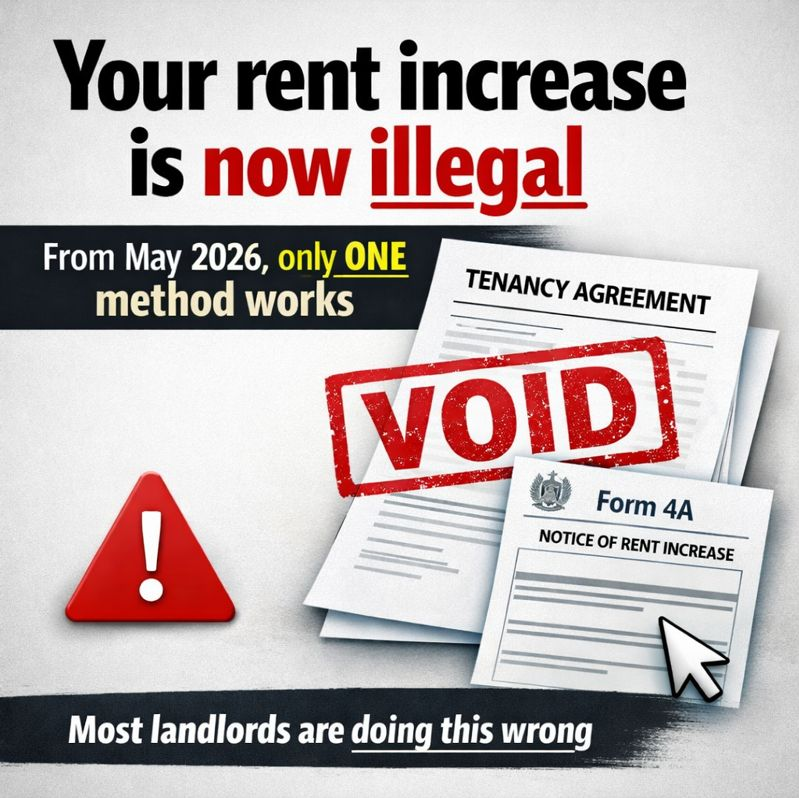
Your rent review clause is void. Here is the only legal way to increase rent in England now
Picture this. You have a tenancy agreement you have been relying on for years. It has a clause saying you can increase rent every twelve months. You send your tenant the usual letter in April. The rent goes up in June. Simple.
Except from 1st May 2026 that process is unlawful. The clause in your agreement is void. Your letter carries no legal weight. Your tenant owes you nothing above the old rent. And you have no mechanism to force the issue.
This is not an edge case or an interpretation argument. The Renters’ Rights Act 2025 is explicit. Every contractual rent review clause in every private residential tenancy agreement in England stopped working on 1st May 2026. Full stop. The only lawful way to increase rent now is through a statutory process most landlords have never used.
Why contractual rent review clauses stopped working
Thirty years of landlord practice built around one assumption: if it is in the tenancy agreement, it is enforceable. Rent review clauses were standard. Solicitors drafted them. Letting agents included them in their templates. Landlords relied on them without question.
The Renters’ Rights Act 2025 ended that assumption overnight. Section 7 of the Act removes the legal basis for any contractual term that purports to increase rent outside the Section 13 process. The clause does not become unenforceable in some circumstances. It ceases to have effect entirely, as though it was never there.
What catches landlords particularly hard is the transitional position. If you agreed a rent increase with your tenant in February, perhaps they signed something, perhaps they just acknowledged your letter, and that increase was due to kick in after 1st May, it does not happen. The agreement you made is irrelevant. The mechanism you used no longer exists in law and the increase it produced falls with it.
There is no workaround. There is no grandfathering. The transition was clean and total by design.
What Section 13 is and why it now matters
Section 13 of the Housing Act 1988 has always existed as a mechanism for increasing rent on periodic tenancies. Under the old system it sat alongside contractual rent review clauses as an alternative route that some landlords used and others ignored. Under the Renters’ Rights Act 2025 it is no longer an alternative. It is the only route.
The Section 13 process requires a landlord to serve a written notice on the tenant using Form 4A, the prescribed government form. The notice must state the current rent, the proposed new rent, and the date from which the increase is to take effect. The tenant must receive it at least two months before that date. And the date itself must fall on the first day of a rental period, not mid-month, not a random date, the first day of the period on which rent is due.
Get any of those elements wrong and the notice is defective. A defective notice means no enforceable increase. The tenant continues paying the old amount and the landlord cannot claim arrears based on the difference.
What makes this particularly important for self-managing landlords is that there is no court to fall back on if you get it wrong. Under the old system, a landlord who made a procedural error with a Section 21 notice could often remedy it and start again relatively quickly. A defective Section 13 notice means starting the entire process from scratch, waiting for the new two month period to expire, and losing whatever months passed in the meantime. On a £1,200 per month tenancy, a notice error that costs you three months of an attempted £100 increase is a £300 mistake. Not catastrophic, but entirely avoidable.
The first year rule that catches landlords out
There is an additional restriction that a surprising number of landlords are unaware of. On any tenancy created on or after 1st May 2026, landlords cannot increase rent at all during the first twelve months. Not at all. A Section 13 notice served before the tenancy is twelve months old has no legal effect regardless of how correctly it was prepared.
This matters practically in several ways. Landlords who let properties at below-market rents initially with the intention of adjusting early in the tenancy can no longer do so. The twelve month protection is absolute and begins from the start of the tenancy, not from the first rent payment date.
It also matters for landlords who plan to let a new property in May or June 2026. If you take on a new tenant next month, you will not be able to increase the rent until May or June 2027 at the earliest. Factor that into your initial rent-setting decision, because you will be locked in for a full year.
The protected period does not apply to existing tenancies that converted to periodic on 1st May 2026. Those tenancies can have rent increased through Section 13 immediately, subject to the twelve month frequency restriction described below, because they were not new tenancies created under the new regime.
How often you can increase rent
Once per year is the maximum. The twelve month clock runs from the date the last increase took effect, not from the date you served the notice. So if you serve notice in June and the new rent kicks in from 1st August, your next eligible increase date is 1st August the following year, not June.
This distinction matters more than it might appear. Landlords who serve early and allow a long gap before the increase takes effect are effectively delaying their next eligible increase date. If you want to maintain maximum flexibility, serve notice as close to two months before the intended start date as possible.
The frequency restriction also applies to increases that happened before May 1st. If your tenant’s rent went up in January 2026 under a contractual review clause, you cannot increase it again until January 2027 at the earliest, even though contractual clauses are now void going forward. The Act looks back at when the last increase took effect, not at how it was implemented.
This catches landlords who assumed that switching to the new system meant they could reset the clock. It does not. If you increased rent six months ago you are locked out for another six months regardless of the method you used.
What Form 4A is and where to get it
The government publishes a prescribed form for Section 13 notices called Form 4A. It replaced the previous Form 4 which applied under the old rules. The new form is available free from GOV.UK and must be used for every rent increase served on or after 1st May 2026.
What landlords need to understand about Form 4A is that it is not a template you can replicate. It is not a format you can copy into a letter. If you serve your own document, however clearly written, however complete the information, you have not served a valid Section 13 notice. The legal requirement is the prescribed form itself, completed in full.
Download it from GOV.UK fresh before every use. Forms are updated and a version saved to your desktop from months ago may no longer be current. Given that it takes thirty seconds to download and the cost of using an outdated form could be months of delayed rent increase, there is no rational argument for not doing this every time.
How to serve it correctly
Three methods of service are valid under the Act: in person, by post, or by email where your tenancy agreement explicitly permits electronic service. That last condition matters. Email is not automatically valid. If your agreement does not say notices can be served by email, post or personal delivery is the safe choice.
Whichever method you use, the evidence question is the one landlords consistently underestimate. If a tenant later claims they never received the notice, what can you produce? A memory that you sent something proves nothing. A certificate of posting from the Post Office, a tracked delivery confirmation, or a read receipt on an email are all far better than nothing. They cost almost nothing to obtain. Keep them permanently alongside your copy of the completed Form 4A.
The one method that categorically does not work is a messaging app. WhatsApp, text messages, and similar channels are not valid service methods for legal notices. If you serve Form 4A this way and the tenant disputes it, you have no notice.
What happens if the tenant disagrees with the amount
A tenant who believes your proposed rent is above the current open market rate can apply to the First-tier Tribunal before the increase takes effect. The application must be made before the date specified in the notice as the start of the new rent. If the tenant misses that deadline, their right to challenge lapses and the new rent takes effect automatically.
The Tribunal will assess the market rent for the property based on comparable lettings in the same area. It will look at what similar properties are currently being advertised for, not what they were renting for several years ago. Current Rightmove and Zoopla listings for comparable properties in the same street or immediate area are the most useful evidence a landlord can bring to a Tribunal hearing.
Under the rules introduced by the Renters’ Rights Act 2025, the Tribunal cannot set a rent higher than what you proposed. This is a new protection for landlords that did not exist under the old system. If the Tribunal determines that the market rent is actually above your proposed figure, the determination is still capped at your original amount. There is no risk of the process backfiring and resulting in a higher increase than you asked for.
The increase also takes effect from the date of the Tribunal determination rather than the date in your notice. This means there is no backdating of the increase to the notice date where a tenant has exercised their right to challenge. The landlord does not receive the higher rent for the period between the notice date and the Tribunal determination.
In practice the vast majority of tenants do not apply to the Tribunal. The process exists as a safeguard against above-market increases, not as a routine obstacle for landlords proposing reasonable rents. If your proposed rent is broadly in line with comparable properties in your area you are very unlikely to face a challenge.
The transitional trap most landlords have already walked into
Here is the one that has already caught people out before May 1st even arrived. Any rent increase agreed under a contractual clause before 1st May 2026 but scheduled to take effect after that date is not permitted. The transition is clean and complete. There is no grandfathering of pre-agreed contractual increases across the line.
If you told your tenant in February that rent was going up in June under the terms of the agreement, that increase is void. The fact that you agreed it before May 1st makes no difference. The fact that the tenant did not object makes no difference. The mechanism you used to agree it ceased to have legal effect on 1st May 2026 and any increase relying on it fell with it.
If you still want to increase the rent from June, you need to serve a fresh Form 4A. Check whether you are within the twelve month frequency restriction. Calculate the correct two month notice period from today. Specify a start date that falls on the first day of a rental period. Serve it by a valid method. Keep the evidence. That is the process, in full, every time.
The seven mistakes landlords are already making
Based on what is already appearing in landlord forums and advice threads since May 1st, these are the errors coming up most frequently.
Still sending annual rent review letters citing the tenancy agreement. That letter is worthless from May 1st. The tenant has no legal obligation to pay a penny more than the existing rent and you cannot enforce the difference.
Assuming a rent increase you arranged with your tenant before May 1st will still go through. It will not. If the mechanism you used was a contractual clause, the increase dies with the clause. It does not matter that the tenant agreed. It does not matter that it felt settled. Serve a fresh Form 4A or the increase does not happen.
Dating the notice period from when you wrote the form rather than when the tenant actually received it. A form completed on the 1st of May and posted on the 7th runs from the 7th. If your proposed start date does not allow two full months from the actual date of service, the notice is invalid.
Picking a convenient start date without checking whether it falls on the first day of a rental period. The 15th of the month feels clean. If rent is not due on the 15th, that date is defective regardless of everything else being correct.
Using a Form 4A downloaded before the Act came into force. Government forms get updated. A version sitting in your downloads folder from three months ago may no longer be the current prescribed form. The thirty seconds it takes to download a fresh copy from GOV.UK is worth taking every single time.
Serving notice on a new tenancy that has not yet reached its first anniversary. The twelve month protected period is absolute on tenancies created from May 1st onwards. The notice has no legal effect, full stop, regardless of how urgent the increase feels.
Sending Form 4A by WhatsApp or text because it felt quicker. It is not valid service. If the tenant disputes receipt you have nothing. Post it, hand it over in person, or email it only if your tenancy agreement explicitly allows email service of notices.
Any one of these errors means the increase does not exist in law. The tenant keeps paying the old rent and you have no route to recover the difference for the period the invalid notice covered.
What this means for your broader compliance position
The shift from contractual to statutory rent increases is part of a much broader pattern in the Renters’ Rights Act. The paperwork now matters in a way it did not before. Under Section 21, landlords needed their compliance documents in order to serve a valid notice. Under the new Section 8 regime, courts scrutinise a landlord’s entire compliance history when assessing discretionary possession grounds.
Courts assessing discretionary Section 8 grounds will look at the full picture. Expired certificates, unprotected deposits, missed prescribed information, all of it gets scrutinised in a way it never was under Section 21. A clean compliance record used to be good practice. Under the new regime it is your evidence. Compliance has stopped being an administrative inconvenience and started being a litigation asset.
The landlords best placed under the new regime are not necessarily the ones with the most properties or the longest track record. They are the ones who have their paperwork in order, their certificates renewed on time, their deposits properly protected, and their processes updated to reflect the new rules. Everything else flows from that.
If you want to see exactly where you stand right now, I built a free compliance checker at llcr.uk/compliance-checker.html — no payment card, no commitment. Run through it in a few minutes and see the gaps before they become a problem.
About the author
Tauhid Islam is a property law paralegal with experience in property law, civil litigation and compliance. He is the founder of LLCR — Landlord Compliance Register, a compliance management platform built for self-managing landlords in England. Platform at llcr.uk
The post Your rent review clause is void. Here is the only legal way to increase rent in England now appeared first on Property118.
View Full Article: Your rent review clause is void. Here is the only legal way to increase rent in England now


Post comment
Categories
- Landlords (19)
- Real Estate (9)
- Renewables & Green Issues (1)
- Rental Property Investment (1)
- Tenants (21)
- Uncategorized (12,685)
Archives
- May 2026 (32)
- April 2026 (78)
- March 2026 (72)
- February 2026 (55)
- January 2026 (52)
- December 2025 (62)
- August 2025 (51)
- July 2025 (51)
- June 2025 (49)
- May 2025 (50)
- April 2025 (48)
- March 2025 (54)
- February 2025 (51)
- January 2025 (52)
- December 2024 (55)
- November 2024 (64)
- October 2024 (82)
- September 2024 (69)
- August 2024 (55)
- July 2024 (64)
- June 2024 (54)
- May 2024 (73)
- April 2024 (59)
- March 2024 (49)
- February 2024 (57)
- January 2024 (58)
- December 2023 (56)
- November 2023 (59)
- October 2023 (67)
- September 2023 (136)
- August 2023 (131)
- July 2023 (129)
- June 2023 (128)
- May 2023 (140)
- April 2023 (121)
- March 2023 (168)
- February 2023 (155)
- January 2023 (152)
- December 2022 (136)
- November 2022 (158)
- October 2022 (146)
- September 2022 (148)
- August 2022 (169)
- July 2022 (124)
- June 2022 (124)
- May 2022 (130)
- April 2022 (116)
- March 2022 (155)
- February 2022 (124)
- January 2022 (120)
- December 2021 (117)
- November 2021 (139)
- October 2021 (130)
- September 2021 (138)
- August 2021 (110)
- July 2021 (110)
- June 2021 (60)
- May 2021 (127)
- April 2021 (122)
- March 2021 (156)
- February 2021 (154)
- January 2021 (133)
- December 2020 (126)
- November 2020 (159)
- October 2020 (169)
- September 2020 (181)
- August 2020 (147)
- July 2020 (172)
- June 2020 (158)
- May 2020 (177)
- April 2020 (188)
- March 2020 (234)
- February 2020 (212)
- January 2020 (164)
- December 2019 (107)
- November 2019 (131)
- October 2019 (145)
- September 2019 (123)
- August 2019 (112)
- July 2019 (93)
- June 2019 (82)
- May 2019 (94)
- April 2019 (88)
- March 2019 (78)
- February 2019 (77)
- January 2019 (71)
- December 2018 (37)
- November 2018 (85)
- October 2018 (108)
- September 2018 (110)
- August 2018 (135)
- July 2018 (140)
- June 2018 (118)
- May 2018 (113)
- April 2018 (64)
- March 2018 (96)
- February 2018 (82)
- January 2018 (92)
- December 2017 (62)
- November 2017 (100)
- October 2017 (105)
- September 2017 (97)
- August 2017 (101)
- July 2017 (104)
- June 2017 (155)
- May 2017 (135)
- April 2017 (113)
- March 2017 (138)
- February 2017 (150)
- January 2017 (127)
- December 2016 (90)
- November 2016 (135)
- October 2016 (149)
- September 2016 (135)
- August 2016 (48)
- July 2016 (52)
- June 2016 (54)
- May 2016 (52)
- April 2016 (24)
- October 2014 (8)
- April 2012 (2)
- December 2011 (2)
- November 2011 (10)
- October 2011 (9)
- September 2011 (9)
- August 2011 (3)
Calendar
Recent Posts
- What you might not know about Inheritance Tax and Whole of Life insurance
- Guidance clarifies council powers to enter premises and seize documents
- The great landlord contradiction: wanting companies, stuck in personal ownership
- Why some landlords are selling before the next repair bill arrives
- Concerns raised over £500 landlord tribunal fees and court delays
