
New Decent Homes Standard could cost landlords billions
 admin
admin 

Property118

New Decent Homes Standard could cost landlords billions
Landlords will need to fork out £26.5 billion to meet the new Decent Homes Standard, according to government data.
Statistics published by the government for its English Housing Survey Briefing: Modelling a new Decent Homes Standard reveals landlords will have to spend billions to meet the new standard by 2035.
Under the new standard, landlords will need to meet certain criteria, including that homes must be in a reasonable state of repair and provide core facilities and services, including a kitchen with adequate space and layout, an appropriately located bathroom and WC, and adequate protection from external noise.
£26.5 billion to meet new standard
According to government data, bringing the private rented sector up to the new standard would cost £26.5 billion in total, approximately twice the £10.9 billion needed to meet the existing standard.
For the social housing sector, the total estimated cost is £11.3 billion. Of this, £4.8 billion would apply to local authority dwellings and £6.5 billion to housing association properties, roughly three times the £3.6 billion required to meet the current standard.
The government’s findings also show that failure rates increase under the new standard. In 2023, 21% of private rented sector homes were non-decent under the existing standard (around 1 million homes).
Under the new standard, this rises to 48% (approximately 2.4 million homes).
Costs of upgrading vary significantly
However, the costs of upgrading individual dwellings vary significantly. The mean cost, the average amount spent per dwelling, in the private rented sector is similar for both the existing and new standards, at around £11,000 per property.
In the social housing sector, the mean cost to meet the new standard (£5,937 per dwelling) is lower than for the existing standard (£8,476 per dwelling).
This comes as the government also announced that all private rented and social housing properties will need to meet EPC C targets by 2030.
However, the government has yet to clarify how it will work with landlords to achieve these standards, with industry experts warning energy efficiency upgrades will be costly for landlords.
The post New Decent Homes Standard could cost landlords billions appeared first on Property118.
View Full Article: New Decent Homes Standard could cost landlords billions
Four in five commercial buildings at EPC risk amid government delay
Property118
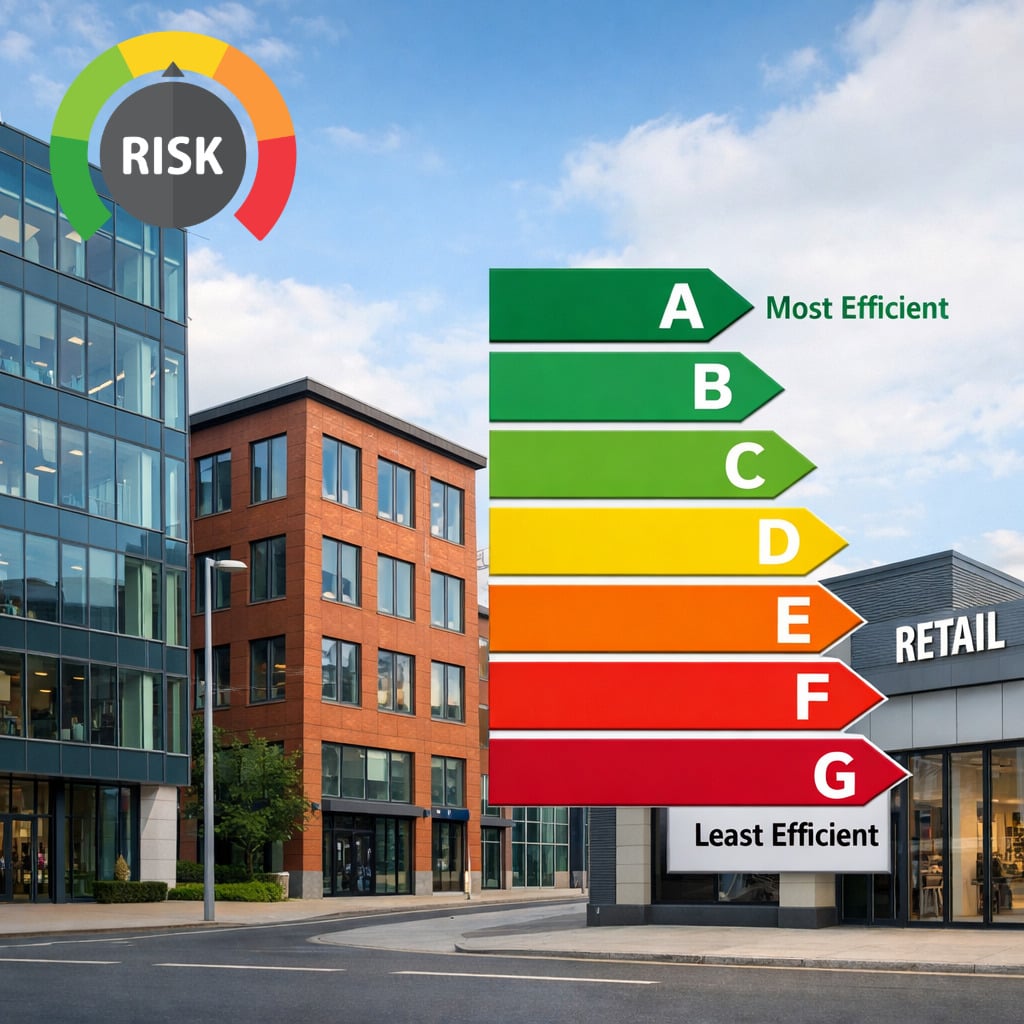
Four in five commercial buildings at EPC risk amid government delay
Most commercial buildings in England’s largest cities could become unlettable without swift government action on energy efficiency rules, a new analysis warns.
Research by the British Property Federation shows 81% of commercial buildings across seven major cities currently sit below an EPC rating of B, leaving around 190 million sq. m of floorspace exposed to future regulation.
The annual review examined offices, retail and industrial property in London, Birmingham, Bristol, Leeds, Liverpool, Manchester and Newcastle.
It found that only 3% of commercial buildings achieved an EPC A rating, with a further 16% reaching B.
Commercial landlords in the dark
The BPF’s assistant director, Rob Wall, said: “The Warm Homes Plan has left commercial landlords in the dark and out in the cold.
“We have been waiting for five years for a decision on future minimum energy efficiency standards for the non-domestic private rented sector.
“It is beyond belief that Ministers have kicked the can down the road once again.”
He added: “The lack of any real policy development under this government on upgrading commercial property is leaving commercial tenants with higher energy bills and undermining efforts to decarbonise our buildings.”
EPC for commercial buildings
Manchester recorded the strongest performance, with 22% of buildings rated A or B, with London following closely at 21%.
Across all seven cities, the proportion of buildings achieving EPC B rose by just one or two percentage points over the past year.
Ongoing uncertainty over minimum energy efficiency standards is holding back investment and delaying upgrades across existing stock, the BPF says.
It warns that the absence of a formal response now makes the proposed 2027 and 2030 targets unrealistic.
That’s because of the work required and the long lead times involved in major commercial retrofits.
The post Four in five commercial buildings at EPC risk amid government delay appeared first on Property118.
View Full Article: Four in five commercial buildings at EPC risk amid government delay
Categories
- Landlords (19)
- Real Estate (9)
- Renewables & Green Issues (1)
- Rental Property Investment (1)
- Tenants (21)
- Uncategorized (12,776)
Archives
- June 2026 (53)
- May 2026 (70)
- April 2026 (78)
- March 2026 (72)
- February 2026 (55)
- January 2026 (52)
- December 2025 (62)
- August 2025 (51)
- July 2025 (51)
- June 2025 (49)
- May 2025 (50)
- April 2025 (48)
- March 2025 (54)
- February 2025 (51)
- January 2025 (52)
- December 2024 (55)
- November 2024 (64)
- October 2024 (82)
- September 2024 (69)
- August 2024 (55)
- July 2024 (64)
- June 2024 (54)
- May 2024 (73)
- April 2024 (59)
- March 2024 (49)
- February 2024 (57)
- January 2024 (58)
- December 2023 (56)
- November 2023 (59)
- October 2023 (67)
- September 2023 (136)
- August 2023 (131)
- July 2023 (129)
- June 2023 (128)
- May 2023 (140)
- April 2023 (121)
- March 2023 (168)
- February 2023 (155)
- January 2023 (152)
- December 2022 (136)
- November 2022 (158)
- October 2022 (146)
- September 2022 (148)
- August 2022 (169)
- July 2022 (124)
- June 2022 (124)
- May 2022 (130)
- April 2022 (116)
- March 2022 (155)
- February 2022 (124)
- January 2022 (120)
- December 2021 (117)
- November 2021 (139)
- October 2021 (130)
- September 2021 (138)
- August 2021 (110)
- July 2021 (110)
- June 2021 (60)
- May 2021 (127)
- April 2021 (122)
- March 2021 (156)
- February 2021 (154)
- January 2021 (133)
- December 2020 (126)
- November 2020 (159)
- October 2020 (169)
- September 2020 (181)
- August 2020 (147)
- July 2020 (172)
- June 2020 (158)
- May 2020 (177)
- April 2020 (188)
- March 2020 (234)
- February 2020 (212)
- January 2020 (164)
- December 2019 (107)
- November 2019 (131)
- October 2019 (145)
- September 2019 (123)
- August 2019 (112)
- July 2019 (93)
- June 2019 (82)
- May 2019 (94)
- April 2019 (88)
- March 2019 (78)
- February 2019 (77)
- January 2019 (71)
- December 2018 (37)
- November 2018 (85)
- October 2018 (108)
- September 2018 (110)
- August 2018 (135)
- July 2018 (140)
- June 2018 (118)
- May 2018 (113)
- April 2018 (64)
- March 2018 (96)
- February 2018 (82)
- January 2018 (92)
- December 2017 (62)
- November 2017 (100)
- October 2017 (105)
- September 2017 (97)
- August 2017 (101)
- July 2017 (104)
- June 2017 (155)
- May 2017 (135)
- April 2017 (113)
- March 2017 (138)
- February 2017 (150)
- January 2017 (127)
- December 2016 (90)
- November 2016 (135)
- October 2016 (149)
- September 2016 (135)
- August 2016 (48)
- July 2016 (52)
- June 2016 (54)
- May 2016 (52)
- April 2016 (24)
- October 2014 (8)
- April 2012 (2)
- December 2011 (2)
- November 2011 (10)
- October 2011 (9)
- September 2011 (9)
- August 2011 (3)
Calendar
Recent Posts
- Buy to let lenders widen landlord options
- What the World Cup teaches landlords about selling property
- The Mortgage Works to pilot landlord EPC support package
- Landbay, Kensington and Dudley cut landlord BTL mortgage rates
- The Property Ombudsman expels five property firms
