
Landlords reducing exposure as regulatory pressure reshapes behaviour
 admin
admin 

Property118

Landlords reducing exposure as regulatory pressure reshapes behaviour
A consistent theme running through the latest landlord data is the growing influence of regulatory and structural pressure on decision-making.
According to the Property118 Landlord Sentiment Survey Q1 2026, a majority of landlords are now choosing to reduce their exposure to the sector rather than expand within it. Based on 2,380 completed responses, 57% of landlords plan to reduce their portfolios over the next 12 months, compared with just 6.8% intending to grow. You can review the full findings here.
The implication is clear: external pressures are beginning to influence long-term strategy.
A changing operating environment
Over recent years, the environment in which landlords operate has evolved significantly. Tax treatment, regulatory requirements and compliance obligations have all shifted, creating a landscape that is more complex and, in some cases, less predictable than before.
The survey data suggests that landlords are responding to this environment in a measured way. Rather than attempting to navigate increasing complexity indefinitely, many are choosing to reduce their involvement.
Not a reaction, but a recalibration
It would be easy to interpret these decisions as a reaction to short-term pressure. The data points towards something more deliberate.
As highlighted elsewhere in the Property118 dataset, many landlords are operating with low levels of borrowing and significant equity.
This means that decisions to reduce exposure are not being forced by immediate financial constraints. Instead, they reflect a broader recalibration of how landlords wish to engage with the sector.
A shift in long-term outlook
When the operating environment becomes more complex, the long-term outlook naturally comes into focus. Landlords begin to consider not just current performance, but future sustainability. Questions around financing, structure, compliance and succession planning become more prominent.
The survey indicates that, for many, the balance has shifted. Continuing to expand under the current framework is no longer seen as the most attractive option.
Implications beyond individual portfolios
The cumulative effect of these decisions has wider implications. If a majority of landlords are reducing exposure, and relatively few are entering or expanding, the overall level of rental supply may be affected over time. This is not an immediate adjustment, but a gradual one, driven by thousands of individual decisions.
A sector adapting to its conditions
The data reflects a sector that is adapting, not abruptly, but steadily. Landlords are not disengaging overnight, but they are adjusting their level of involvement in response to a changing environment.
For now, one conclusion stands out: landlords are not simply reacting to pressure, they are recalibrating their long-term role within the private rented sector.
A conversation worth having?
If you are weighing up your own strategy, whether that’s to sell, expand, or restructure to improve profitibility, it is worth having a discussion with a Property118 consultant to take a closer look at how your portfolio is structured as a whole now, and to forecast the outcomes based on multiple scenario’s.
These conversations are typically most useful for landlords with established portfolios and relatively modest borrowing who are beginning to reflect on how their assets could work more effectively in the years ahead.
/* “function”==typeof InitializeEditor,callIfLoaded:function(o){return!(!gform.domLoaded||!gform.scriptsLoaded||!gform.themeScriptsLoaded&&!gform.isFormEditor()||(gform.isFormEditor()&&console.warn(“The use of gform.initializeOnLoaded() is deprecated in the form editor context and will be removed in Gravity Forms 3.1.”),o(),0))},initializeOnLoaded:function(o){gform.callIfLoaded(o)||(document.addEventListener(“gform_main_scripts_loaded”,()=>{gform.scriptsLoaded=!0,gform.callIfLoaded(o)}),document.addEventListener(“gform/theme/scripts_loaded”,()=>{gform.themeScriptsLoaded=!0,gform.callIfLoaded(o)}),window.addEventListener(“DOMContentLoaded”,()=>{gform.domLoaded=!0,gform.callIfLoaded(o)}))},hooks:{action:{},filter:{}},addAction:function(o,r,e,t){gform.addHook(“action”,o,r,e,t)},addFilter:function(o,r,e,t){gform.addHook(“filter”,o,r,e,t)},doAction:function(o){gform.doHook(“action”,o,arguments)},applyFilters:function(o){return gform.doHook(“filter”,o,arguments)},removeAction:function(o,r){gform.removeHook(“action”,o,r)},removeFilter:function(o,r,e){gform.removeHook(“filter”,o,r,e)},addHook:function(o,r,e,t,n){null==gform.hooks[o][r]&&(gform.hooks[o][r]=[]);var d=gform.hooks[o][r];null==n&&(n=r+”_”+d.length),gform.hooks[o][r].push({tag:n,callable:e,priority:t=null==t?10:t})},doHook:function(r,o,e){var t;if(e=Array.prototype.slice.call(e,1),null!=gform.hooks[r][o]&&((o=gform.hooks[r][o]).sort(function(o,r){return o.priority-r.priority}),o.forEach(function(o){“function”!=typeof(t=o.callable)&&(t=window[t]),”action”==r?t.apply(null,e):e[0]=t.apply(null,e)})),”filter”==r)return e[0]},removeHook:function(o,r,t,n){var e;null!=gform.hooks[o][r]&&(e=(e=gform.hooks[o][r]).filter(function(o,r,e){return!!(null!=n&&n!=o.tag||null!=t&&t!=o.priority)}),gform.hooks[o][r]=e)}});
/* ]]> */
Enquire about a free initial discussion with a Property118 consultant
-
About you
So our Executive Assistant knows who to greet. -
Mr.Mrs.MissMs.Dr.Prof.Rev.
-
-
Your portfolio
A short picture of how you currently hold property. -
-
-
-
-
-
-
Your situation
So the conversation can start where it should. -
-
-
-
-
-
-
-
-
-
-
Max. file size: 500 MB.
-
 Important Notice – Scope of Planning Support
Where our recommendations touch on areas requiring specialist or regulated input, we may refer you to appropriately authorised professionals for advice and implementation.
-
-
-
/* = 0;if(!is_postback){return;}var form_content = jQuery(this).contents().find(‘#gform_wrapper_585′);var is_confirmation = jQuery(this).contents().find(‘#gform_confirmation_wrapper_585′).length > 0;var is_redirect = contents.indexOf(‘gformRedirect(){‘) >= 0;var is_form = form_content.length > 0 && ! is_redirect && ! is_confirmation;var mt = parseInt(jQuery(‘html’).css(‘margin-top’), 10) + parseInt(jQuery(‘body’).css(‘margin-top’), 10) + 100;if(is_form){form_content.find(‘form’).css(‘opacity’, 0);jQuery(‘#gform_wrapper_585′).html(form_content.html());if(form_content.hasClass(‘gform_validation_error’)){jQuery(‘#gform_wrapper_585′).addClass(‘gform_validation_error’);} else {jQuery(‘#gform_wrapper_585′).removeClass(‘gform_validation_error’);}setTimeout( function() { /* delay the scroll by 50 milliseconds to fix a bug in chrome */ }, 50 );if(window[‘gformInitDatepicker’]) {gformInitDatepicker();}if(window[‘gformInitPriceFields’]) {gformInitPriceFields();}var current_page = jQuery(‘#gform_source_page_number_585′).val();gformInitSpinner( 585, ‘https://www.property118.com/wp-content/plugins/gravityforms/images/spinner.svg’, true );jQuery(document).trigger(‘gform_page_loaded’, [585, current_page]);window[‘gf_submitting_585′] = false;}else if(!is_redirect){var confirmation_content = jQuery(this).contents().find(‘.GF_AJAX_POSTBACK’).html();if(!confirmation_content){confirmation_content = contents;}jQuery(‘#gform_wrapper_585′).replaceWith(confirmation_content);jQuery(document).trigger(‘gform_confirmation_loaded’, [585]);window[‘gf_submitting_585′] = false;wp.a11y.speak(jQuery(‘#gform_confirmation_message_585′).text());}else{jQuery(‘#gform_585′).append(contents);if(window[‘gformRedirect’]) {gformRedirect();}}jQuery(document).trigger(“gform_pre_post_render”, [{ formId: “585”, currentPage: “current_page”, abort: function() { this.preventDefault(); } }]); if (event && event.defaultPrevented) { return; } const gformWrapperDiv = document.getElementById( “gform_wrapper_585″ ); if ( gformWrapperDiv ) { const visibilitySpan = document.createElement( “span” ); visibilitySpan.id = “gform_visibility_test_585″; gformWrapperDiv.insertAdjacentElement( “afterend”, visibilitySpan ); } const visibilityTestDiv = document.getElementById( “gform_visibility_test_585″ ); let postRenderFired = false; function triggerPostRender() { if ( postRenderFired ) { return; } postRenderFired = true; gform.core.triggerPostRenderEvents( 585, current_page ); if ( visibilityTestDiv ) { visibilityTestDiv.parentNode.removeChild( visibilityTestDiv ); } } function debounce( func, wait, immediate ) { var timeout; return function() { var context = this, args = arguments; var later = function() { timeout = null; if ( !immediate ) func.apply( context, args ); }; var callNow = immediate && !timeout; clearTimeout( timeout ); timeout = setTimeout( later, wait ); if ( callNow ) func.apply( context, args ); }; } const debouncedTriggerPostRender = debounce( function() { triggerPostRender(); }, 200 ); if ( visibilityTestDiv && visibilityTestDiv.offsetParent === null ) { const observer = new MutationObserver( ( mutations ) => { mutations.forEach( ( mutation ) => { if ( mutation.type === ‘attributes’ && visibilityTestDiv.offsetParent !== null ) { debouncedTriggerPostRender(); observer.disconnect(); } }); }); observer.observe( document.body, { attributes: true, childList: false, subtree: true, attributeFilter: [ ‘style’, ‘class’ ], }); } else { triggerPostRender(); } } );} );
/* ]]> */
|
★★★★★
|
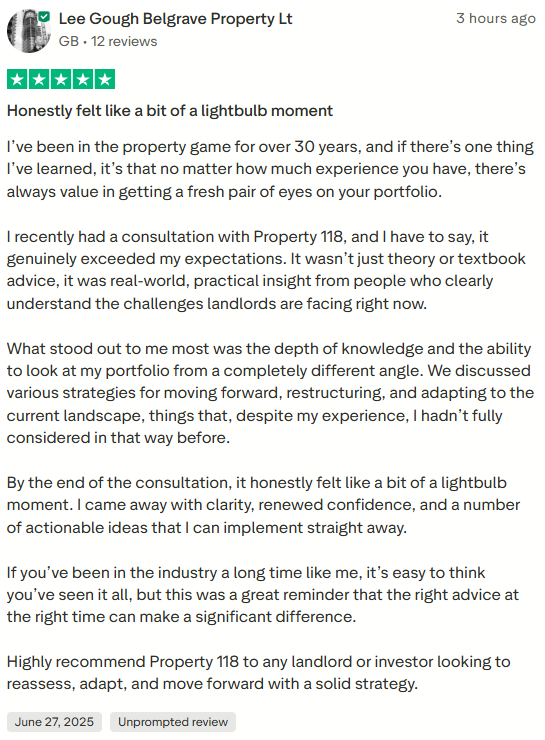
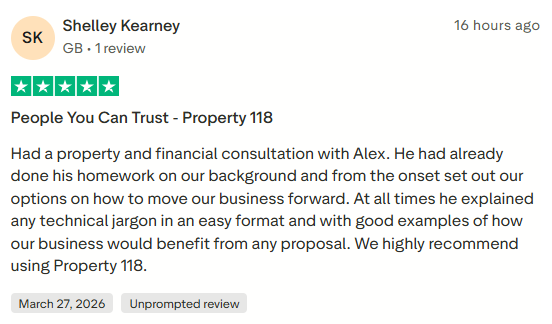
Help other landlords find Property118If you have found Property118 useful, a short Trustpilot review would make a meaningful difference. It helps other landlords decide whether our research is worth following. |
The post Landlords reducing exposure as regulatory pressure reshapes behaviour appeared first on Property118.
View Full Article: Landlords reducing exposure as regulatory pressure reshapes behaviour
Sky News Section 21 story suggests a deeper problem to me
Property118

Sky News Section 21 story suggests a deeper problem to me
Did you see the recent Sky News coverage that linked to Property118? It was about landlords rushing to serve Section 21 notices before the 1 May changes.
When a significant legal change is approaching, it is only natural that some landlords will focus on what can still be done before the new rules take effect, but I believe the Sky News story, and many others like it, point to something much deeper. For many landlords, the real issue is not simply whether Section 21 can still be used in time; it is whether their property business, as it stands today, still works for the next phase of life, family responsibility, and risk.
That’s why the Sky News article felt to me like the real story here sits much deeper than just a possession issue. That’s the top of the iceberg in my opinion, and yours too, it seems, based on the recent Property118 landlord sentiment survey. I think the number of s21’s issued recently is really about whether the business still works. What do you think?
From control to continuity
The real question is no longer just whether one legal route remains available; it is whether the business itself is still resilient, manageable, and fit for purpose if circumstances change. That is why, in my opinion, this is beginning to look like more than a possession story.
Many landlords continue operating on assumptions that made sense years ago, but which may no longer reflect current realities. That does not mean the original strategy was wrong; it means the business may now need a different kind of plan.
A portfolio is not always a plan
This is where I believe many landlords get caught out, because owning property is not the same as having a strategy and having equity is not the same as having clarity, and having rental income is not the same as having a business model that still works. A portfolio can have substantial value and still lack continuity, and it can produce income and still create strain.
A rental property business might well represent years of effort and success, yet still leave basic questions unanswered.
- What happens if the owner becomes ill?
- What happens if they die unexpectedly?
- Would a spouse or child know what to do next?
- Would the business continue in an orderly way, or quickly turn into a series of decisions made under pressure?
The loneliness of being a landlord
Landlording can be a lonely profession. Most of us carry strategic, financial, and family pressures without a trusted sounding board. You may well have a broker, accountant, solicitor, and maybe even a letting agent, but lot’s of landlords I speak to still feel that nobody is previously ever helped them to step back and look at the whole picture in a joined up way.
What most landlords tell me about the realities of working with multiple professional advisers is that the discussions are often fragmented. One conversation may be about tax, another about refinancing, another about tenants, another about wills or succession, and yet another about whether to hold or sell. Very few landlords I’ve ever spoken to have ever managed to find a person like me before who can join up all of this thinking for them.
Asking better questions
If the real issue is one difficult tenancy, then the immediate legal question is exactly the right one, but for many landlords, the pressure is broader than that.
The rush to serve s21 notices, as reported by Sky News, may be linked not only to possession, but also to concern about future regulation, weaker cash flow than expected, financing costs, operational fatigue, retirement planning, succession, legacy or uncertainty about what the portfolio is ultimately for.
When landlords focus only on the immediate legal mechanics, they may miss the larger issue, and for many, the real pressure is not one tenancy, it is that the current business model no longer feels fully aligned with their stage of life. For others, it is the growing realisation that a portfolio built over many years may still have no clear continuity plan attached to it. Doing nothing is also a decision, but rarely a good one.
Landlords now need to ask better, more strategic questions than the headlines alone suggest, and if they don’t know what questions they should be asking, they need to read Property118 a lot more, or arrange a free initial consultation with a specialist landlord consultant like me.
As a Property118 consultant, I have spent many years supporting landlords through changing market conditions, not just by looking at isolated technical issues, but by helping them step back and consider the bigger picture. In practice, these issues rarely sit in neat compartments. Cash flow, financing, continuity, succession, structure, family pressure, and quality of life are often closely connected.
A landlord who thinks they have a tenant problem may really have a strategic planning problem. A landlord who thinks they have a tax problem may actually have a continuity problem. A landlord who feels they need to act quickly may really need to think more clearly. That is why a joined up approach matters.
For some landlords, the priority may be simplification, for others, it may be continuity, or it might also be a desire for stronger cash flow, lower risk, or greater clarity around the next stage. The point is not that every landlord needs the same solution, it is that many landlords now need a more joined up plan than they currently have.
A shift in emphasis
The recent attention on Section 21 may yet prove to be about more than a legal deadline.
It may also be highlighting a wider shift in landlord thinking, from reaction to reflection, from individual problems to overall strategy and from accumulation alone to continuity, clarity, and resilience. In that sense, the real issue is not simply whether Section 21 notices can still be used before the deadline; it is whether the business still works.
If this article has made you question whether your current property business is still fit for purpose for you, your family, or the next stage of life, I would like to help you to step back, assess your wider position, and move from uncertainty to a clearer strategic plan. Sometimes the most valuable decision is not the next tactical move, but taking the time to think strategically before making it.
Kind regards
Swati Sammant-Mayger, ATT – Founder Property118 consultant and your fellow portfolio landlord
The post Sky News Section 21 story suggests a deeper problem to me appeared first on Property118.
View Full Article: Sky News Section 21 story suggests a deeper problem to me
Selling one poor performer can beat keeping three average ones
Property118

Selling one poor performer can beat keeping three average ones
Many landlords assume progress comes from owning more properties. More doors, more rent days, more long-term growth. Sometimes that is true, yet there are also moments when progress comes from owning fewer, better assets.
That idea is often resisted at first, but it deserves attention because one well-judged sale can sometimes improve a portfolio more than years of passive holding.
The trap of under-performing assets
Across long-held portfolios, it is common to find properties that are not disasters, but not stars either. They may generate modest net income, absorb regular maintenance spend, sit in weaker locations, tie up meaningful equity, require disproportionate attention, or offer little excitement or strategic value. Individually, none seem urgent, but collectively, they can be a drag overall performance and mental health.
When one sale changes the whole picture
Selling a weaker asset can sometimes allow an owner to create emergency reserves, improve monthly surplus, remove a recurring headache, focus attention on better assets, or regain flexibility for future opportunities, and any of those things can outperform simply keeping everything by habit.
More is not always better
This can be uncomfortable for landlords who built success through accumulation, yet the strategy that built wealth is not always the strategy that best protects or enhances it later. Sometimes maturity means refining rather than expanding.
A conversation worth having?
If parts of your portfolio feel respectable but uninspiring, it may be worth reviewing whether quantity is masking quality.
Sometimes the right answer is to hold everything.
Sometimes the smartest move is not buying another property, but letting one average asset go.
These discussions are often most useful for established landlords who want stronger performance, simpler ownership and capital working harder than it does today.
/* “function”==typeof InitializeEditor,callIfLoaded:function(o){return!(!gform.domLoaded||!gform.scriptsLoaded||!gform.themeScriptsLoaded&&!gform.isFormEditor()||(gform.isFormEditor()&&console.warn(“The use of gform.initializeOnLoaded() is deprecated in the form editor context and will be removed in Gravity Forms 3.1.”),o(),0))},initializeOnLoaded:function(o){gform.callIfLoaded(o)||(document.addEventListener(“gform_main_scripts_loaded”,()=>{gform.scriptsLoaded=!0,gform.callIfLoaded(o)}),document.addEventListener(“gform/theme/scripts_loaded”,()=>{gform.themeScriptsLoaded=!0,gform.callIfLoaded(o)}),window.addEventListener(“DOMContentLoaded”,()=>{gform.domLoaded=!0,gform.callIfLoaded(o)}))},hooks:{action:{},filter:{}},addAction:function(o,r,e,t){gform.addHook(“action”,o,r,e,t)},addFilter:function(o,r,e,t){gform.addHook(“filter”,o,r,e,t)},doAction:function(o){gform.doHook(“action”,o,arguments)},applyFilters:function(o){return gform.doHook(“filter”,o,arguments)},removeAction:function(o,r){gform.removeHook(“action”,o,r)},removeFilter:function(o,r,e){gform.removeHook(“filter”,o,r,e)},addHook:function(o,r,e,t,n){null==gform.hooks[o][r]&&(gform.hooks[o][r]=[]);var d=gform.hooks[o][r];null==n&&(n=r+”_”+d.length),gform.hooks[o][r].push({tag:n,callable:e,priority:t=null==t?10:t})},doHook:function(r,o,e){var t;if(e=Array.prototype.slice.call(e,1),null!=gform.hooks[r][o]&&((o=gform.hooks[r][o]).sort(function(o,r){return o.priority-r.priority}),o.forEach(function(o){“function”!=typeof(t=o.callable)&&(t=window[t]),”action”==r?t.apply(null,e):e[0]=t.apply(null,e)})),”filter”==r)return e[0]},removeHook:function(o,r,t,n){var e;null!=gform.hooks[o][r]&&(e=(e=gform.hooks[o][r]).filter(function(o,r,e){return!!(null!=n&&n!=o.tag||null!=t&&t!=o.priority)}),gform.hooks[o][r]=e)}});
/* ]]> */
Enquire about a free initial discussion with a Property118 consultant
-
About you
So our Executive Assistant knows who to greet. -
Mr.Mrs.MissMs.Dr.Prof.Rev.
-
-
Your portfolio
A short picture of how you currently hold property. -
-
-
-
-
-
-
Your situation
So the conversation can start where it should. -
-
-
-
-
-
-
-
-
-
-
Max. file size: 500 MB.
-
Important Notice – Scope of Planning Support
Where our recommendations touch on areas requiring specialist or regulated input, we may refer you to appropriately authorised professionals for advice and implementation.
-
-
-
/* = 0;if(!is_postback){return;}var form_content = jQuery(this).contents().find(‘#gform_wrapper_585′);var is_confirmation = jQuery(this).contents().find(‘#gform_confirmation_wrapper_585′).length > 0;var is_redirect = contents.indexOf(‘gformRedirect(){‘) >= 0;var is_form = form_content.length > 0 && ! is_redirect && ! is_confirmation;var mt = parseInt(jQuery(‘html’).css(‘margin-top’), 10) + parseInt(jQuery(‘body’).css(‘margin-top’), 10) + 100;if(is_form){form_content.find(‘form’).css(‘opacity’, 0);jQuery(‘#gform_wrapper_585′).html(form_content.html());if(form_content.hasClass(‘gform_validation_error’)){jQuery(‘#gform_wrapper_585′).addClass(‘gform_validation_error’);} else {jQuery(‘#gform_wrapper_585′).removeClass(‘gform_validation_error’);}setTimeout( function() { /* delay the scroll by 50 milliseconds to fix a bug in chrome */ }, 50 );if(window[‘gformInitDatepicker’]) {gformInitDatepicker();}if(window[‘gformInitPriceFields’]) {gformInitPriceFields();}var current_page = jQuery(‘#gform_source_page_number_585′).val();gformInitSpinner( 585, ‘https://www.property118.com/wp-content/plugins/gravityforms/images/spinner.svg’, true );jQuery(document).trigger(‘gform_page_loaded’, [585, current_page]);window[‘gf_submitting_585′] = false;}else if(!is_redirect){var confirmation_content = jQuery(this).contents().find(‘.GF_AJAX_POSTBACK’).html();if(!confirmation_content){confirmation_content = contents;}jQuery(‘#gform_wrapper_585′).replaceWith(confirmation_content);jQuery(document).trigger(‘gform_confirmation_loaded’, [585]);window[‘gf_submitting_585′] = false;wp.a11y.speak(jQuery(‘#gform_confirmation_message_585′).text());}else{jQuery(‘#gform_585′).append(contents);if(window[‘gformRedirect’]) {gformRedirect();}}jQuery(document).trigger(“gform_pre_post_render”, [{ formId: “585”, currentPage: “current_page”, abort: function() { this.preventDefault(); } }]); if (event && event.defaultPrevented) { return; } const gformWrapperDiv = document.getElementById( “gform_wrapper_585″ ); if ( gformWrapperDiv ) { const visibilitySpan = document.createElement( “span” ); visibilitySpan.id = “gform_visibility_test_585″; gformWrapperDiv.insertAdjacentElement( “afterend”, visibilitySpan ); } const visibilityTestDiv = document.getElementById( “gform_visibility_test_585″ ); let postRenderFired = false; function triggerPostRender() { if ( postRenderFired ) { return; } postRenderFired = true; gform.core.triggerPostRenderEvents( 585, current_page ); if ( visibilityTestDiv ) { visibilityTestDiv.parentNode.removeChild( visibilityTestDiv ); } } function debounce( func, wait, immediate ) { var timeout; return function() { var context = this, args = arguments; var later = function() { timeout = null; if ( !immediate ) func.apply( context, args ); }; var callNow = immediate && !timeout; clearTimeout( timeout ); timeout = setTimeout( later, wait ); if ( callNow ) func.apply( context, args ); }; } const debouncedTriggerPostRender = debounce( function() { triggerPostRender(); }, 200 ); if ( visibilityTestDiv && visibilityTestDiv.offsetParent === null ) { const observer = new MutationObserver( ( mutations ) => { mutations.forEach( ( mutation ) => { if ( mutation.type === ‘attributes’ && visibilityTestDiv.offsetParent !== null ) { debouncedTriggerPostRender(); observer.disconnect(); } }); }); observer.observe( document.body, { attributes: true, childList: false, subtree: true, attributeFilter: [ ‘style’, ‘class’ ], }); } else { triggerPostRender(); } } );} );
/* ]]> */
The post Selling one poor performer can beat keeping three average ones appeared first on Property118.
View Full Article: Selling one poor performer can beat keeping three average ones
Why low debt is not always the low-risk strategy landlords think it is
Property118

Why low debt is not always the low-risk strategy landlords think it is
Among landlords, few beliefs are more deeply rooted than this: Pay down debt and risk falls.
It might sound sensible, and in some circumstances, it might be sensible, yet like many simple truths, it can become misleading when applied too broadly because once borrowing becomes modest, a different form of risk often grows quietly in the background. Not lender risk but concentration risk.
The hidden issue many overlook
Imagine two landlords. The first owns a £1.5m portfolio with very low borrowing and most of their wealth tied up inside a handful of properties. The second has similar net worth, but holds a more balanced mix of property, liquidity and optionality.
Who is safer?
Equity can be powerful, but inflexible
High equity looks reassuring on paper, but it can also create hidden vulnerabilities:
- wealth trapped in illiquid assets
- dependence on one sector
- reliance on local property markets
- exposure to repairs and regulation
- limited ready cash in emergencies
- difficulty helping family at the right time
- fewer options if circumstances change
That is not low risk, it is simply a different risk.
Why landlords miss it
They miss it because leverage is visible, they see the mortgage statement, they feel interest rate rises, they celebrate redemptions, but concentration risk is quieter. It does not send monthly letters, instead it sits unnoticed until a life event, health issue, family need or market change reveals it.
The goal is not maximum debt either
This is not an argument for reckless borrowing, far from it. Excess leverage creates its own obvious dangers.
The smarter question is usually: What balance of debt, equity and liquidity best serves my stage of life now?
That answer changes over time.
What often matters more after 55
Earlier in life, accumulation may dominate thinking.
Later, many landlords value flexibility, monthly surplus, emergency reserves, easier succession planning, lower stress, freedom to travel, and the ability to act quickly.
Those priorities can justify a very different structure from the one that built the wealth in the first place.
Why most landlords eventually reposition
We increasingly speak with landlords who are not trying to grow at all. Instead, they are trying to improve quality. That may involve reducing weaker holdings, refinancing selectively, releasing dormant capital, improving income efficiency, creating liquidity buffers and/or simplifying ownership structures. Those are often rational risk decisions, not aggressive ones.
Security is more than low LTV
A portfolio at 20% loan-to-value can still feel fragile if cashflow is weak, options are limited and too much depends on a few assets. Meanwhile, a thoughtfully structured portfolio with sensible leverage and stronger liquidity can feel far more resilient because security is broader than debt percentage.
A conversation worth having?
If you have spent years reducing debt, that may have been exactly the right move.
The next question is whether the current structure remains the right move now.
Sometimes the answer is yes.
Sometimes the bigger risk is no longer borrowing, but inertia.
These discussions are often most useful for established landlords with meaningful equity who want stronger resilience, greater flexibility and a portfolio that fits the next phase of life.
/* “function”==typeof InitializeEditor,callIfLoaded:function(o){return!(!gform.domLoaded||!gform.scriptsLoaded||!gform.themeScriptsLoaded&&!gform.isFormEditor()||(gform.isFormEditor()&&console.warn(“The use of gform.initializeOnLoaded() is deprecated in the form editor context and will be removed in Gravity Forms 3.1.”),o(),0))},initializeOnLoaded:function(o){gform.callIfLoaded(o)||(document.addEventListener(“gform_main_scripts_loaded”,()=>{gform.scriptsLoaded=!0,gform.callIfLoaded(o)}),document.addEventListener(“gform/theme/scripts_loaded”,()=>{gform.themeScriptsLoaded=!0,gform.callIfLoaded(o)}),window.addEventListener(“DOMContentLoaded”,()=>{gform.domLoaded=!0,gform.callIfLoaded(o)}))},hooks:{action:{},filter:{}},addAction:function(o,r,e,t){gform.addHook(“action”,o,r,e,t)},addFilter:function(o,r,e,t){gform.addHook(“filter”,o,r,e,t)},doAction:function(o){gform.doHook(“action”,o,arguments)},applyFilters:function(o){return gform.doHook(“filter”,o,arguments)},removeAction:function(o,r){gform.removeHook(“action”,o,r)},removeFilter:function(o,r,e){gform.removeHook(“filter”,o,r,e)},addHook:function(o,r,e,t,n){null==gform.hooks[o][r]&&(gform.hooks[o][r]=[]);var d=gform.hooks[o][r];null==n&&(n=r+”_”+d.length),gform.hooks[o][r].push({tag:n,callable:e,priority:t=null==t?10:t})},doHook:function(r,o,e){var t;if(e=Array.prototype.slice.call(e,1),null!=gform.hooks[r][o]&&((o=gform.hooks[r][o]).sort(function(o,r){return o.priority-r.priority}),o.forEach(function(o){“function”!=typeof(t=o.callable)&&(t=window[t]),”action”==r?t.apply(null,e):e[0]=t.apply(null,e)})),”filter”==r)return e[0]},removeHook:function(o,r,t,n){var e;null!=gform.hooks[o][r]&&(e=(e=gform.hooks[o][r]).filter(function(o,r,e){return!!(null!=n&&n!=o.tag||null!=t&&t!=o.priority)}),gform.hooks[o][r]=e)}});
/* ]]> */
Enquire about a free initial discussion with a Property118 consultant
-
About you
So our Executive Assistant knows who to greet. -
Mr.Mrs.MissMs.Dr.Prof.Rev.
-
-
Your portfolio
A short picture of how you currently hold property. -
-
-
-
-
-
-
Your situation
So the conversation can start where it should. -
-
-
-
-
-
-
-
-
-
-
Max. file size: 500 MB.
-
Important Notice – Scope of Planning Support
Where our recommendations touch on areas requiring specialist or regulated input, we may refer you to appropriately authorised professionals for advice and implementation.
-
-
-
/* = 0;if(!is_postback){return;}var form_content = jQuery(this).contents().find(‘#gform_wrapper_585′);var is_confirmation = jQuery(this).contents().find(‘#gform_confirmation_wrapper_585′).length > 0;var is_redirect = contents.indexOf(‘gformRedirect(){‘) >= 0;var is_form = form_content.length > 0 && ! is_redirect && ! is_confirmation;var mt = parseInt(jQuery(‘html’).css(‘margin-top’), 10) + parseInt(jQuery(‘body’).css(‘margin-top’), 10) + 100;if(is_form){form_content.find(‘form’).css(‘opacity’, 0);jQuery(‘#gform_wrapper_585′).html(form_content.html());if(form_content.hasClass(‘gform_validation_error’)){jQuery(‘#gform_wrapper_585′).addClass(‘gform_validation_error’);} else {jQuery(‘#gform_wrapper_585′).removeClass(‘gform_validation_error’);}setTimeout( function() { /* delay the scroll by 50 milliseconds to fix a bug in chrome */ }, 50 );if(window[‘gformInitDatepicker’]) {gformInitDatepicker();}if(window[‘gformInitPriceFields’]) {gformInitPriceFields();}var current_page = jQuery(‘#gform_source_page_number_585′).val();gformInitSpinner( 585, ‘https://www.property118.com/wp-content/plugins/gravityforms/images/spinner.svg’, true );jQuery(document).trigger(‘gform_page_loaded’, [585, current_page]);window[‘gf_submitting_585′] = false;}else if(!is_redirect){var confirmation_content = jQuery(this).contents().find(‘.GF_AJAX_POSTBACK’).html();if(!confirmation_content){confirmation_content = contents;}jQuery(‘#gform_wrapper_585′).replaceWith(confirmation_content);jQuery(document).trigger(‘gform_confirmation_loaded’, [585]);window[‘gf_submitting_585′] = false;wp.a11y.speak(jQuery(‘#gform_confirmation_message_585′).text());}else{jQuery(‘#gform_585′).append(contents);if(window[‘gformRedirect’]) {gformRedirect();}}jQuery(document).trigger(“gform_pre_post_render”, [{ formId: “585”, currentPage: “current_page”, abort: function() { this.preventDefault(); } }]); if (event && event.defaultPrevented) { return; } const gformWrapperDiv = document.getElementById( “gform_wrapper_585″ ); if ( gformWrapperDiv ) { const visibilitySpan = document.createElement( “span” ); visibilitySpan.id = “gform_visibility_test_585″; gformWrapperDiv.insertAdjacentElement( “afterend”, visibilitySpan ); } const visibilityTestDiv = document.getElementById( “gform_visibility_test_585″ ); let postRenderFired = false; function triggerPostRender() { if ( postRenderFired ) { return; } postRenderFired = true; gform.core.triggerPostRenderEvents( 585, current_page ); if ( visibilityTestDiv ) { visibilityTestDiv.parentNode.removeChild( visibilityTestDiv ); } } function debounce( func, wait, immediate ) { var timeout; return function() { var context = this, args = arguments; var later = function() { timeout = null; if ( !immediate ) func.apply( context, args ); }; var callNow = immediate && !timeout; clearTimeout( timeout ); timeout = setTimeout( later, wait ); if ( callNow ) func.apply( context, args ); }; } const debouncedTriggerPostRender = debounce( function() { triggerPostRender(); }, 200 ); if ( visibilityTestDiv && visibilityTestDiv.offsetParent === null ) { const observer = new MutationObserver( ( mutations ) => { mutations.forEach( ( mutation ) => { if ( mutation.type === ‘attributes’ && visibilityTestDiv.offsetParent !== null ) { debouncedTriggerPostRender(); observer.disconnect(); } }); }); observer.observe( document.body, { attributes: true, childList: false, subtree: true, attributeFilter: [ ‘style’, ‘class’ ], }); } else { triggerPostRender(); } } );} );
/* ]]> */
The post Why low debt is not always the low-risk strategy landlords think it is appeared first on Property118.
View Full Article: Why low debt is not always the low-risk strategy landlords think it is
Hidden leaks outside homes raise landlord costs
Property118

Hidden leaks outside homes raise landlord costs
More than half of hidden leaks affecting residential property originate outside the building, leaving responsibility with the owner and landlords rather than the water supplier.
According to an analysis of 9,000 callouts by property maintenance firm Aspect, 58% of hidden leaks occur in underground mains supply pipes beyond the property’s structure.
The firm, which works across London and the South and East of England, found that most leaks are linked to internal plumbing or heating systems.
However, in practice, its analysis points to nearly six in 10 cases starting in pipework buried under gardens, driveways or boundary lines.
Landlord leak awareness
The firm’s leak detection manager, Neil Lampton, said: “Hidden leaks outside the home are often the hardest to identify, as they develop underground with no visible signs.
“They are often mistaken for internal plumbing or heating faults, which can delay diagnosis and increase costs.”
He added: “Greater awareness of external supply pipes as a key risk area can help landlords take a more targeted and cost-effective approach to maintenance, particularly as they are responsible for them, not the water provider.”
Leaks without warning
Aspect says the leak location matters since these pipes sit out of sight, so faults can continue without any visible warning.
Tenants may not realise anything is wrong while water escapes over time.
Responsibility for those external pipes usually sits with the property owner which means landlords face the cost of both investigation and repair.
Recent case data also highlights the scale of the problem with hidden leaks being found to waste about 56 litres of water per hour.
That adds up to more than 40,000 litres each month.
Cost of leak repairs
Also, the repair costs for a leak running for a month, range from £150 to £160, though more severe cases rise above £200 to £250.
Over a year, unresolved leaks can push bills towards £2,400 to £3,000.
Tenants in metered homes may see the first signs through higher charges.
Left unresolved, issues can develop into complaints, disputes and further maintenance demands.
To help, Aspect is advising landlords to watch for sudden changes in water use, pressure drops or unexpected bills flagged by tenants.
They are also being urged to act on supplier alerts, check external pipework, and arrange specialist leak detection where needed.
The post Hidden leaks outside homes raise landlord costs appeared first on Property118.
View Full Article: Hidden leaks outside homes raise landlord costs
Landlords increasingly prioritising simplicity over expansion
Property118

Landlords increasingly prioritising simplicity over expansion
A more subtle shift is taking place within the UK private rented sector, one that is less about numbers and more about mindset. According to the Property118 Landlord Sentiment Survey Q1 2026, many landlords are no longer focused on growing their portfolios, but on simplifying them.
Based on 2,380 completed responses, just 6.8% of landlords plan to expand, while a much larger proportion are either reducing or holding their positions. You can review the full findings here.
The implication is clear: expansion is no longer the default objective.
From accumulation to clarity
For many landlords, the early stages of their property journey are defined by growth. Acquiring additional properties, increasing income and building equity are often the primary goals. Over time, as portfolios become larger and more complex, those priorities can begin to shift. The survey data reflects this transition.
Rather than continuing to accumulate assets, many landlords are now focusing on how their portfolios are structured, how they are financed and how they will function in the long term.
Complexity becomes the challenge
As portfolios grow, so does the level of complexity involved in managing them. Multiple properties bring multiple mortgages, tax considerations, regulatory requirements and administrative responsibilities. What once felt manageable can become increasingly fragmented over time. This complexity can influence decision making. For some landlords, reducing the number of properties is not about stepping away from the sector entirely, but about regaining control and simplifying their overall position.
A shift in priorities
The data suggests that landlords are placing greater emphasis on:
- certainty over growth
- clarity over expansion
- control over scale
This aligns with other findings from the Property118 dataset, including low levels of borrowing, high levels of equity and a demographic profile skewed towards more experienced landlords.
At a certain stage, the objective changes. It becomes less about how large the portfolio can grow, and more about how effectively it supports long-term goals.
Implications for future activity
A move towards simplification has implications for the wider market. If landlords are less focused on acquiring additional properties, transaction activity within the investment segment may decline. At the same time, selective selling may increase as portfolios are streamlined. This creates a different type of market dynamic, one driven by restructuring rather than expansion.
A more deliberate phase of ownership
The survey points towards a sector that is entering a more deliberate phase. Landlords are not necessarily disengaging, but they are becoming more selective in how they operate. Decisions are increasingly shaped by long-term planning rather than short-term opportunity.
For now, one conclusion stands out: many landlords are no longer asking how to grow their portfolios, but how to simplify and manage what they have already built.
A conversation worth having?
If you are weighing up your own strategy, whether that’s to sell, expand, or restructure to improve profitibility, it is worth having a discussion with a Property118 consultant to take a closer look at how your portfolio is structured as a whole now, and to forecast the outcomes based on multiple scenario’s.
These conversations are typically most useful for landlords with established portfolios and relatively modest borrowing who are beginning to reflect on how their assets could work more effectively in the years ahead.
/* “function”==typeof InitializeEditor,callIfLoaded:function(o){return!(!gform.domLoaded||!gform.scriptsLoaded||!gform.themeScriptsLoaded&&!gform.isFormEditor()||(gform.isFormEditor()&&console.warn(“The use of gform.initializeOnLoaded() is deprecated in the form editor context and will be removed in Gravity Forms 3.1.”),o(),0))},initializeOnLoaded:function(o){gform.callIfLoaded(o)||(document.addEventListener(“gform_main_scripts_loaded”,()=>{gform.scriptsLoaded=!0,gform.callIfLoaded(o)}),document.addEventListener(“gform/theme/scripts_loaded”,()=>{gform.themeScriptsLoaded=!0,gform.callIfLoaded(o)}),window.addEventListener(“DOMContentLoaded”,()=>{gform.domLoaded=!0,gform.callIfLoaded(o)}))},hooks:{action:{},filter:{}},addAction:function(o,r,e,t){gform.addHook(“action”,o,r,e,t)},addFilter:function(o,r,e,t){gform.addHook(“filter”,o,r,e,t)},doAction:function(o){gform.doHook(“action”,o,arguments)},applyFilters:function(o){return gform.doHook(“filter”,o,arguments)},removeAction:function(o,r){gform.removeHook(“action”,o,r)},removeFilter:function(o,r,e){gform.removeHook(“filter”,o,r,e)},addHook:function(o,r,e,t,n){null==gform.hooks[o][r]&&(gform.hooks[o][r]=[]);var d=gform.hooks[o][r];null==n&&(n=r+”_”+d.length),gform.hooks[o][r].push({tag:n,callable:e,priority:t=null==t?10:t})},doHook:function(r,o,e){var t;if(e=Array.prototype.slice.call(e,1),null!=gform.hooks[r][o]&&((o=gform.hooks[r][o]).sort(function(o,r){return o.priority-r.priority}),o.forEach(function(o){“function”!=typeof(t=o.callable)&&(t=window[t]),”action”==r?t.apply(null,e):e[0]=t.apply(null,e)})),”filter”==r)return e[0]},removeHook:function(o,r,t,n){var e;null!=gform.hooks[o][r]&&(e=(e=gform.hooks[o][r]).filter(function(o,r,e){return!!(null!=n&&n!=o.tag||null!=t&&t!=o.priority)}),gform.hooks[o][r]=e)}});
/* ]]> */
Enquire about a free initial discussion with a Property118 consultant
-
About you
So our Executive Assistant knows who to greet. -
Mr.Mrs.MissMs.Dr.Prof.Rev.
-
-
Your portfolio
A short picture of how you currently hold property. -
-
-
-
-
Your situation
So the conversation can start where it should. -
-
-
-
-
-
-
-
-
Max. file size: 500 MB.
-
Important Notice – Scope of Planning Support
Where our recommendations touch on areas requiring regulated input, we refer clients to appropriately authorised professionals for advice and implementation.
-
-
-
/* = 0;if(!is_postback){return;}var form_content = jQuery(this).contents().find(‘#gform_wrapper_585′);var is_confirmation = jQuery(this).contents().find(‘#gform_confirmation_wrapper_585′).length > 0;var is_redirect = contents.indexOf(‘gformRedirect(){‘) >= 0;var is_form = form_content.length > 0 && ! is_redirect && ! is_confirmation;var mt = parseInt(jQuery(‘html’).css(‘margin-top’), 10) + parseInt(jQuery(‘body’).css(‘margin-top’), 10) + 100;if(is_form){form_content.find(‘form’).css(‘opacity’, 0);jQuery(‘#gform_wrapper_585′).html(form_content.html());if(form_content.hasClass(‘gform_validation_error’)){jQuery(‘#gform_wrapper_585′).addClass(‘gform_validation_error’);} else {jQuery(‘#gform_wrapper_585′).removeClass(‘gform_validation_error’);}setTimeout( function() { /* delay the scroll by 50 milliseconds to fix a bug in chrome */ }, 50 );if(window[‘gformInitDatepicker’]) {gformInitDatepicker();}if(window[‘gformInitPriceFields’]) {gformInitPriceFields();}var current_page = jQuery(‘#gform_source_page_number_585′).val();gformInitSpinner( 585, ‘https://www.property118.com/wp-content/plugins/gravityforms/images/spinner.svg’, true );jQuery(document).trigger(‘gform_page_loaded’, [585, current_page]);window[‘gf_submitting_585′] = false;}else if(!is_redirect){var confirmation_content = jQuery(this).contents().find(‘.GF_AJAX_POSTBACK’).html();if(!confirmation_content){confirmation_content = contents;}jQuery(‘#gform_wrapper_585′).replaceWith(confirmation_content);jQuery(document).trigger(‘gform_confirmation_loaded’, [585]);window[‘gf_submitting_585′] = false;wp.a11y.speak(jQuery(‘#gform_confirmation_message_585′).text());}else{jQuery(‘#gform_585′).append(contents);if(window[‘gformRedirect’]) {gformRedirect();}}jQuery(document).trigger(“gform_pre_post_render”, [{ formId: “585”, currentPage: “current_page”, abort: function() { this.preventDefault(); } }]); if (event && event.defaultPrevented) { return; } const gformWrapperDiv = document.getElementById( “gform_wrapper_585″ ); if ( gformWrapperDiv ) { const visibilitySpan = document.createElement( “span” ); visibilitySpan.id = “gform_visibility_test_585″; gformWrapperDiv.insertAdjacentElement( “afterend”, visibilitySpan ); } const visibilityTestDiv = document.getElementById( “gform_visibility_test_585″ ); let postRenderFired = false; function triggerPostRender() { if ( postRenderFired ) { return; } postRenderFired = true; gform.core.triggerPostRenderEvents( 585, current_page ); if ( visibilityTestDiv ) { visibilityTestDiv.parentNode.removeChild( visibilityTestDiv ); } } function debounce( func, wait, immediate ) { var timeout; return function() { var context = this, args = arguments; var later = function() { timeout = null; if ( !immediate ) func.apply( context, args ); }; var callNow = immediate && !timeout; clearTimeout( timeout ); timeout = setTimeout( later, wait ); if ( callNow ) func.apply( context, args ); }; } const debouncedTriggerPostRender = debounce( function() { triggerPostRender(); }, 200 ); if ( visibilityTestDiv && visibilityTestDiv.offsetParent === null ) { const observer = new MutationObserver( ( mutations ) => { mutations.forEach( ( mutation ) => { if ( mutation.type === ‘attributes’ && visibilityTestDiv.offsetParent !== null ) { debouncedTriggerPostRender(); observer.disconnect(); } }); }); observer.observe( document.body, { attributes: true, childList: false, subtree: true, attributeFilter: [ ‘style’, ‘class’ ], }); } else { triggerPostRender(); } } );} );
/* ]]> */
|
★★★★★
|
Help other landlords find Property118If you have found Property118 useful, a short Trustpilot review would make a meaningful difference. It helps other landlords decide whether our research is worth following. |
The post Landlords increasingly prioritising simplicity over expansion appeared first on Property118.
View Full Article: Landlords increasingly prioritising simplicity over expansion
Buy to let lenders cut rates and raise loan limits
Property118

Buy to let lenders cut rates and raise loan limits
Several buy to let lenders have reduced rates and increased loan sizes across a range of products, with changes covering standard lending as well as more specialist areas.
Landbay has cut rates by 0.20% on its selected Core two- and five-year fixed products up to 75% LTV.
The changes span 15 products, including both standard and AVM options.
Two-year fixes now start at 4.19% with a 5% fee or 5.69% with a 2% fee.
Five-year fixes begin at 4.94% with a 6% fee or 5.74% with a 2% fee.
Maximum loan size
Alongside this, maximum loan sizes on standard products have been increased to £1.5m, applying to individual borrowers as well as limited company structures such as SPVs and LLPs.
Landbay’s sales and distribution director, Rob Stanton, said: “By reducing rates across our Core range and increasing maximum loan sizes, we are giving advisers greater flexibility when structuring cases, particularly where larger loan amounts are required.
“This is especially important as we continue to see activity across both remortgage and purchase business.”
Foundation’s new HMO products
Foundation, meanwhile, has introduced new products for large HMOs and short-term lets, while also cutting rates across parts of its existing range.
The large HMO products include a two-year fix at 5.29% with a 3% fee and a five-year fix at 5.99% with a 4% fee.
Short-term let products start at 5.19% for two years and 5.89% for five years.
It has also reduced pricing on standard HMO and MUFB products.
The standard HMO two-year fix has been cut by 0.25% to 4.99%, with the five-year fix reduced by 0.10% to 5.69%.
MUFB fixes now stand at 5.09% for two years and 5.79% for five years.
Within its standard range for F1 borrowers, two-year fixes are now 4.89%, with five-year fixes at 5.59%.
The lender has also reintroduced a five-year fixed product for first-time buyers and first-time landlords, priced at 6.54% with a 1.5% fee.
Foundation’s director of sales, Grant Hendry, said: “Landlord borrowers continue to seek product options for these types of properties as they look for improved yield, so we’re pleased to be able to offer both two- and five-year fixed-rate options.”
Accord increases loan size
Elsewhere, Accord has increased its maximum loan size to £1.5m on buy to let products up to 75% LTV for borrowers with at least 12 months’ landlord experience.
Loans between 75.01% and 80% LTV now reach £750,000, up from £500,000.
First-time landlords can access borrowing up to £1m at up to 75% LTV, with existing affordability rules unchanged.
Angelika Christian, the strategic partnerships and propositions manager at Accord, said: “This change recognises the significant increase in property prices in recent years, offering greater flexibility and choice for brokers supporting landlords with larger portfolios or higher-value properties.”
TMW lowers BTL rates
The Mortgage Works has also reduced rates across selected buy to let and let to buy products by up to 0.20 percentage points.
Its two-year fixed remortgage rate is now 3.74% with a 3% fee at up to 65% LTV.
A five-year fixed remortgage product is priced at 4.37% with a 3% fee at up to 55% LTV.
Another five-year option, available up to 75% LTV, has been reduced to 4.99% with a £1,495 fee. Free valuation and legal work are included.
Keir Fraser, TMW’s lead manager, said: “We’re delighted to be able to make these rate cuts as we continue to put The Mortgage Works at the forefront of the buy to let market with competitive rates.”
If you would like to discuss quickly selling your rental property with experts, contact Landlord Sales Agency:
/* “function”==typeof InitializeEditor,callIfLoaded:function(o){return!(!gform.domLoaded||!gform.scriptsLoaded||!gform.themeScriptsLoaded&&!gform.isFormEditor()||(gform.isFormEditor()&&console.warn(“The use of gform.initializeOnLoaded() is deprecated in the form editor context and will be removed in Gravity Forms 3.1.”),o(),0))},initializeOnLoaded:function(o){gform.callIfLoaded(o)||(document.addEventListener(“gform_main_scripts_loaded”,()=>{gform.scriptsLoaded=!0,gform.callIfLoaded(o)}),document.addEventListener(“gform/theme/scripts_loaded”,()=>{gform.themeScriptsLoaded=!0,gform.callIfLoaded(o)}),window.addEventListener(“DOMContentLoaded”,()=>{gform.domLoaded=!0,gform.callIfLoaded(o)}))},hooks:{action:{},filter:{}},addAction:function(o,r,e,t){gform.addHook(“action”,o,r,e,t)},addFilter:function(o,r,e,t){gform.addHook(“filter”,o,r,e,t)},doAction:function(o){gform.doHook(“action”,o,arguments)},applyFilters:function(o){return gform.doHook(“filter”,o,arguments)},removeAction:function(o,r){gform.removeHook(“action”,o,r)},removeFilter:function(o,r,e){gform.removeHook(“filter”,o,r,e)},addHook:function(o,r,e,t,n){null==gform.hooks[o][r]&&(gform.hooks[o][r]=[]);var d=gform.hooks[o][r];null==n&&(n=r+”_”+d.length),gform.hooks[o][r].push({tag:n,callable:e,priority:t=null==t?10:t})},doHook:function(r,o,e){var t;if(e=Array.prototype.slice.call(e,1),null!=gform.hooks[r][o]&&((o=gform.hooks[r][o]).sort(function(o,r){return o.priority-r.priority}),o.forEach(function(o){“function”!=typeof(t=o.callable)&&(t=window[t]),”action”==r?t.apply(null,e):e[0]=t.apply(null,e)})),”filter”==r)return e[0]},removeHook:function(o,r,t,n){var e;null!=gform.hooks[o][r]&&(e=(e=gform.hooks[o][r]).filter(function(o,r,e){return!!(null!=n&&n!=o.tag||null!=t&&t!=o.priority)}),gform.hooks[o][r]=e)}});
/* ]]> */
Contact Landlord Sales Agency
/* = 0;if(!is_postback){return;}var form_content = jQuery(this).contents().find(‘#gform_wrapper_515′);var is_confirmation = jQuery(this).contents().find(‘#gform_confirmation_wrapper_515′).length > 0;var is_redirect = contents.indexOf(‘gformRedirect(){‘) >= 0;var is_form = form_content.length > 0 && ! is_redirect && ! is_confirmation;var mt = parseInt(jQuery(‘html’).css(‘margin-top’), 10) + parseInt(jQuery(‘body’).css(‘margin-top’), 10) + 100;if(is_form){jQuery(‘#gform_wrapper_515′).html(form_content.html());if(form_content.hasClass(‘gform_validation_error’)){jQuery(‘#gform_wrapper_515′).addClass(‘gform_validation_error’);} else {jQuery(‘#gform_wrapper_515′).removeClass(‘gform_validation_error’);}setTimeout( function() { /* delay the scroll by 50 milliseconds to fix a bug in chrome */ }, 50 );if(window[‘gformInitDatepicker’]) {gformInitDatepicker();}if(window[‘gformInitPriceFields’]) {gformInitPriceFields();}var current_page = jQuery(‘#gform_source_page_number_515′).val();gformInitSpinner( 515, ‘https://www.property118.com/wp-content/plugins/gravityforms/images/spinner.svg’, true );jQuery(document).trigger(‘gform_page_loaded’, [515, current_page]);window[‘gf_submitting_515′] = false;}else if(!is_redirect){var confirmation_content = jQuery(this).contents().find(‘.GF_AJAX_POSTBACK’).html();if(!confirmation_content){confirmation_content = contents;}jQuery(‘#gform_wrapper_515′).replaceWith(confirmation_content);jQuery(document).trigger(‘gform_confirmation_loaded’, [515]);window[‘gf_submitting_515′] = false;wp.a11y.speak(jQuery(‘#gform_confirmation_message_515′).text());}else{jQuery(‘#gform_515′).append(contents);if(window[‘gformRedirect’]) {gformRedirect();}}jQuery(document).trigger(“gform_pre_post_render”, [{ formId: “515”, currentPage: “current_page”, abort: function() { this.preventDefault(); } }]); if (event && event.defaultPrevented) { return; } const gformWrapperDiv = document.getElementById( “gform_wrapper_515″ ); if ( gformWrapperDiv ) { const visibilitySpan = document.createElement( “span” ); visibilitySpan.id = “gform_visibility_test_515″; gformWrapperDiv.insertAdjacentElement( “afterend”, visibilitySpan ); } const visibilityTestDiv = document.getElementById( “gform_visibility_test_515″ ); let postRenderFired = false; function triggerPostRender() { if ( postRenderFired ) { return; } postRenderFired = true; gform.core.triggerPostRenderEvents( 515, current_page ); if ( visibilityTestDiv ) { visibilityTestDiv.parentNode.removeChild( visibilityTestDiv ); } } function debounce( func, wait, immediate ) { var timeout; return function() { var context = this, args = arguments; var later = function() { timeout = null; if ( !immediate ) func.apply( context, args ); }; var callNow = immediate && !timeout; clearTimeout( timeout ); timeout = setTimeout( later, wait ); if ( callNow ) func.apply( context, args ); }; } const debouncedTriggerPostRender = debounce( function() { triggerPostRender(); }, 200 ); if ( visibilityTestDiv && visibilityTestDiv.offsetParent === null ) { const observer = new MutationObserver( ( mutations ) => { mutations.forEach( ( mutation ) => { if ( mutation.type === ‘attributes’ && visibilityTestDiv.offsetParent !== null ) { debouncedTriggerPostRender(); observer.disconnect(); } }); }); observer.observe( document.body, { attributes: true, childList: false, subtree: true, attributeFilter: [ ‘style’, ‘class’ ], }); } else { triggerPostRender(); } } );} );
/* ]]> */
The post Buy to let lenders cut rates and raise loan limits appeared first on Property118.
View Full Article: Buy to let lenders cut rates and raise loan limits
Government urges landlords to act on Decent Homes Standard
Property118

Government urges landlords to act on Decent Homes Standard
Landlords are being urged by the government to take action now to get their properties up to the upcoming Decent Homes Standard.
In a written question, Labour MP Sharon Hodgson acknowledged that bringing homes up to standard will take time, but confirmed the direction of travel is clear.
All private and social landlords will be expected to comply with the Decent Homes Standard by 2035.
Reduce illness linked to damp
In a written question, Green Party MP Carla Denyer asked: “Whether the Department of Health has had discussions with the Housing Secretary on the potential impact of the 2035 implementation date for the New Decent Homes Standard on incidence of illness caused by i) damp and mould and ii) other poor conditions in the private rented sector.”
In response, Ms Hodgson said the government has been working to tackle damp and mould in the private rented by introducing Awaab’s law, and landlords should start preparing now to meet the standard.
She said: “The Decent Homes Standard (DHS) is part of the package of government action and investment to support improvements in the quality of rented homes, including implementation of Awaab’s Law, the Renters’ Rights Act, and minimum energy efficiency standards. One aim of these measures is to reduce illness linked to damp, mould, and other housing hazards.
“The new Decent Homes Standard prioritises safety, decency, and warmth. The Department of Health and Social Care’s engagement has focused on the health-related aspects of the Decent Homes Standard.”
Take action now
She adds: “Decisions on the implementation timetable have been led by the Ministry of Housing, Communities and Local Government, and informed by consultation with the sector.
“The government expects landlords to begin taking action now to ensure their properties meet the Decent Homes Standard. We recognise, however, that it will take time to plan and deliver works sustainably.
“The Department of Health and Social Care will work with the Ministry of Housing, Communities and Local Government to produce guidance to support implementation of the Decent Homes Standard.”
The post Government urges landlords to act on Decent Homes Standard appeared first on Property118.
View Full Article: Government urges landlords to act on Decent Homes Standard
Landlords shifting future purchases towards limited companies
Property118

Landlords shifting future purchases towards limited companies
A clear shift in future buying behaviour is emerging across the UK private rented sector. According to the Property118 Landlord Sentiment Survey Q1 2026, while most landlords still hold property in their personal names, a growing majority would choose to purchase through a limited company if acquiring today.
Based on 2,380 completed responses, although 61% of landlords currently own personally, more than half indicate a preference for company ownership for any future acquisitions. You can review the full findings here.
The implication is clear: the direction of travel is corporate, even if the present reality is not.
A change driven by experience
This is not a trend driven by new entrants, but by experienced landlords reassessing their approach. Many respondents have built their portfolios over time under a different set of rules. As conditions have changed, so too has their view of how property should be held going forward.
The survey data reflects this shift in thinking. Rather than continuing with legacy structures, landlords are increasingly considering how future acquisitions can be structured more efficiently from the outset.
Why the structure matters
Ownership structure is not just a technical detail, it shapes how a portfolio functions. It influences financing options, tax treatment, profit extraction and long-term planning. As portfolios grow and mature, these factors become more significant.
The growing preference for company ownership suggests that landlords are placing greater emphasis on flexibility and control when making future decisions.
A gap between past and future
Despite this shift in preference, most existing portfolios remain in personal ownership. As highlighted in the Property118 dataset, this creates a disconnect between how landlords would choose to operate today and how they are currently structured. Bridging that gap is not always straightforward. Transferring existing properties into a company can involve tax considerations, financing changes and practical complexity, which means many landlords continue to operate within structures that no longer align with their preferred approach.
What this means for future supply
The shift towards company ownership is likely to influence how new rental stock enters the market. If fewer landlords are buying, and those who do are increasingly using corporate structures, the composition of the sector may gradually change over time. This is not an immediate transformation, but a directional one. Future supply may become more concentrated within corporate ownership, while existing personally held portfolios are gradually reduced or restructured.
A sector evolving in slow motion
The data points towards a sector that is evolving, but not uniformly. New decisions reflect current thinking, while existing portfolios reflect the past. The result is a market that operates across two parallel structures, one established and one emerging.
For now, one conclusion stands out: landlords may not be restructuring what they already own, but they are increasingly changing how they would invest going forward.
A quieter theme emerging from the latest landlord data is not about borrowing, but about what is not being done with existing equity. According to the Property118 Landlord Sentiment Survey Q1 2026, a large proportion of landlords now operate with low loan-to-value ratios or no borrowing at all, indicating substantial levels of equity sitting within portfolios.
Based on 2,380 completed responses, the majority of landlords report loan-to-value ratios below 50%, with many holding properties outright. You can explore the full dataset here.
The implication is clear: significant capital exists within the sector, but much of it is not actively deployed.
Equity without direction
For many landlords, equity has built up gradually over time through capital growth and mortgage repayment. This has created a position of financial strength, but not always a clear plan for what that capital is intended to achieve. In some cases, it simply remains within the properties themselves, without being actively utilised.
This is not necessarily a problem, but it does raise an important question:
If the equity is not being used to support growth, income or wider financial planning, what role is it serving?
From growth to preservation
The shift towards lower leverage suggests a broader change in mindset. Earlier stages of portfolio building often involve higher borrowing levels to accelerate growth. Over time, as portfolios mature, the focus tends to move towards consolidation and risk reduction.
The survey findings reflect this transition.
Many landlords are no longer looking to expand aggressively. Instead, they are holding substantial equity while reassessing their long-term objectives.
Opportunity or inefficiency?
Unused equity can be viewed in two ways. On one hand, it provides security. Lower borrowing reduces financial risk and creates resilience against market fluctuations. On the other, it may represent an opportunity cost.
Capital tied up in property is not easily accessible, and if it is not being actively deployed, it may not be contributing fully to income generation or broader financial planning.
This is where the distinction between holding assets and actively managing them becomes more relevant.
A factor in changing behaviour
The presence of significant equity also influences how landlords respond to current market conditions. As highlighted elsewhere in the Property118 dataset, many landlords are planning to reduce their portfolios or exit entirely. When equity levels are high, these decisions become easier to implement. Selling a property with low or no debt is a straightforward way to release capital, particularly if there is no immediate need to refinance or restructure, but is that the best option to choose?
A turning point in how portfolios are used
The data suggests that many landlords are approaching a turning point. Having built substantial equity over time, the focus is shifting from accumulation to utilisation. The question is no longer how to build the portfolio, but what to do with what has already been created.
For now, one conclusion stands out: a significant proportion of landlord wealth is tied up in property, but without a clear strategy, that equity risks remaining passive rather than productive.
Important context: Property118 is not currently recommending Section 162 incorporation for landlords with mortgages while legal uncertainty remains over the treatment of mortgage liabilities. Read our current position here: Why Property118 is not currently recommending s162 incorporation to landlords with mortgages
A conversation worth having?
If you are weighing up your own strategy, whether that’s to sell, expand, or restructure to improve profitibility, it is worth having a discussion with a Property118 consultant to take a closer look at how your portfolio is structured as a whole now, and to forecast the outcomes based on multiple scenario’s.
These conversations are typically most useful for landlords with established portfolios and relatively modest borrowing who are beginning to reflect on how their assets could work more effectively in the years ahead.
/* “function”==typeof InitializeEditor,callIfLoaded:function(o){return!(!gform.domLoaded||!gform.scriptsLoaded||!gform.themeScriptsLoaded&&!gform.isFormEditor()||(gform.isFormEditor()&&console.warn(“The use of gform.initializeOnLoaded() is deprecated in the form editor context and will be removed in Gravity Forms 3.1.”),o(),0))},initializeOnLoaded:function(o){gform.callIfLoaded(o)||(document.addEventListener(“gform_main_scripts_loaded”,()=>{gform.scriptsLoaded=!0,gform.callIfLoaded(o)}),document.addEventListener(“gform/theme/scripts_loaded”,()=>{gform.themeScriptsLoaded=!0,gform.callIfLoaded(o)}),window.addEventListener(“DOMContentLoaded”,()=>{gform.domLoaded=!0,gform.callIfLoaded(o)}))},hooks:{action:{},filter:{}},addAction:function(o,r,e,t){gform.addHook(“action”,o,r,e,t)},addFilter:function(o,r,e,t){gform.addHook(“filter”,o,r,e,t)},doAction:function(o){gform.doHook(“action”,o,arguments)},applyFilters:function(o){return gform.doHook(“filter”,o,arguments)},removeAction:function(o,r){gform.removeHook(“action”,o,r)},removeFilter:function(o,r,e){gform.removeHook(“filter”,o,r,e)},addHook:function(o,r,e,t,n){null==gform.hooks[o][r]&&(gform.hooks[o][r]=[]);var d=gform.hooks[o][r];null==n&&(n=r+”_”+d.length),gform.hooks[o][r].push({tag:n,callable:e,priority:t=null==t?10:t})},doHook:function(r,o,e){var t;if(e=Array.prototype.slice.call(e,1),null!=gform.hooks[r][o]&&((o=gform.hooks[r][o]).sort(function(o,r){return o.priority-r.priority}),o.forEach(function(o){“function”!=typeof(t=o.callable)&&(t=window[t]),”action”==r?t.apply(null,e):e[0]=t.apply(null,e)})),”filter”==r)return e[0]},removeHook:function(o,r,t,n){var e;null!=gform.hooks[o][r]&&(e=(e=gform.hooks[o][r]).filter(function(o,r,e){return!!(null!=n&&n!=o.tag||null!=t&&t!=o.priority)}),gform.hooks[o][r]=e)}});
/* ]]> */
Enquire about a free initial discussion with a Property118 consultant
-
About you
So our Executive Assistant knows who to greet. -
Mr.Mrs.MissMs.Dr.Prof.Rev.
-
-
Your portfolio
A short picture of how you currently hold property. -
-
-
-
-
Your situation
So the conversation can start where it should. -
-
-
-
-
-
-
-
-
Max. file size: 500 MB.
-
Important Notice – Scope of Planning Support
Where our recommendations touch on areas requiring regulated input, we refer clients to appropriately authorised professionals for advice and implementation.
-
-
-
/* = 0;if(!is_postback){return;}var form_content = jQuery(this).contents().find(‘#gform_wrapper_585′);var is_confirmation = jQuery(this).contents().find(‘#gform_confirmation_wrapper_585′).length > 0;var is_redirect = contents.indexOf(‘gformRedirect(){‘) >= 0;var is_form = form_content.length > 0 && ! is_redirect && ! is_confirmation;var mt = parseInt(jQuery(‘html’).css(‘margin-top’), 10) + parseInt(jQuery(‘body’).css(‘margin-top’), 10) + 100;if(is_form){form_content.find(‘form’).css(‘opacity’, 0);jQuery(‘#gform_wrapper_585′).html(form_content.html());if(form_content.hasClass(‘gform_validation_error’)){jQuery(‘#gform_wrapper_585′).addClass(‘gform_validation_error’);} else {jQuery(‘#gform_wrapper_585′).removeClass(‘gform_validation_error’);}setTimeout( function() { /* delay the scroll by 50 milliseconds to fix a bug in chrome */ }, 50 );if(window[‘gformInitDatepicker’]) {gformInitDatepicker();}if(window[‘gformInitPriceFields’]) {gformInitPriceFields();}var current_page = jQuery(‘#gform_source_page_number_585′).val();gformInitSpinner( 585, ‘https://www.property118.com/wp-content/plugins/gravityforms/images/spinner.svg’, true );jQuery(document).trigger(‘gform_page_loaded’, [585, current_page]);window[‘gf_submitting_585′] = false;}else if(!is_redirect){var confirmation_content = jQuery(this).contents().find(‘.GF_AJAX_POSTBACK’).html();if(!confirmation_content){confirmation_content = contents;}jQuery(‘#gform_wrapper_585′).replaceWith(confirmation_content);jQuery(document).trigger(‘gform_confirmation_loaded’, [585]);window[‘gf_submitting_585′] = false;wp.a11y.speak(jQuery(‘#gform_confirmation_message_585′).text());}else{jQuery(‘#gform_585′).append(contents);if(window[‘gformRedirect’]) {gformRedirect();}}jQuery(document).trigger(“gform_pre_post_render”, [{ formId: “585”, currentPage: “current_page”, abort: function() { this.preventDefault(); } }]); if (event && event.defaultPrevented) { return; } const gformWrapperDiv = document.getElementById( “gform_wrapper_585″ ); if ( gformWrapperDiv ) { const visibilitySpan = document.createElement( “span” ); visibilitySpan.id = “gform_visibility_test_585″; gformWrapperDiv.insertAdjacentElement( “afterend”, visibilitySpan ); } const visibilityTestDiv = document.getElementById( “gform_visibility_test_585″ ); let postRenderFired = false; function triggerPostRender() { if ( postRenderFired ) { return; } postRenderFired = true; gform.core.triggerPostRenderEvents( 585, current_page ); if ( visibilityTestDiv ) { visibilityTestDiv.parentNode.removeChild( visibilityTestDiv ); } } function debounce( func, wait, immediate ) { var timeout; return function() { var context = this, args = arguments; var later = function() { timeout = null; if ( !immediate ) func.apply( context, args ); }; var callNow = immediate && !timeout; clearTimeout( timeout ); timeout = setTimeout( later, wait ); if ( callNow ) func.apply( context, args ); }; } const debouncedTriggerPostRender = debounce( function() { triggerPostRender(); }, 200 ); if ( visibilityTestDiv && visibilityTestDiv.offsetParent === null ) { const observer = new MutationObserver( ( mutations ) => { mutations.forEach( ( mutation ) => { if ( mutation.type === ‘attributes’ && visibilityTestDiv.offsetParent !== null ) { debouncedTriggerPostRender(); observer.disconnect(); } }); }); observer.observe( document.body, { attributes: true, childList: false, subtree: true, attributeFilter: [ ‘style’, ‘class’ ], }); } else { triggerPostRender(); } } );} );
/* ]]> */
|
★★★★★
|
Help other landlords find Property118If you have found Property118 useful, a short Trustpilot review would make a meaningful difference. It helps other landlords decide whether our research is worth following. |
A conversation worth having?
If you are weighing up your own strategy, whether that’s to sell, expand, or restructure to improve profitibility, it is worth having a discussion with a Property118 consultant to take a closer look at how your portfolio is structured as a whole now, and to forecast the outcomes based on multiple scenario’s.
These conversations are typically most useful for landlords with established portfolios and relatively modest borrowing who are beginning to reflect on how their assets could work more effectively in the years ahead.
Enquire about a free initial discussion with a Property118 consultant
-
About you
So our Executive Assistant knows who to greet. -
Mr.Mrs.MissMs.Dr.Prof.Rev.
-
-
Your portfolio
A short picture of how you currently hold property. -
-
-
-
-
Your situation
So the conversation can start where it should. -
-
-
-
-
-
-
-
-
Max. file size: 500 MB.
-
Important Notice – Scope of Planning Support
Where our recommendations touch on areas requiring regulated input, we refer clients to appropriately authorised professionals for advice and implementation.
-
-
-
/* = 0;if(!is_postback){return;}var form_content = jQuery(this).contents().find(‘#gform_wrapper_585′);var is_confirmation = jQuery(this).contents().find(‘#gform_confirmation_wrapper_585′).length > 0;var is_redirect = contents.indexOf(‘gformRedirect(){‘) >= 0;var is_form = form_content.length > 0 && ! is_redirect && ! is_confirmation;var mt = parseInt(jQuery(‘html’).css(‘margin-top’), 10) + parseInt(jQuery(‘body’).css(‘margin-top’), 10) + 100;if(is_form){form_content.find(‘form’).css(‘opacity’, 0);jQuery(‘#gform_wrapper_585′).html(form_content.html());if(form_content.hasClass(‘gform_validation_error’)){jQuery(‘#gform_wrapper_585′).addClass(‘gform_validation_error’);} else {jQuery(‘#gform_wrapper_585′).removeClass(‘gform_validation_error’);}setTimeout( function() { /* delay the scroll by 50 milliseconds to fix a bug in chrome */ }, 50 );if(window[‘gformInitDatepicker’]) {gformInitDatepicker();}if(window[‘gformInitPriceFields’]) {gformInitPriceFields();}var current_page = jQuery(‘#gform_source_page_number_585′).val();gformInitSpinner( 585, ‘https://www.property118.com/wp-content/plugins/gravityforms/images/spinner.svg’, true );jQuery(document).trigger(‘gform_page_loaded’, [585, current_page]);window[‘gf_submitting_585′] = false;}else if(!is_redirect){var confirmation_content = jQuery(this).contents().find(‘.GF_AJAX_POSTBACK’).html();if(!confirmation_content){confirmation_content = contents;}jQuery(‘#gform_wrapper_585′).replaceWith(confirmation_content);jQuery(document).trigger(‘gform_confirmation_loaded’, [585]);window[‘gf_submitting_585′] = false;wp.a11y.speak(jQuery(‘#gform_confirmation_message_585′).text());}else{jQuery(‘#gform_585′).append(contents);if(window[‘gformRedirect’]) {gformRedirect();}}jQuery(document).trigger(“gform_pre_post_render”, [{ formId: “585”, currentPage: “current_page”, abort: function() { this.preventDefault(); } }]); if (event && event.defaultPrevented) { return; } const gformWrapperDiv = document.getElementById( “gform_wrapper_585″ ); if ( gformWrapperDiv ) { const visibilitySpan = document.createElement( “span” ); visibilitySpan.id = “gform_visibility_test_585″; gformWrapperDiv.insertAdjacentElement( “afterend”, visibilitySpan ); } const visibilityTestDiv = document.getElementById( “gform_visibility_test_585″ ); let postRenderFired = false; function triggerPostRender() { if ( postRenderFired ) { return; } postRenderFired = true; gform.core.triggerPostRenderEvents( 585, current_page ); if ( visibilityTestDiv ) { visibilityTestDiv.parentNode.removeChild( visibilityTestDiv ); } } function debounce( func, wait, immediate ) { var timeout; return function() { var context = this, args = arguments; var later = function() { timeout = null; if ( !immediate ) func.apply( context, args ); }; var callNow = immediate && !timeout; clearTimeout( timeout ); timeout = setTimeout( later, wait ); if ( callNow ) func.apply( context, args ); }; } const debouncedTriggerPostRender = debounce( function() { triggerPostRender(); }, 200 ); if ( visibilityTestDiv && visibilityTestDiv.offsetParent === null ) { const observer = new MutationObserver( ( mutations ) => { mutations.forEach( ( mutation ) => { if ( mutation.type === ‘attributes’ && visibilityTestDiv.offsetParent !== null ) { debouncedTriggerPostRender(); observer.disconnect(); } }); }); observer.observe( document.body, { attributes: true, childList: false, subtree: true, attributeFilter: [ ‘style’, ‘class’ ], }); } else { triggerPostRender(); } } );} );
/* ]]> */
|
★★★★★
|
Help other landlords find Property118If you have found Property118 useful, a short Trustpilot review would make a meaningful difference. It helps other landlords decide whether our research is worth following. |
The post Landlords shifting future purchases towards limited companies appeared first on Property118.
View Full Article: Landlords shifting future purchases towards limited companies
Rent rises affect one in three tenants since rental reforms
Property118

Rent rises affect one in three tenants since rental reforms
Nearly a third of tenants in England have experienced rent rises since the Renters’ Rights Act received Royal Assent six months ago, according to a new report.
Data from SpareRoom shows that 30% of tenants who have stayed in the same rental property during that period have had their rent increased.
The findings come as the Renters’ Rights Act is due to come fully into force on 1 May, when Section 21 evictions will be abolished and fixed-term tenancies will end.
Being a landlord requires work
According to SpareRoom, 28% of tenants in London said their rent had increased since the Act received Royal Assent.
Of those who experienced a rise, 39% said it was due to increased costs for landlords, while 11% said it was because mortgage rates had gone up.
Matt Hutchinson, director of SpareRoom, said: “Given the rental market is supposed to be made fairer by these reforms, it isn’t fair tenants have been at the receiving end of all the upheaval since the 1 May hard deadline was announced.
“On the upside, what we may find is landlords who treat their rentals as a passive income may decide enough is enough, and that’s not necessarily a bad thing. Being a landlord requires work and good landlords know that.
“But there will also be good landlords who’ve decided compliance isn’t worth the hassle and it will be a great shame to lose them.”
Under the Renters’ Rights Act, landlords will only be able to raise rents once a year using a Section 13 notice.
Not all landlords will be prepared
The data also reveals that 11% of tenants in England have received an eviction notice or been evicted since the Act received Royal Assent, with the main reason for eviction (43%) being landlords selling the property.
Mr Hutchinson adds that, although evictions have remained relatively stable, there could still be a delayed impact.
He said: “It would be an exaggeration to say supply in the flatshare market has been immune to the Renters’ Rights Act, but it’s been surprisingly resilient when you consider the response from landlords, many of whom said they planned to quit the market or reduce their portfolios.
“There’s still the risk of a delayed reaction after 1 May. Not all landlords will be as prepared as they should be, and they may be a flight risk.
“However, there are some signs that flatshare supply may now be under threat. Although supply has grown for the past three consecutive years, supply growth in the year to January 2026 slowed considerably.
“The Renters’ Rights Act will give tenants much greater security. The end of Section 21 ‘no fault’ evictions and fixed-term tenancies, and stopping landlords asking for several months’ rent in advance are truly game changing for tenants. What it’s unlikely to do, in the short term at least, is significantly reduce rents, but it is a huge step forward in correcting the power imbalance.”
The post Rent rises affect one in three tenants since rental reforms appeared first on Property118.
View Full Article: Rent rises affect one in three tenants since rental reforms
Categories
- Landlords (19)
- Real Estate (9)
- Renewables & Green Issues (1)
- Rental Property Investment (1)
- Tenants (21)
- Uncategorized (12,685)
Archives
- May 2026 (32)
- April 2026 (78)
- March 2026 (72)
- February 2026 (55)
- January 2026 (52)
- December 2025 (62)
- August 2025 (51)
- July 2025 (51)
- June 2025 (49)
- May 2025 (50)
- April 2025 (48)
- March 2025 (54)
- February 2025 (51)
- January 2025 (52)
- December 2024 (55)
- November 2024 (64)
- October 2024 (82)
- September 2024 (69)
- August 2024 (55)
- July 2024 (64)
- June 2024 (54)
- May 2024 (73)
- April 2024 (59)
- March 2024 (49)
- February 2024 (57)
- January 2024 (58)
- December 2023 (56)
- November 2023 (59)
- October 2023 (67)
- September 2023 (136)
- August 2023 (131)
- July 2023 (129)
- June 2023 (128)
- May 2023 (140)
- April 2023 (121)
- March 2023 (168)
- February 2023 (155)
- January 2023 (152)
- December 2022 (136)
- November 2022 (158)
- October 2022 (146)
- September 2022 (148)
- August 2022 (169)
- July 2022 (124)
- June 2022 (124)
- May 2022 (130)
- April 2022 (116)
- March 2022 (155)
- February 2022 (124)
- January 2022 (120)
- December 2021 (117)
- November 2021 (139)
- October 2021 (130)
- September 2021 (138)
- August 2021 (110)
- July 2021 (110)
- June 2021 (60)
- May 2021 (127)
- April 2021 (122)
- March 2021 (156)
- February 2021 (154)
- January 2021 (133)
- December 2020 (126)
- November 2020 (159)
- October 2020 (169)
- September 2020 (181)
- August 2020 (147)
- July 2020 (172)
- June 2020 (158)
- May 2020 (177)
- April 2020 (188)
- March 2020 (234)
- February 2020 (212)
- January 2020 (164)
- December 2019 (107)
- November 2019 (131)
- October 2019 (145)
- September 2019 (123)
- August 2019 (112)
- July 2019 (93)
- June 2019 (82)
- May 2019 (94)
- April 2019 (88)
- March 2019 (78)
- February 2019 (77)
- January 2019 (71)
- December 2018 (37)
- November 2018 (85)
- October 2018 (108)
- September 2018 (110)
- August 2018 (135)
- July 2018 (140)
- June 2018 (118)
- May 2018 (113)
- April 2018 (64)
- March 2018 (96)
- February 2018 (82)
- January 2018 (92)
- December 2017 (62)
- November 2017 (100)
- October 2017 (105)
- September 2017 (97)
- August 2017 (101)
- July 2017 (104)
- June 2017 (155)
- May 2017 (135)
- April 2017 (113)
- March 2017 (138)
- February 2017 (150)
- January 2017 (127)
- December 2016 (90)
- November 2016 (135)
- October 2016 (149)
- September 2016 (135)
- August 2016 (48)
- July 2016 (52)
- June 2016 (54)
- May 2016 (52)
- April 2016 (24)
- October 2014 (8)
- April 2012 (2)
- December 2011 (2)
- November 2011 (10)
- October 2011 (9)
- September 2011 (9)
- August 2011 (3)
Calendar
Recent Posts
- What you might not know about Inheritance Tax and Whole of Life insurance
- Guidance clarifies council powers to enter premises and seize documents
- The great landlord contradiction: wanting companies, stuck in personal ownership
- Why some landlords are selling before the next repair bill arrives
- Concerns raised over £500 landlord tribunal fees and court delays
