
Most renters report positive landlord relationships ahead of RRA
 admin
admin 

Property118

Most renters report positive landlord relationships ahead of RRA
Most renters report positive or neutral relationships with their landlord ahead of the Renters’ Rights Act taking effect this week.
According to Hiscox, just 5% of tenants describe their experience as negative.
Nearly a quarter say their relationship is friendly, with another 24% calling it professional.
Around 30% report neutral feelings, according to the survey.
Create positive renting experience
The firm’s landlord insurance product lead, Michael Dear, said: “These findings highlight the issues driving conversation amongst tenants when it comes to their landlords: privacy, responsiveness and open communication.
“It’s clear that small, thoughtful actions like respecting boundaries, addressing repairs promptly, and being transparent about rent can have a huge impact on tenant satisfaction.”
He added: “Landlords who prioritise these behaviours not only create a more positive renting experience but also build stronger, longer-lasting relationships with their tenants.
“Tenants want to feel secure, listened to, and treated fairly.
“With the Renters’ Rights Act coming into force, those everyday behaviours matter even more.”
What tenants want
The insurer analysed more than 1,000 tenant–landlord discussions on Reddit, using upvotes to gauge which issues attract the most engagement.
The analysis reflects topics most frequently raised online rather than a full ranking of tenant priorities.
Respecting tenant privacy accounted for 59% of total upvotes.
Repair responsiveness followed at 16%, with communication at 13% and rent transparency at 10%.
Safe and habitable conditions were mentioned in 2% of cases.
Complaints about repairs and upkeep drew the highest level of attention, accounting for 49% of upvotes.
Legal compliance issues made up 20% of complaints, and unfair rent increases or hidden charges followed at 14%.
Communication problems are at 10%, while intrusive inspections and deposit disputes accounted for 6% and 2%.
The post Most renters report positive landlord relationships ahead of RRA appeared first on Property118.
View Full Article: Most renters report positive landlord relationships ahead of RRA
Why the rental market may tighten even without rising demand
Property118

Why the rental market may tighten even without rising demand
A common assumption is that rental prices and availability are driven primarily by tenant demand. The latest data suggests that supply-side changes may play an equally important role. According to the Property118 Landlord Sentiment Survey Q1 2026, landlord behaviour alone has the potential to tighten the market, even if demand remains stable.
Based on 2,380 completed responses, 57% of landlords plan to reduce their portfolios, while only 6.8% intend to expand. You can review the full findings here.
The implication is clear: supply dynamics are shifting.
Supply does not require falling demand to tighten
Market tightening is often associated with increased demand. However, supply can also contract independently. The survey data highlights a scenario where fewer properties may be available to rent, regardless of changes in tenant demand. If landlords reduce their portfolios and fewer replace them, the total number of rental properties can decline. This creates pressure on availability.
A gradual reduction in stock
The reduction in supply is unlikely to happen all at once. Instead, it is likely to occur gradually, as individual landlords sell properties over time. Each sale may appear insignificant in isolation, but collectively they can lead to a noticeable shift. This is particularly relevant when selling activity is not matched by new investment. The imbalance highlighted in the Property118 dataset suggests that this may be the case.
Demand is only part of the equation
Focusing solely on tenant demand provides an incomplete picture. Even if demand remains constant, a reduction in supply can alter market conditions. Fewer available properties can lead to increased competition among tenants, changes in pricing and shifts in availability. Understanding both sides of the equation is essential. The survey highlights how landlord decisions contribute directly to the supply side.
A structural rather than cyclical shift
Short-term fluctuations in supply and demand are common. What the data suggests is something more structural. The combination of reduced portfolios, limited expansion and an ageing landlord base points towards a longer-term change in how supply is generated. This is not simply a response to current conditions, but part of a broader transition.
A different kind of pressure
The potential tightening of the rental market may not come from increased demand, but from reduced supply. This creates a different type of pressure, one that is less visible in traditional indicators but equally important.
For now, one conclusion stands out: the rental market may tighten not because more tenants are entering, but because fewer landlords are choosing to remain.
A conversation worth having?
If you are weighing up your own strategy, whether that’s to sell, expand, or restructure to improve profitibility, it is worth having a discussion with a Property118 consultant to take a closer look at how your portfolio is structured as a whole now, and to forecast the outcomes based on multiple scenario’s.
These conversations are typically most useful for landlords with established portfolios and relatively modest borrowing who are beginning to reflect on how their assets could work more effectively in the years ahead.
/* “function”==typeof InitializeEditor,callIfLoaded:function(o){return!(!gform.domLoaded||!gform.scriptsLoaded||!gform.themeScriptsLoaded&&!gform.isFormEditor()||(gform.isFormEditor()&&console.warn(“The use of gform.initializeOnLoaded() is deprecated in the form editor context and will be removed in Gravity Forms 3.1.”),o(),0))},initializeOnLoaded:function(o){gform.callIfLoaded(o)||(document.addEventListener(“gform_main_scripts_loaded”,()=>{gform.scriptsLoaded=!0,gform.callIfLoaded(o)}),document.addEventListener(“gform/theme/scripts_loaded”,()=>{gform.themeScriptsLoaded=!0,gform.callIfLoaded(o)}),window.addEventListener(“DOMContentLoaded”,()=>{gform.domLoaded=!0,gform.callIfLoaded(o)}))},hooks:{action:{},filter:{}},addAction:function(o,r,e,t){gform.addHook(“action”,o,r,e,t)},addFilter:function(o,r,e,t){gform.addHook(“filter”,o,r,e,t)},doAction:function(o){gform.doHook(“action”,o,arguments)},applyFilters:function(o){return gform.doHook(“filter”,o,arguments)},removeAction:function(o,r){gform.removeHook(“action”,o,r)},removeFilter:function(o,r,e){gform.removeHook(“filter”,o,r,e)},addHook:function(o,r,e,t,n){null==gform.hooks[o][r]&&(gform.hooks[o][r]=[]);var d=gform.hooks[o][r];null==n&&(n=r+”_”+d.length),gform.hooks[o][r].push({tag:n,callable:e,priority:t=null==t?10:t})},doHook:function(r,o,e){var t;if(e=Array.prototype.slice.call(e,1),null!=gform.hooks[r][o]&&((o=gform.hooks[r][o]).sort(function(o,r){return o.priority-r.priority}),o.forEach(function(o){“function”!=typeof(t=o.callable)&&(t=window[t]),”action”==r?t.apply(null,e):e[0]=t.apply(null,e)})),”filter”==r)return e[0]},removeHook:function(o,r,t,n){var e;null!=gform.hooks[o][r]&&(e=(e=gform.hooks[o][r]).filter(function(o,r,e){return!!(null!=n&&n!=o.tag||null!=t&&t!=o.priority)}),gform.hooks[o][r]=e)}});
/* ]]> */
Enquire about a free initial discussion with a Property118 consultant
-
About you
So our Executive Assistant knows who to greet. -
Mr.Mrs.MissMs.Dr.Prof.Rev.
-
-
Your portfolio
A short picture of how you currently hold property. -
-
-
-
-
-
-
Your situation
So the conversation can start where it should. -
-
-
-
-
-
-
-
-
-
-
Max. file size: 500 MB.
-
 Important Notice – Scope of Planning Support
Where our recommendations touch on areas requiring specialist or regulated input, we may refer you to appropriately authorised professionals for advice and implementation.
-
-
-
/* = 0;if(!is_postback){return;}var form_content = jQuery(this).contents().find(‘#gform_wrapper_585′);var is_confirmation = jQuery(this).contents().find(‘#gform_confirmation_wrapper_585′).length > 0;var is_redirect = contents.indexOf(‘gformRedirect(){‘) >= 0;var is_form = form_content.length > 0 && ! is_redirect && ! is_confirmation;var mt = parseInt(jQuery(‘html’).css(‘margin-top’), 10) + parseInt(jQuery(‘body’).css(‘margin-top’), 10) + 100;if(is_form){form_content.find(‘form’).css(‘opacity’, 0);jQuery(‘#gform_wrapper_585′).html(form_content.html());if(form_content.hasClass(‘gform_validation_error’)){jQuery(‘#gform_wrapper_585′).addClass(‘gform_validation_error’);} else {jQuery(‘#gform_wrapper_585′).removeClass(‘gform_validation_error’);}setTimeout( function() { /* delay the scroll by 50 milliseconds to fix a bug in chrome */ }, 50 );if(window[‘gformInitDatepicker’]) {gformInitDatepicker();}if(window[‘gformInitPriceFields’]) {gformInitPriceFields();}var current_page = jQuery(‘#gform_source_page_number_585′).val();gformInitSpinner( 585, ‘https://www.property118.com/wp-content/plugins/gravityforms/images/spinner.svg’, true );jQuery(document).trigger(‘gform_page_loaded’, [585, current_page]);window[‘gf_submitting_585′] = false;}else if(!is_redirect){var confirmation_content = jQuery(this).contents().find(‘.GF_AJAX_POSTBACK’).html();if(!confirmation_content){confirmation_content = contents;}jQuery(‘#gform_wrapper_585′).replaceWith(confirmation_content);jQuery(document).trigger(‘gform_confirmation_loaded’, [585]);window[‘gf_submitting_585′] = false;wp.a11y.speak(jQuery(‘#gform_confirmation_message_585′).text());}else{jQuery(‘#gform_585′).append(contents);if(window[‘gformRedirect’]) {gformRedirect();}}jQuery(document).trigger(“gform_pre_post_render”, [{ formId: “585”, currentPage: “current_page”, abort: function() { this.preventDefault(); } }]); if (event && event.defaultPrevented) { return; } const gformWrapperDiv = document.getElementById( “gform_wrapper_585″ ); if ( gformWrapperDiv ) { const visibilitySpan = document.createElement( “span” ); visibilitySpan.id = “gform_visibility_test_585″; gformWrapperDiv.insertAdjacentElement( “afterend”, visibilitySpan ); } const visibilityTestDiv = document.getElementById( “gform_visibility_test_585″ ); let postRenderFired = false; function triggerPostRender() { if ( postRenderFired ) { return; } postRenderFired = true; gform.core.triggerPostRenderEvents( 585, current_page ); if ( visibilityTestDiv ) { visibilityTestDiv.parentNode.removeChild( visibilityTestDiv ); } } function debounce( func, wait, immediate ) { var timeout; return function() { var context = this, args = arguments; var later = function() { timeout = null; if ( !immediate ) func.apply( context, args ); }; var callNow = immediate && !timeout; clearTimeout( timeout ); timeout = setTimeout( later, wait ); if ( callNow ) func.apply( context, args ); }; } const debouncedTriggerPostRender = debounce( function() { triggerPostRender(); }, 200 ); if ( visibilityTestDiv && visibilityTestDiv.offsetParent === null ) { const observer = new MutationObserver( ( mutations ) => { mutations.forEach( ( mutation ) => { if ( mutation.type === ‘attributes’ && visibilityTestDiv.offsetParent !== null ) { debouncedTriggerPostRender(); observer.disconnect(); } }); }); observer.observe( document.body, { attributes: true, childList: false, subtree: true, attributeFilter: [ ‘style’, ‘class’ ], }); } else { triggerPostRender(); } } );} );
/* ]]> */
|
★★★★★
|
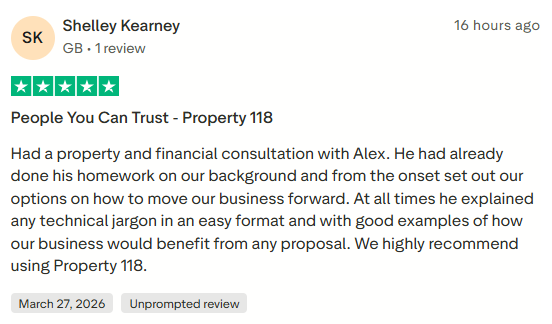
Help other landlords find Property118If you have found Property118 useful, a short Trustpilot review would make a meaningful difference. It helps other landlords decide whether our research is worth following. |

The post Why the rental market may tighten even without rising demand appeared first on Property118.
View Full Article: Why the rental market may tighten even without rising demand
Northern Ireland politicians clash over rent controls
Property118

Northern Ireland politicians clash over rent controls
Rent controls are not the solution to rising rents in Northern Ireland, claims the Communities Minister.
In a heated debate between politicians, Communities Minister Gordon Lyons (DUP) pointed out that rent controls do not work.
The news comes after Northern Ireland landlords could soon face some of the longest Notice to Quit periods in the UK under new legislation.
Rent controls are not the solution
In a heated debate in the Northern Ireland Assembly, Gerry Carroll MLA claimed “landlords have been able to run riot and rip people off”.
Mr Carroll said: “A 53% increase in private rents is disgusting but not surprising. It is something that I, and many others, warned about years ago. The truth is, Minister, that you have allowed landlords to run riot and rip people off.
“When are you going to introduce rent reduction and rent caps? It should not fall on my shoulders to bring forward a private Member’s Bill on the issue, but I am doing so because you have failed to act on this issue.”
Lack of supply and demand
Mr Lyons hit back, arguing that rent controls do more harm than good.
He said: “I understand that the Member is passionate about the issue, and he is bringing forward what he thinks is the solution.
“However, as I have said repeatedly, his solutions will make things worse because, unless we deal with the issue of demand and the lack of supply, we will never be able to tackle the issue.
“In the past, I have provided, and I am happy to do so again, to the House the information, research and evidence that show that it simply will not work for people. Our focus needs to be on what has been proven time and time again to work, which is an increase in the supply of housing across all tenures in Northern Ireland.”
The post Northern Ireland politicians clash over rent controls appeared first on Property118.
View Full Article: Northern Ireland politicians clash over rent controls
Buy to let mortgage rates cut across lenders
Property118

Buy to let mortgage rates cut across lenders
Several lenders have cut buy to let mortgage rates and expanded product ranges, with changes spanning five-year fixes, trackers and short-term let deals.
Fleet Mortgages has reduced pricing by 20bps on its 3% fee, 75% LTV five-year fixed products across standard, limited company and HMO and MUFB ranges.
Rates now stand at 5.04% for standard and limited company borrowing and 5.49% for HMO and MUFB.
Alongside the cuts, the lender has reintroduced a wider set of five-year fixed options.
These include zero-fee and £3,999 fee products, with standard and limited company pricing at 5.69% and 5.39% respectively.
Equivalent HMO and MUFB options start from 6.14% for zero-fee and 5.79% for the £3,999 fee.
Fleet lowers rates
Fleet has also launched three two-year product transfer tracker products across all ranges.
Standard and limited company trackers are priced at Bank Base Rate plus 0.5%, currently 4.25%, while HMO and MUFB products are set at BBR plus 1.15%, currently 4.90%.
Each carries a 2.5% completion fee.
The lender’s chief commercial officer, Steve Cox, said: “Some landlords are looking for longer-term certainty and are comfortable paying for that through a fixed fee, while others are more focused on managing initial outlay or retaining flexibility.
“That is why maintaining a range that works across those different needs is key, particularly when market conditions remain changeable.”
CHL revamps BTL range
CHL Mortgages has cut rates by up to 25bps on short-term let products and by up to 10bps across its limited edition buy to let range.
Limited edition deals for single dwellings now start at 2.85%, rising to 2.95% for HMO and MUFB properties with up to six bedrooms or units.
Short-term let products, including holiday lets and serviced accommodation, now begin at 3.46%.
The range is open to individual and limited company landlords, with fee options, up to 80% LTV and free valuations on selected short-term let products.
Roger Morris, the distribution director for CHL, said: “The reductions reflect our focus on delivering greater value for landlords while giving them the opportunity to diversify their portfolios and explore other investment opportunities.”
Darlington BS cuts BTL rates
Darlington Building Society has reduced rates across its buy to let range, with selected products cut by up to 50bps.
Its five-year fixed standard product at 80% LTV is now priced at 5.49%, down from 5.99%.
Darlington’s head of mortgage distribution, Chris Blewitt, said: “We have focused on making meaningful reductions where we know there is demand, particularly within buy to let and higher LTV residential lending.
“As always, the aim is to remain consistent in how we approach lending, with a common sense view on cases and a willingness to look at scenarios that may not fit a more automated approach.”
Leeds BS is pick of the week
A two-year fixed BTL deal from Leeds Building Society at 60% LTV has been highlighted in the latest Moneyfactscompare.co.uk’s ‘Pick of the Week’.
The product is priced at 4.79% until 31 July 2028 with a £1,499 fee, and includes a free valuation and support with remortgage costs.
Caitlyn Eastell, a personal finance analyst at the platform, said: “The two-year option at 60% loan-to-value takes a prominent position as a best buy and is priced at a competitive 4.79% until 31 July 2028.
“Landlords looking to save on upfront costs may be pleased to note that the £1,499 product fee is offset by its attractive incentive package which includes a free valuation for both second time and remortgage customers, however, remortgage customers could also receive help towards costs.”
Aldermore’s new BTL fees
Aldermore has also reduced fixed rates by 0.20% across its buy to let range and reintroduced a wider selection of fee structures.
New two- and five-year fixed products are available from 3.99%, with multiple options at 75% and 80% LTV.
Products include a two-year fixed at 75% LTV with a 3% fee at 4.99%, and a five-year fixed at 75% LTV with a 7% fee at 4.84%.
Additional five-year options include a 1.5% fee product at 5.94% and an £1,999 fee version at 6.14%.
For portfolio landlords, rates start from 3.94% following the same 0.20% reduction, with new five-year fixed options including a 7% fee product at 4.79% and a 1.5% fee version at 5.89%.
Existing borrower product switch rates have also been reduced, with two-year fixes starting from 6.79%.
New five-year fixed zero-fee products are available at 70% and 75% LTV at 6.54%, and at 85% LTV at 7.04%.
Aldermore’s director of mortgages, Jon Cooper, said: “Our latest rate reductions, alongside the reintroduction of discount products and a broader range of fee options, are designed to help brokers support their clients in a changing market.”
The post Buy to let mortgage rates cut across lenders appeared first on Property118.
View Full Article: Buy to let mortgage rates cut across lenders
Landlords prioritising income stability over capital growth
Property118

Landlords prioritising income stability over capital growth
A subtle but important shift is emerging in how landlords view the purpose of their portfolios. According to the Property118 Landlord Sentiment Survey Q1 2026, many landlords are now focusing less on expanding capital values and more on maintaining stable, reliable income.
Based on 2,380 completed responses, with an average portfolio size of 9.7 properties and generally low levels of borrowing, the data suggests that landlords are increasingly operating from positions of financial maturity. You can review the full findings here.
The implication is clear: priorities are shifting.
From growth mindset to income mindset
Earlier stages of portfolio building are often driven by capital growth. Acquisition strategies, refinancing and leverage are typically used to expand holdings and increase long-term value. Over time, as portfolios mature and equity builds, the focus naturally begins to change. The survey data reflects this evolution.
Many landlords are no longer actively seeking to grow their portfolios. Instead, they are concentrating on how those portfolios perform as income-generating assets.
Stability becomes the objective
With lower loan-to-value ratios and significant equity, landlords are less exposed to short-term market fluctuations.
This allows for a different approach. Rather than pursuing additional acquisitions, landlords can prioritise:
- consistent rental income
- reduced financial risk
- predictable cashflow
This aligns with other findings from the Property118 dataset, including a limited appetite for expansion and a growing tendency to hold or reduce portfolios.
Why this matters for market behaviour
A shift towards income stability influences how landlords behave within the market. If the primary objective is reliable income rather than capital growth, there is less incentive to take on additional borrowing or pursue new acquisitions. This can reduce demand within the investment segment of the housing market. At the same time, landlords may be more selective about which properties they retain, focusing on those that deliver consistent performance.
A more conservative phase
The data suggests that the sector is entering a more conservative phase. Landlords are not necessarily disengaging, but they are becoming more cautious and more selective. Decisions are increasingly guided by long-term income considerations rather than growth ambitions. This reflects a broader shift in mindset, one that aligns with the demographic profile of the sector and the maturity of many portfolios.
A different definition of success
As priorities change, so too does the definition of success. For many landlords, success is no longer measured by the number of properties owned or the rate of expansion. Instead, it is defined by the ability of the portfolio to provide stable, sustainable income over time.
For now, one conclusion stands out: landlords are increasingly focusing on what their portfolios deliver, not just what they are worth.
A conversation worth having?
If you are weighing up your own strategy, whether that’s to sell, expand, or restructure to improve profitibility, it is worth having a discussion with a Property118 consultant to take a closer look at how your portfolio is structured as a whole now, and to forecast the outcomes based on multiple scenario’s.
These conversations are typically most useful for landlords with established portfolios and relatively modest borrowing who are beginning to reflect on how their assets could work more effectively in the years ahead.
/* “function”==typeof InitializeEditor,callIfLoaded:function(o){return!(!gform.domLoaded||!gform.scriptsLoaded||!gform.themeScriptsLoaded&&!gform.isFormEditor()||(gform.isFormEditor()&&console.warn(“The use of gform.initializeOnLoaded() is deprecated in the form editor context and will be removed in Gravity Forms 3.1.”),o(),0))},initializeOnLoaded:function(o){gform.callIfLoaded(o)||(document.addEventListener(“gform_main_scripts_loaded”,()=>{gform.scriptsLoaded=!0,gform.callIfLoaded(o)}),document.addEventListener(“gform/theme/scripts_loaded”,()=>{gform.themeScriptsLoaded=!0,gform.callIfLoaded(o)}),window.addEventListener(“DOMContentLoaded”,()=>{gform.domLoaded=!0,gform.callIfLoaded(o)}))},hooks:{action:{},filter:{}},addAction:function(o,r,e,t){gform.addHook(“action”,o,r,e,t)},addFilter:function(o,r,e,t){gform.addHook(“filter”,o,r,e,t)},doAction:function(o){gform.doHook(“action”,o,arguments)},applyFilters:function(o){return gform.doHook(“filter”,o,arguments)},removeAction:function(o,r){gform.removeHook(“action”,o,r)},removeFilter:function(o,r,e){gform.removeHook(“filter”,o,r,e)},addHook:function(o,r,e,t,n){null==gform.hooks[o][r]&&(gform.hooks[o][r]=[]);var d=gform.hooks[o][r];null==n&&(n=r+”_”+d.length),gform.hooks[o][r].push({tag:n,callable:e,priority:t=null==t?10:t})},doHook:function(r,o,e){var t;if(e=Array.prototype.slice.call(e,1),null!=gform.hooks[r][o]&&((o=gform.hooks[r][o]).sort(function(o,r){return o.priority-r.priority}),o.forEach(function(o){“function”!=typeof(t=o.callable)&&(t=window[t]),”action”==r?t.apply(null,e):e[0]=t.apply(null,e)})),”filter”==r)return e[0]},removeHook:function(o,r,t,n){var e;null!=gform.hooks[o][r]&&(e=(e=gform.hooks[o][r]).filter(function(o,r,e){return!!(null!=n&&n!=o.tag||null!=t&&t!=o.priority)}),gform.hooks[o][r]=e)}});
/* ]]> */
Enquire about a free initial discussion with a Property118 consultant
-
About you
So our Executive Assistant knows who to greet. -
Mr.Mrs.MissMs.Dr.Prof.Rev.
-
-
Your portfolio
A short picture of how you currently hold property. -
-
-
-
-
-
-
Your situation
So the conversation can start where it should. -
-
-
-
-
-
-
-
-
-
-
Max. file size: 500 MB.
-
Important Notice – Scope of Planning Support
Where our recommendations touch on areas requiring specialist or regulated input, we may refer you to appropriately authorised professionals for advice and implementation.
-
-
-
/* = 0;if(!is_postback){return;}var form_content = jQuery(this).contents().find(‘#gform_wrapper_585′);var is_confirmation = jQuery(this).contents().find(‘#gform_confirmation_wrapper_585′).length > 0;var is_redirect = contents.indexOf(‘gformRedirect(){‘) >= 0;var is_form = form_content.length > 0 && ! is_redirect && ! is_confirmation;var mt = parseInt(jQuery(‘html’).css(‘margin-top’), 10) + parseInt(jQuery(‘body’).css(‘margin-top’), 10) + 100;if(is_form){form_content.find(‘form’).css(‘opacity’, 0);jQuery(‘#gform_wrapper_585′).html(form_content.html());if(form_content.hasClass(‘gform_validation_error’)){jQuery(‘#gform_wrapper_585′).addClass(‘gform_validation_error’);} else {jQuery(‘#gform_wrapper_585′).removeClass(‘gform_validation_error’);}setTimeout( function() { /* delay the scroll by 50 milliseconds to fix a bug in chrome */ }, 50 );if(window[‘gformInitDatepicker’]) {gformInitDatepicker();}if(window[‘gformInitPriceFields’]) {gformInitPriceFields();}var current_page = jQuery(‘#gform_source_page_number_585′).val();gformInitSpinner( 585, ‘https://www.property118.com/wp-content/plugins/gravityforms/images/spinner.svg’, true );jQuery(document).trigger(‘gform_page_loaded’, [585, current_page]);window[‘gf_submitting_585′] = false;}else if(!is_redirect){var confirmation_content = jQuery(this).contents().find(‘.GF_AJAX_POSTBACK’).html();if(!confirmation_content){confirmation_content = contents;}jQuery(‘#gform_wrapper_585′).replaceWith(confirmation_content);jQuery(document).trigger(‘gform_confirmation_loaded’, [585]);window[‘gf_submitting_585′] = false;wp.a11y.speak(jQuery(‘#gform_confirmation_message_585′).text());}else{jQuery(‘#gform_585′).append(contents);if(window[‘gformRedirect’]) {gformRedirect();}}jQuery(document).trigger(“gform_pre_post_render”, [{ formId: “585”, currentPage: “current_page”, abort: function() { this.preventDefault(); } }]); if (event && event.defaultPrevented) { return; } const gformWrapperDiv = document.getElementById( “gform_wrapper_585″ ); if ( gformWrapperDiv ) { const visibilitySpan = document.createElement( “span” ); visibilitySpan.id = “gform_visibility_test_585″; gformWrapperDiv.insertAdjacentElement( “afterend”, visibilitySpan ); } const visibilityTestDiv = document.getElementById( “gform_visibility_test_585″ ); let postRenderFired = false; function triggerPostRender() { if ( postRenderFired ) { return; } postRenderFired = true; gform.core.triggerPostRenderEvents( 585, current_page ); if ( visibilityTestDiv ) { visibilityTestDiv.parentNode.removeChild( visibilityTestDiv ); } } function debounce( func, wait, immediate ) { var timeout; return function() { var context = this, args = arguments; var later = function() { timeout = null; if ( !immediate ) func.apply( context, args ); }; var callNow = immediate && !timeout; clearTimeout( timeout ); timeout = setTimeout( later, wait ); if ( callNow ) func.apply( context, args ); }; } const debouncedTriggerPostRender = debounce( function() { triggerPostRender(); }, 200 ); if ( visibilityTestDiv && visibilityTestDiv.offsetParent === null ) { const observer = new MutationObserver( ( mutations ) => { mutations.forEach( ( mutation ) => { if ( mutation.type === ‘attributes’ && visibilityTestDiv.offsetParent !== null ) { debouncedTriggerPostRender(); observer.disconnect(); } }); }); observer.observe( document.body, { attributes: true, childList: false, subtree: true, attributeFilter: [ ‘style’, ‘class’ ], }); } else { triggerPostRender(); } } );} );
/* ]]> */
|
★★★★★
|
Help other landlords find Property118If you have found Property118 useful, a short Trustpilot review would make a meaningful difference. It helps other landlords decide whether our research is worth following. |
The post Landlords prioritising income stability over capital growth appeared first on Property118.
View Full Article: Landlords prioritising income stability over capital growth
Landlord exodus slows as sell-offs fall
Property118

Landlord exodus slows as sell-offs fall
Landlords considering selling up appear to be stepping back from their exit plans, with fewer former rental homes being listed for sale ahead of the Renters’ Rights Act changes.
According to TwentyCi, the proportion of homes coming to market that were previously rented has dropped over the past year, based on analysis of the last 15 months.
The share of properties listed for sale that had been rented within the previous three years fell from 22.5% in Q1 2025 to 12.4% in Q1 2026.
That’s a 45% year-on-year reduction and the figures bring activity closer to historic norms after a period of higher landlord disposals.
Hard being a landlord
The firm’s latest Property & Homemover Report notes: “A wave of regulatory changes has significantly reshaped the private rental sector.
“Stricter compliance requirements, enhanced tenant protections, and rising operational costs, combined, have made it increasingly undesirable to be a landlord.”
It goes on: “The stock of private rental properties in the UK has reduced and continues to fall as a result of regulation and taxation changes.
“This is, and has, occurred at a time when the availability and affordability of private rental stock for tenants are two of the government’s most pressing housing problems.”
Former rental homes
Regionally, London recorded the sharpest decline in landlords listing former rental homes for sale, with a 51% year-on-year fall.
Outside the capital, the reduction stood at 41%, showing a broad-based shift across the country.
Within London itself, inner London saw a 52% drop in landlords exiting compared with the same period last year, while outer London recorded a 45% fall.
Inner London still registered the highest level of landlord sales activity among all regions.
Advertised for relet
Separately, the data tracks what happens to former rental homes once sold, focusing on transactions completed in Q2 and Q3 2025.
Only 11% of those properties in London were subsequently advertised to let again by the end of Q1 2026.
Outside London, the proportion returning to the lettings market was lower still, at 6% of transactions over the same period.
The figures are based on more than 492,000 transactions analysed across the UK.
The data shows that in Q1 2025, half of all homes listed for sale in London were previously rented properties, compared with 16% across the rest of the UK.
The post Landlord exodus slows as sell-offs fall appeared first on Property118.
View Full Article: Landlord exodus slows as sell-offs fall
Which rental properties are selling within weeks right now?
Property118

Which rental properties are selling within weeks right now?
Houses are attracting the strongest demand at the moment, particularly in the North West and the Midlands.
Demand among both first time buyers and new investors is highest at the lower end of the market.
Examples include:
• North West – Typically £80k–£130k houses (Liverpool, Chester/Wirral, Manchester-type stock)
• North East / Yorkshire – Typically £50k–£100k houses (Sheffield, Doncaster, Newcastle)
• Midlands – Typically £90k–£150k houses (Nottingham, Birmingham, Leicester)
• Wales – Typically £60k–£110k houses (North Wales, Cardiff, South Wales)
Where speed matters, houses usually enjoy an advantage because they appeal to more than one type of buyer. A young family may value the garden, parking space or extra bedroom, whereas service charges for flats and having to consider lease length and potential lease extension costs are the biggest off-put to both types of buyers.
Flats can and do sell, of course, particularly in stronger urban locations and at sensible price points, yet the buyer pool is often narrower. That doesn’t make flats unsellable, but it does mean houses frequently have the edge.
The strongest areas are rarely a mystery
Across many recent transactions, familiar patterns emerge. Parts of the North West continue to generate solid interest where homes are affordable and lettable. Selected Midlands towns and suburbs remain active, particularly where buyers can commute, and families want space. Certain Yorkshire and North East markets still offer enough value to attract attention. London is different, higher value, more postcode-sensitive, and far less forgiving of overpricing. Again, nothing revolutionary there, because buyers still want value, financeability and locations that make sense.
Price is where many sellers lose momentum
Some landlords become fixated on the number they would like to achieve rather than the range at which buyers are prepared to act. That can be an expensive mistake because the first burst of buyer interest when a property comes to market is often the most valuable. If that moment is lost through wishful pricing, the listing can quickly feel stale.
A realistic seller is not necessarily a cheap seller, but quite often, they use pricing to create competition.
In many cases, the focus is often on achieving the highest possible price. That is understandable, but in the case of rental property, the true cost of selling might be more complicated. For example, if the property is tenanted, some buyers will only proceed with vacant possession. That can create a number of issues, such as:
- the cost and delay of obtaining vacant possession
- the risk of tenants stopping rent once notice has been served
- legal costs if matters become contested
- mortgage payments continuing during the process
- insurance and utilities still needing to be paid
- council tax, sometimes at higher rates once empty
- loss of rental income during any void period
- redecorating to make the property saleable
- replacing tired carpets or flooring
- updating kitchens or bathrooms to attract owner-occupier buyers
- gardening, clearance, and general presentation costs
- estate agency fees on completion
- months of uncertainty while waiting for a buyer
- chains collapsing or buyers renegotiating late in the day
By the time all of that is added together it’s a lot of hassle and what’s the true cost?
That’s why some landlords might accept a slightly lower price in exchange for:
- speed of sale
- certainty
- no chain
- fewer viewings
- less stress
- quicker access to capital
- avoiding months of holding costs
A conversation worth having?
If you have been considering whether to sell, whether now is sensible timing, or simply which property you would choose to part with first, a proper review can be worthwhile.
The post Which rental properties are selling within weeks right now? appeared first on Property118.
View Full Article: Which rental properties are selling within weeks right now?
Why some North West family homes are attracting stronger demand than landlords expect
Property118

Why some North West family homes are attracting stronger demand than landlords expect
Many landlords assume buyers are mainly interested in city-centre flats, trendy postcodes or high-yield investor stock. That can be true in certain pockets, yet across parts of the North West, another pattern is holding firm: well-located family homes continue to attract stronger interest than many owners expect.
For landlords considering a sale, that could well be important if properties once bought purely as rentals now appeal to a wider and often more motivated buyer pool.
Why family homes can be attractive now
In many towns and suburbs, buyers continue to value practical fundamentals such as good local schools, transport links, gardens or outdoor space, extra bedrooms, parking and neighbourhood stability. Those priorities can create demand from owner-occupiers as well as investors.
Why some landlords underestimate this
Many owners mentally value their property only through a landlord lens:
- What rent does it achieve?
- What yield does it show?
- How easy is it to let?
Those are fair questions, but if a home also suits growing families or first-time movers stepping up, the likely buyer pool may be larger than assumed.
Why this matters in 2026
Selective markets reward selective stock. Homes with broad appeal can still perform well even when more marginal properties struggle, which means some landlords sitting on long-held family houses may have more options than they realise.
Selling does not have to mean abandoning property investment
Some owners choose to sell one stronger-demand property in order to release substantial equity, simplify a portfolio,fund another opportunity, and retain higher-performing rentals. That can be a rational commercial move, not an exit.
Presentation and pricing still matter
Strong demand does not mean automatic success. Outcomes are still influenced by sensible pricing, property condition, tenancy position, local competition, timing and route to market.
Two similar homes can achieve very different results depending on execution.
The hidden opportunity many miss
Some landlords focus only on monthly rent and overlook capital demand entirely. That can leave valuable options unexplored because a property that feels ordinary as a rental may be highly attractive to a buying family.
A conversation worth having?
If you own family-sized rental property in the North West and have assumed selling would be difficult or unremarkable, it may be worth reassessing current demand.
These discussions are often most useful for established landlords who want informed choices, stronger optionality and decisions based on real buyer behaviour rather than assumptions.
/* “function”==typeof InitializeEditor,callIfLoaded:function(o){return!(!gform.domLoaded||!gform.scriptsLoaded||!gform.themeScriptsLoaded&&!gform.isFormEditor()||(gform.isFormEditor()&&console.warn(“The use of gform.initializeOnLoaded() is deprecated in the form editor context and will be removed in Gravity Forms 3.1.”),o(),0))},initializeOnLoaded:function(o){gform.callIfLoaded(o)||(document.addEventListener(“gform_main_scripts_loaded”,()=>{gform.scriptsLoaded=!0,gform.callIfLoaded(o)}),document.addEventListener(“gform/theme/scripts_loaded”,()=>{gform.themeScriptsLoaded=!0,gform.callIfLoaded(o)}),window.addEventListener(“DOMContentLoaded”,()=>{gform.domLoaded=!0,gform.callIfLoaded(o)}))},hooks:{action:{},filter:{}},addAction:function(o,r,e,t){gform.addHook(“action”,o,r,e,t)},addFilter:function(o,r,e,t){gform.addHook(“filter”,o,r,e,t)},doAction:function(o){gform.doHook(“action”,o,arguments)},applyFilters:function(o){return gform.doHook(“filter”,o,arguments)},removeAction:function(o,r){gform.removeHook(“action”,o,r)},removeFilter:function(o,r,e){gform.removeHook(“filter”,o,r,e)},addHook:function(o,r,e,t,n){null==gform.hooks[o][r]&&(gform.hooks[o][r]=[]);var d=gform.hooks[o][r];null==n&&(n=r+”_”+d.length),gform.hooks[o][r].push({tag:n,callable:e,priority:t=null==t?10:t})},doHook:function(r,o,e){var t;if(e=Array.prototype.slice.call(e,1),null!=gform.hooks[r][o]&&((o=gform.hooks[r][o]).sort(function(o,r){return o.priority-r.priority}),o.forEach(function(o){“function”!=typeof(t=o.callable)&&(t=window[t]),”action”==r?t.apply(null,e):e[0]=t.apply(null,e)})),”filter”==r)return e[0]},removeHook:function(o,r,t,n){var e;null!=gform.hooks[o][r]&&(e=(e=gform.hooks[o][r]).filter(function(o,r,e){return!!(null!=n&&n!=o.tag||null!=t&&t!=o.priority)}),gform.hooks[o][r]=e)}});
/* ]]> */
Enquire about a free initial discussion with a Property118 consultant
-
About you
So our Executive Assistant knows who to greet. -
Mr.Mrs.MissMs.Dr.Prof.Rev.
-
-
Your portfolio
A short picture of how you currently hold property. -
-
-
-
-
-
-
Your situation
So the conversation can start where it should. -
-
-
-
-
-
-
-
-
-
-
Max. file size: 500 MB.
-
Important Notice – Scope of Planning Support
Where our recommendations touch on areas requiring specialist or regulated input, we may refer you to appropriately authorised professionals for advice and implementation.
-
-
-
/* = 0;if(!is_postback){return;}var form_content = jQuery(this).contents().find(‘#gform_wrapper_585′);var is_confirmation = jQuery(this).contents().find(‘#gform_confirmation_wrapper_585′).length > 0;var is_redirect = contents.indexOf(‘gformRedirect(){‘) >= 0;var is_form = form_content.length > 0 && ! is_redirect && ! is_confirmation;var mt = parseInt(jQuery(‘html’).css(‘margin-top’), 10) + parseInt(jQuery(‘body’).css(‘margin-top’), 10) + 100;if(is_form){form_content.find(‘form’).css(‘opacity’, 0);jQuery(‘#gform_wrapper_585′).html(form_content.html());if(form_content.hasClass(‘gform_validation_error’)){jQuery(‘#gform_wrapper_585′).addClass(‘gform_validation_error’);} else {jQuery(‘#gform_wrapper_585′).removeClass(‘gform_validation_error’);}setTimeout( function() { /* delay the scroll by 50 milliseconds to fix a bug in chrome */ }, 50 );if(window[‘gformInitDatepicker’]) {gformInitDatepicker();}if(window[‘gformInitPriceFields’]) {gformInitPriceFields();}var current_page = jQuery(‘#gform_source_page_number_585′).val();gformInitSpinner( 585, ‘https://www.property118.com/wp-content/plugins/gravityforms/images/spinner.svg’, true );jQuery(document).trigger(‘gform_page_loaded’, [585, current_page]);window[‘gf_submitting_585′] = false;}else if(!is_redirect){var confirmation_content = jQuery(this).contents().find(‘.GF_AJAX_POSTBACK’).html();if(!confirmation_content){confirmation_content = contents;}jQuery(‘#gform_wrapper_585′).replaceWith(confirmation_content);jQuery(document).trigger(‘gform_confirmation_loaded’, [585]);window[‘gf_submitting_585′] = false;wp.a11y.speak(jQuery(‘#gform_confirmation_message_585′).text());}else{jQuery(‘#gform_585′).append(contents);if(window[‘gformRedirect’]) {gformRedirect();}}jQuery(document).trigger(“gform_pre_post_render”, [{ formId: “585”, currentPage: “current_page”, abort: function() { this.preventDefault(); } }]); if (event && event.defaultPrevented) { return; } const gformWrapperDiv = document.getElementById( “gform_wrapper_585″ ); if ( gformWrapperDiv ) { const visibilitySpan = document.createElement( “span” ); visibilitySpan.id = “gform_visibility_test_585″; gformWrapperDiv.insertAdjacentElement( “afterend”, visibilitySpan ); } const visibilityTestDiv = document.getElementById( “gform_visibility_test_585″ ); let postRenderFired = false; function triggerPostRender() { if ( postRenderFired ) { return; } postRenderFired = true; gform.core.triggerPostRenderEvents( 585, current_page ); if ( visibilityTestDiv ) { visibilityTestDiv.parentNode.removeChild( visibilityTestDiv ); } } function debounce( func, wait, immediate ) { var timeout; return function() { var context = this, args = arguments; var later = function() { timeout = null; if ( !immediate ) func.apply( context, args ); }; var callNow = immediate && !timeout; clearTimeout( timeout ); timeout = setTimeout( later, wait ); if ( callNow ) func.apply( context, args ); }; } const debouncedTriggerPostRender = debounce( function() { triggerPostRender(); }, 200 ); if ( visibilityTestDiv && visibilityTestDiv.offsetParent === null ) { const observer = new MutationObserver( ( mutations ) => { mutations.forEach( ( mutation ) => { if ( mutation.type === ‘attributes’ && visibilityTestDiv.offsetParent !== null ) { debouncedTriggerPostRender(); observer.disconnect(); } }); }); observer.observe( document.body, { attributes: true, childList: false, subtree: true, attributeFilter: [ ‘style’, ‘class’ ], }); } else { triggerPostRender(); } } );} );
/* ]]> */
The post Why some North West family homes are attracting stronger demand than landlords expect appeared first on Property118.
View Full Article: Why some North West family homes are attracting stronger demand than landlords expect
Selling with tenants in place may be easier than you think
Property118

Selling with tenants in place may be easier than you think
One of the most common reasons landlords postpone selling is simple: “I can’t sell yet, the property is tenanted.”
That assumption keeps many owners stuck for months, sometimes years, but in reality, a tenanted property does not automatically prevent a sale. In some cases, it can even broaden the pool of potential buyers. The key is understanding who the likely buyer is, and choosing the right route accordingly.
Why the myth persists
Many landlords naturally picture selling through the traditional owner-occupier route. That often means vacant possession expected, viewings arranged around occupiers, cosmetic presentation important, and chains and onward purchases involved. If that is the only route considered, a sitting tenant can feel like a barrier, but it is not the only route.
Why some buyers like tenanted property
Investor buyers often value immediate rental income, no initial void period, an existing tenancy already in place, evidence of achievable rent, and less time before cashflow starts.
For the right buyer, a tenanted property can be a positive rather than a negative.
Where realism matters
Not every tenanted property sells easily. Much depends on, tenancy terms, rent level versus market rent, tenant cooperation, property condition, location demand, pricing expectations, and legal paperwork being in order. That is why informed guidance matters.
Why some landlords delay unnecessarily
We often hear owners say they will wait until the tenant leaves naturally. Sometimes that is sensible, but in others it means more months of uncertainty, another repair cycle, another letting decision, more delay to wider plans, and missing current buyer demand. Waiting should be a choice, not an assumption.
Selling does not have to be confrontational
Some landlords worry that even exploring a sale creates tension with tenants, but handled professionally, that need not be the case. Clear communication, realistic expectations and choosing a buyer suited to the circumstances can make a material difference.
It may also open selective options
Some landlords are not looking to sell everything. They may simply wish to dispose of one lower-performing rental, a distant property, a higher-maintenance asset, or stock no longer suited to future plans. If that property is tenanted, a sale may still be more achievable than assumed.
A conversation worth having?
If you own a tenanted rental and have mentally ruled out selling, it may be worth revisiting that assumption.
Some properties are better retained, some are easier sold vacant and some may appeal most strongly with a tenant already in place.
These discussions are often most useful for established landlords who want practical options, less delay and decisions based on facts rather than old assumptions.
/* “function”==typeof InitializeEditor,callIfLoaded:function(o){return!(!gform.domLoaded||!gform.scriptsLoaded||!gform.themeScriptsLoaded&&!gform.isFormEditor()||(gform.isFormEditor()&&console.warn(“The use of gform.initializeOnLoaded() is deprecated in the form editor context and will be removed in Gravity Forms 3.1.”),o(),0))},initializeOnLoaded:function(o){gform.callIfLoaded(o)||(document.addEventListener(“gform_main_scripts_loaded”,()=>{gform.scriptsLoaded=!0,gform.callIfLoaded(o)}),document.addEventListener(“gform/theme/scripts_loaded”,()=>{gform.themeScriptsLoaded=!0,gform.callIfLoaded(o)}),window.addEventListener(“DOMContentLoaded”,()=>{gform.domLoaded=!0,gform.callIfLoaded(o)}))},hooks:{action:{},filter:{}},addAction:function(o,r,e,t){gform.addHook(“action”,o,r,e,t)},addFilter:function(o,r,e,t){gform.addHook(“filter”,o,r,e,t)},doAction:function(o){gform.doHook(“action”,o,arguments)},applyFilters:function(o){return gform.doHook(“filter”,o,arguments)},removeAction:function(o,r){gform.removeHook(“action”,o,r)},removeFilter:function(o,r,e){gform.removeHook(“filter”,o,r,e)},addHook:function(o,r,e,t,n){null==gform.hooks[o][r]&&(gform.hooks[o][r]=[]);var d=gform.hooks[o][r];null==n&&(n=r+”_”+d.length),gform.hooks[o][r].push({tag:n,callable:e,priority:t=null==t?10:t})},doHook:function(r,o,e){var t;if(e=Array.prototype.slice.call(e,1),null!=gform.hooks[r][o]&&((o=gform.hooks[r][o]).sort(function(o,r){return o.priority-r.priority}),o.forEach(function(o){“function”!=typeof(t=o.callable)&&(t=window[t]),”action”==r?t.apply(null,e):e[0]=t.apply(null,e)})),”filter”==r)return e[0]},removeHook:function(o,r,t,n){var e;null!=gform.hooks[o][r]&&(e=(e=gform.hooks[o][r]).filter(function(o,r,e){return!!(null!=n&&n!=o.tag||null!=t&&t!=o.priority)}),gform.hooks[o][r]=e)}});
/* ]]> */
Enquire about a free initial discussion with a Property118 consultant
-
About you
So our Executive Assistant knows who to greet. -
Mr.Mrs.MissMs.Dr.Prof.Rev.
-
-
Your portfolio
A short picture of how you currently hold property. -
-
-
-
-
-
-
Your situation
So the conversation can start where it should. -
-
-
-
-
-
-
-
-
-
-
Max. file size: 500 MB.
-
Important Notice – Scope of Planning Support
Where our recommendations touch on areas requiring specialist or regulated input, we may refer you to appropriately authorised professionals for advice and implementation.
-
-
-
/* = 0;if(!is_postback){return;}var form_content = jQuery(this).contents().find(‘#gform_wrapper_585′);var is_confirmation = jQuery(this).contents().find(‘#gform_confirmation_wrapper_585′).length > 0;var is_redirect = contents.indexOf(‘gformRedirect(){‘) >= 0;var is_form = form_content.length > 0 && ! is_redirect && ! is_confirmation;var mt = parseInt(jQuery(‘html’).css(‘margin-top’), 10) + parseInt(jQuery(‘body’).css(‘margin-top’), 10) + 100;if(is_form){form_content.find(‘form’).css(‘opacity’, 0);jQuery(‘#gform_wrapper_585′).html(form_content.html());if(form_content.hasClass(‘gform_validation_error’)){jQuery(‘#gform_wrapper_585′).addClass(‘gform_validation_error’);} else {jQuery(‘#gform_wrapper_585′).removeClass(‘gform_validation_error’);}setTimeout( function() { /* delay the scroll by 50 milliseconds to fix a bug in chrome */ }, 50 );if(window[‘gformInitDatepicker’]) {gformInitDatepicker();}if(window[‘gformInitPriceFields’]) {gformInitPriceFields();}var current_page = jQuery(‘#gform_source_page_number_585′).val();gformInitSpinner( 585, ‘https://www.property118.com/wp-content/plugins/gravityforms/images/spinner.svg’, true );jQuery(document).trigger(‘gform_page_loaded’, [585, current_page]);window[‘gf_submitting_585′] = false;}else if(!is_redirect){var confirmation_content = jQuery(this).contents().find(‘.GF_AJAX_POSTBACK’).html();if(!confirmation_content){confirmation_content = contents;}jQuery(‘#gform_wrapper_585′).replaceWith(confirmation_content);jQuery(document).trigger(‘gform_confirmation_loaded’, [585]);window[‘gf_submitting_585′] = false;wp.a11y.speak(jQuery(‘#gform_confirmation_message_585′).text());}else{jQuery(‘#gform_585′).append(contents);if(window[‘gformRedirect’]) {gformRedirect();}}jQuery(document).trigger(“gform_pre_post_render”, [{ formId: “585”, currentPage: “current_page”, abort: function() { this.preventDefault(); } }]); if (event && event.defaultPrevented) { return; } const gformWrapperDiv = document.getElementById( “gform_wrapper_585″ ); if ( gformWrapperDiv ) { const visibilitySpan = document.createElement( “span” ); visibilitySpan.id = “gform_visibility_test_585″; gformWrapperDiv.insertAdjacentElement( “afterend”, visibilitySpan ); } const visibilityTestDiv = document.getElementById( “gform_visibility_test_585″ ); let postRenderFired = false; function triggerPostRender() { if ( postRenderFired ) { return; } postRenderFired = true; gform.core.triggerPostRenderEvents( 585, current_page ); if ( visibilityTestDiv ) { visibilityTestDiv.parentNode.removeChild( visibilityTestDiv ); } } function debounce( func, wait, immediate ) { var timeout; return function() { var context = this, args = arguments; var later = function() { timeout = null; if ( !immediate ) func.apply( context, args ); }; var callNow = immediate && !timeout; clearTimeout( timeout ); timeout = setTimeout( later, wait ); if ( callNow ) func.apply( context, args ); }; } const debouncedTriggerPostRender = debounce( function() { triggerPostRender(); }, 200 ); if ( visibilityTestDiv && visibilityTestDiv.offsetParent === null ) { const observer = new MutationObserver( ( mutations ) => { mutations.forEach( ( mutation ) => { if ( mutation.type === ‘attributes’ && visibilityTestDiv.offsetParent !== null ) { debouncedTriggerPostRender(); observer.disconnect(); } }); }); observer.observe( document.body, { attributes: true, childList: false, subtree: true, attributeFilter: [ ‘style’, ‘class’ ], }); } else { triggerPostRender(); } } );} );
/* ]]> */
The post Selling with tenants in place may be easier than you think appeared first on Property118.
View Full Article: Selling with tenants in place may be easier than you think
James Cleverley blames Labour’s Renters’ Rights Act after receiving Section 21 notice
Property118

James Cleverley blames Labour’s Renters’ Rights Act after receiving Section 21 notice
The Shadow Housing Secretary has said he has received a Section 21 notice, blaming Labour’s housing reforms for prompting landlords to sell up.
Speaking at a London Housing Conference, James Cleverly said the notice was issued after his landlord decided to sell the property.
He also warned that the Renters’ Rights Act will do more harm than good.
Renters’ Rights Act will not protect tenants
Mr Cleverly said his experience of receiving a Section 21 notice is “replicated thousands of times across the country”.
He blamed the Labour government for the Renters’ Rights Act, arguing that despite claims it is meant to protect tenants, it will have the opposite effect.
Speaking to PoliticsHome, he said: “The key bit of this is the arrogance with which Labour approached this process. They just refuse to listen to the points we’re making because it was we who were making those points.
“Unfortunately, now the people who are suffering are the people who could and should have a decent supply of properties in the private rented sector, and they don’t.
“The people who they claim to want to protect are the very people who are being disadvantaged by this and it didn’t have to be like this. If the Labour Party weren’t so arrogant and unwilling to listen, it wouldn’t be happening.”
Conservatives failed to ban Section 21
A Labour source hit back and told PoliticsHome: “The Shadow Housing Secretary will be furious when he finds out who is responsible for allowing no-fault evictions to continue.
“It’s his Conservative Party that failed to ban them during their 14 years in office.
“Labour in government is putting things right and ending this unfair practice to protect renters from suddenly being thrown out of their homes for no reason. If he has changed his views and now agrees with us, he should cross the floor and join Labour.”
The news comes ahead of the Renters’ Rights Act coming into force on 1 May 2026.
The post James Cleverley blames Labour’s Renters’ Rights Act after receiving Section 21 notice appeared first on Property118.
View Full Article: James Cleverley blames Labour’s Renters’ Rights Act after receiving Section 21 notice
Categories
- Landlords (19)
- Real Estate (9)
- Renewables & Green Issues (1)
- Rental Property Investment (1)
- Tenants (21)
- Uncategorized (12,685)
Archives
- May 2026 (32)
- April 2026 (78)
- March 2026 (72)
- February 2026 (55)
- January 2026 (52)
- December 2025 (62)
- August 2025 (51)
- July 2025 (51)
- June 2025 (49)
- May 2025 (50)
- April 2025 (48)
- March 2025 (54)
- February 2025 (51)
- January 2025 (52)
- December 2024 (55)
- November 2024 (64)
- October 2024 (82)
- September 2024 (69)
- August 2024 (55)
- July 2024 (64)
- June 2024 (54)
- May 2024 (73)
- April 2024 (59)
- March 2024 (49)
- February 2024 (57)
- January 2024 (58)
- December 2023 (56)
- November 2023 (59)
- October 2023 (67)
- September 2023 (136)
- August 2023 (131)
- July 2023 (129)
- June 2023 (128)
- May 2023 (140)
- April 2023 (121)
- March 2023 (168)
- February 2023 (155)
- January 2023 (152)
- December 2022 (136)
- November 2022 (158)
- October 2022 (146)
- September 2022 (148)
- August 2022 (169)
- July 2022 (124)
- June 2022 (124)
- May 2022 (130)
- April 2022 (116)
- March 2022 (155)
- February 2022 (124)
- January 2022 (120)
- December 2021 (117)
- November 2021 (139)
- October 2021 (130)
- September 2021 (138)
- August 2021 (110)
- July 2021 (110)
- June 2021 (60)
- May 2021 (127)
- April 2021 (122)
- March 2021 (156)
- February 2021 (154)
- January 2021 (133)
- December 2020 (126)
- November 2020 (159)
- October 2020 (169)
- September 2020 (181)
- August 2020 (147)
- July 2020 (172)
- June 2020 (158)
- May 2020 (177)
- April 2020 (188)
- March 2020 (234)
- February 2020 (212)
- January 2020 (164)
- December 2019 (107)
- November 2019 (131)
- October 2019 (145)
- September 2019 (123)
- August 2019 (112)
- July 2019 (93)
- June 2019 (82)
- May 2019 (94)
- April 2019 (88)
- March 2019 (78)
- February 2019 (77)
- January 2019 (71)
- December 2018 (37)
- November 2018 (85)
- October 2018 (108)
- September 2018 (110)
- August 2018 (135)
- July 2018 (140)
- June 2018 (118)
- May 2018 (113)
- April 2018 (64)
- March 2018 (96)
- February 2018 (82)
- January 2018 (92)
- December 2017 (62)
- November 2017 (100)
- October 2017 (105)
- September 2017 (97)
- August 2017 (101)
- July 2017 (104)
- June 2017 (155)
- May 2017 (135)
- April 2017 (113)
- March 2017 (138)
- February 2017 (150)
- January 2017 (127)
- December 2016 (90)
- November 2016 (135)
- October 2016 (149)
- September 2016 (135)
- August 2016 (48)
- July 2016 (52)
- June 2016 (54)
- May 2016 (52)
- April 2016 (24)
- October 2014 (8)
- April 2012 (2)
- December 2011 (2)
- November 2011 (10)
- October 2011 (9)
- September 2011 (9)
- August 2011 (3)
Calendar
Recent Posts
- What you might not know about Inheritance Tax and Whole of Life insurance
- Guidance clarifies council powers to enter premises and seize documents
- The great landlord contradiction: wanting companies, stuck in personal ownership
- Why some landlords are selling before the next repair bill arrives
- Concerns raised over £500 landlord tribunal fees and court delays
