
Landlords release £2.37bn to fund property improvements
 admin
admin 

Property118

Landlords release £2.37bn to fund property improvements
Landlords released £2.37 billion from their properties to fund improvements last year, a 60% from 2024’s figure of £1.48 billion.
Paragon Bank’s analysis of industry data found the money was released across 14,817 remortgages during 2025, compared with 9,754 a year earlier.
It said the increase coincided with landlords preparing for further requirements under the Renters’ Rights Act.
Part of the cash was to fund the proposed application of the Decent Homes Standard to privately let properties.
Leveraging BTL borrowing
The lender’s managing director of mortgages, Louisa Sedgwick, said: “These figures reveal how landlords are strategically structuring their buy to let borrowing, leveraging the considerable amounts of equity they have built across their portfolios to finance property improvements.
“The timing of the increase in equity withdrawn for property improvements suggests that the Renters’ Rights Act is a driver, but landlords will also benefit from likely increases in the value of their investments and the additional appeal to tenants.”
Sedgwick added: “Our earlier research revealed that almost six in 10 landlords don’t get their EPCs assessed after undertaking works to make their properties more energy efficient.
“Not only could this lead to ambiguity around compliance with any new MEES but could also mean that they’re missing out on preferentially priced green finance products.”
Landlords spend £8,500 on improvements
Previous research by the bank found that 44% of landlords focus on properties that need work, spending an average of £8,500 on each one.
The most common improvements are new boilers, updated kitchens and bathrooms, and repairs for damp or structural issues.
Separate research found that four in 10 landlords plan to refinance this year, which rises to 57% for landlords with portfolios of four or more properties.
Paragon said brokers could see more finance demand to help pay for proposed Minimum Energy Efficiency Standards, so homes meet an EPC rating of C or above by 2030.
The post Landlords release £2.37bn to fund property improvements appeared first on Property118.
View Full Article: Landlords release £2.37bn to fund property improvements
Government corrects landlord possession guidance error
Property118
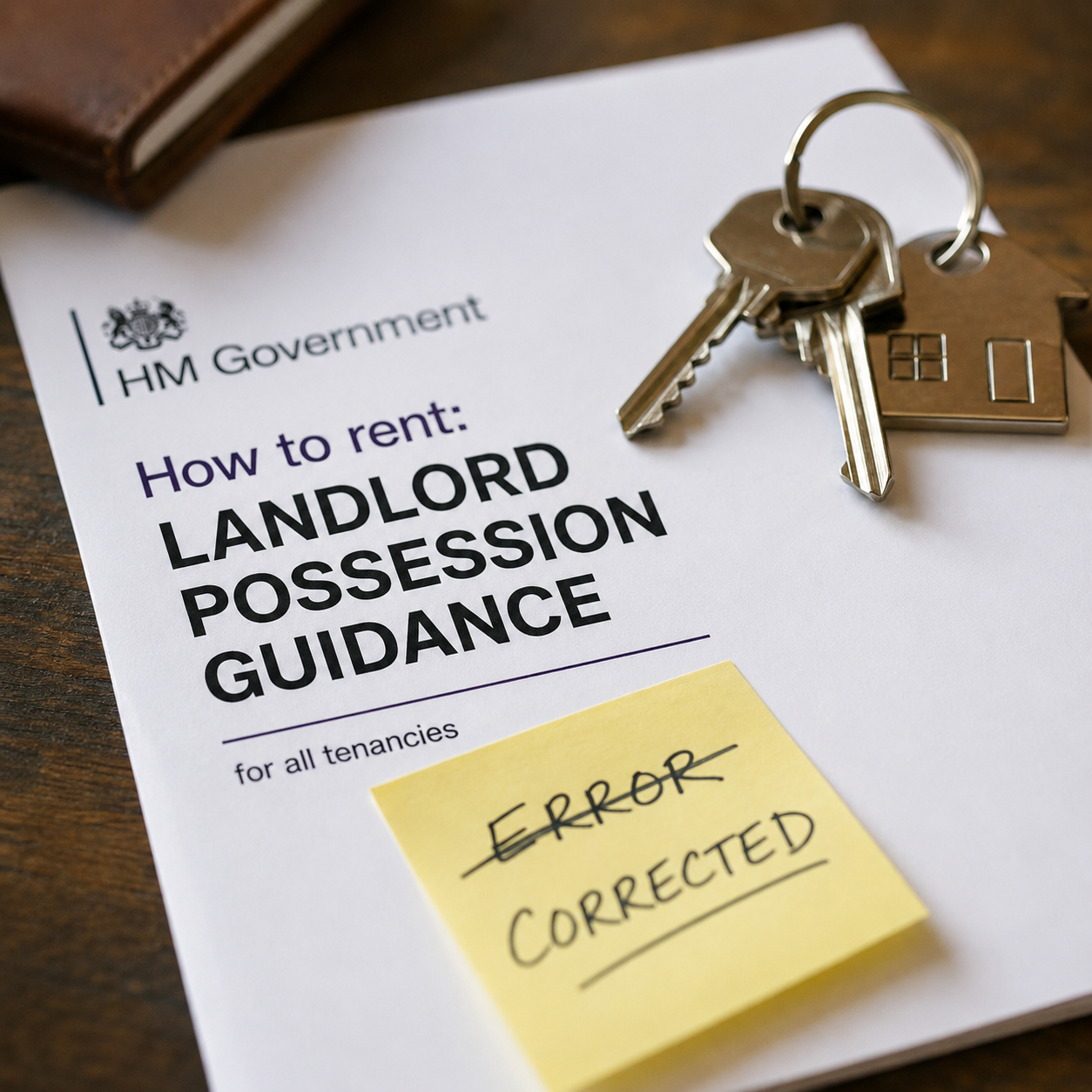
Government corrects landlord possession guidance error
The government has corrected its official possession guidance after wrongly suggesting that landlords could have used the sale of a property as a Section 8 ground before 1 May 2026.
The error has now been quietly removed.
However, it comes as landlords relying on notices served under the old possession system face a fast-approaching deadline to begin court proceedings.
The Ministry of Housing, Communities and Local Government updated its guidance for England on 15 June, stating: “Removed ground for selling the property as it does not apply before 1 May 2026.”
Recover possession
Before the Renters’ Rights Act reforms took effect, there was no general Section 8 ground allowing a private landlord to recover possession simply because they wanted to sell.
Landlords intending to dispose of a property would usually have relied on Section 21, provided the notice was valid and all the relevant legal requirements had been met.
The new mandatory selling ground introduced under the reformed possession system applies to notices served from 1 May 2026.
It cannot be used retrospectively to support a notice served before that date.
Government removes incorrect reference
The corrected guidance now lists examples of the grounds that could have been used in a pre-May Section 8 notice.
They include rent arrears, damage to the property, antisocial behaviour and breaches of the tenancy agreement.
It also refers to cases where the landlord needed to move back into the property or where the home was being repossessed by a mortgage lender.
Selling the property is no longer included.
Navigating two systems
The amendment does not change the law, but it removes potentially misleading advice at a time when landlords and tenants are navigating two possession systems.
Notices served before 1 May are governed by the previous rules, while notices served from that date must comply with the new Section 8 regime.
Landlords who served a Section 8 notice before 1 May must generally begin possession proceedings within 12 months of serving it or by 31 July 2026, whichever date comes first.
If that deadline is missed, the notice expires and cannot be used to begin a court claim.
The landlord must start again using the new grounds, forms and notice periods introduced on 1 May.
However, different limits apply to old Section 21 notices.
A landlord can normally begin proceedings only up to the earlier of 31 July 2026 or six months from the date the notice was served, although some periodic tenancies may be subject to a different validity period.
The guidance also warns that where a tenant’s required notice period runs to 31 July or later, the landlord will not be able to begin Section 21 proceedings before the transitional deadline.
Tenants must continue paying rent
The government has also made a separate amendment to the guidance on 11 June to clarify that tenants remain liable for rent throughout the notice period.
It now states that a tenant who leaves before a Section 8 or Section 21 notice expires will still need to pay rent until the notice period ends.
However, landlords and tenants may agree an earlier end to the liability.
The guidance suggests a landlord might agree to write off arrears where a tenant leaves voluntarily, avoiding the time and cost of court proceedings.
Landlords should ensure that any such arrangement is recorded clearly in writing, including the agreed date on which the tenancy and rent liability will end.
Old notices should be checked now
The correction gives landlords another reason to review any possession notices served before 1 May.
An old notice cannot be rescued by referring to one of the new possession grounds.
Its validity will depend on the law, prescribed form, grounds and notice periods that applied when it was served.
Landlords planning to rely on a pre-May notice should also check the final date for issuing proceedings rather than assuming every notice remains usable until 31 July.
The post Government corrects landlord possession guidance error appeared first on Property118.
View Full Article: Government corrects landlord possession guidance error
Manchester leads house price growth over decade
Property118

Manchester leads house price growth over decade
Manchester’s house prices have risen by 63% in a decade, putting the city at the top of Rightmove’s long-term growth table.
London, meanwhile, has limped along with the country’s slowest rate of growth with an increase of just 7%.
The average asking price in Manchester now stands at £261,891, compared with £160,422 10 years ago.
Wolverhampton matched Manchester’s 63% increase, although its current average asking price is lower at £229,094.
Growth determined by affordability
The firm’s property expert, Colleen Babcock, said: “Manchester is a big winner of the past decade, with strong price growth underlining its growing popularity among buyers.
“By contrast, London has seen much slower growth over the same period, reflecting how higher prices in the capital have limited how much further buyers can stretch.”
She added: “Looking at the bigger picture, affordability has been a central theme shaping these trends.
“Areas with lower starting price points have had more room for growth, which has contributed to a widening north-south divide in price growth trends over the last 10 years.”
The reasons for the divide include changing working patterns, more hybrid and remote working which also influence where people choose to live.
Manchester’s house prices
In the Rightmove table, Newport ranked third after prices climbed by 57% to £235,275, followed by Nottingham, where a 53% rise took the average to £210,238.
The platform analysed millions of property listings, buyer demand indicators and price data points to track changes during the past decade.
Its figures show that Manchester’s growth has spread beyond the city centre.
The four local areas recording the largest increases were Levenshulme, Atherton, Droylsden and Failsworth, all in Greater Manchester.
Prices in each of those suburbs rose by about 80% over the 10-year period.
London sees the slowest growth
By contrast, London’s average asking price increased from £639,593 to £687,080 to remain the most expensive city in Great Britain.
However, the capital recorded the slowest percentage growth in Rightmove’s analysis.
None of the 10 cities with the fastest price growth is in southern England, though five of the 10 slowest-growing cities are in the south.
Higher starting prices restricted growth in several expensive markets, Rightmove said.
London, Oxford, St Albans and Winchester were among the areas recording smaller increases.
House price driver
Mary-Lou Press, the NAEA Propertymark President, said: “Affordability has become one of the strongest drivers of house price growth over the past decade.
“Cities such as Manchester, Wolverhampton and Nottingham have benefited from lower starting price points, while higher-value markets like London have faced natural affordability constraints.”
She added: “Manchester’s success reflects more than affordability alone.
“Strong economic growth, regeneration, investment, transport improvements and changing working patterns have all helped boost demand, with growth increasingly spreading into surrounding suburbs.”
The post Manchester leads house price growth over decade appeared first on Property118.
View Full Article: Manchester leads house price growth over decade
Private landlords help house 122 homeless people
Property118

Private landlords help house 122 homeless people
Private landlords have helped make a city’s homeless housing scheme a success by providing homes for 122 people.
This is the same council which unveiled a £714,000 funding boost three months ago to increase scrutiny of ‘rogue’ landlords and strengthen private sector housing enforcement under the Renters’ Rights Act.
One participating landlord in the scheme now houses eight people as part of Wolverhampton’s Winter Pressures Fund 12-month pilot.
It is run by the Good Shepherd charity and City of Wolverhampton Council and has now helped 99 people move out of homelessness and prevented another 23 from becoming homeless.
Making a difference
Mrs Matharu is the private landlord who housed eight people, said: “I’ve been working with Good Shepherd for some time now, and their support makes a real difference.
“With housing people who have experienced multiple disadvantages, there can be challenges, but I always felt informed and supported.”
She added: “The team works closely with both landlords and partners to make sure the right help is in place.
“I’m pleased the project has been able to support so many people out of homelessness, and I’m proud to be part of that.”
Work with private landlords
The people who have been supported were placed in private rented homes or other long-term accommodation, with financial help available for deposits and rent in advance.
The project works with private landlords to find homes for people who may otherwise struggle to secure a tenancy.
Support continues after they move in, with staff helping tenants manage their accommodation and reduce the risk of becoming homeless again.
Good Shepherd also works with P3 Charity, The Haven and Wolverhampton Homes to provide support tailored to each person’s circumstances.
Landlords helping rebuild lives
Councillor Steve Evans, the council’s deputy leader and cabinet member for housing, said: “Supporting our most vulnerable residents is a key priority in the city and I am very proud that we have been able to work with the Good Shepherd to provide timely, practical support to people experiencing or at risk of homelessness.
“This partnership approach is helping to change lives – from securing safe accommodation to offering tailored support for those with more complex needs.
“Together, we are making a meaningful difference and helping to ensure that those who need help most are not left behind.”
Rich O’Leary, the homeless prevention team leader at Good Shepherd, said: “This project shows what can be achieved when organisations come together with a shared goal.
“Supporting people into accommodation is just one part of the journey, we also provide the ongoing support people need to sustain their tenancies and rebuild their lives.”
Funding has been secured to continue the project during 2026 and 2027 when it will be called the Move on and Prevention Service.
The post Private landlords help house 122 homeless people appeared first on Property118.
View Full Article: Private landlords help house 122 homeless people
Tenants delay moves over cash deposit costs
Property118

Tenants delay moves over cash deposit costs
Landlords and letting agents face a tougher moving market as tenants struggle to find the upfront cash deposit needed to move home.
Research from Reposit says 34% of tenants are delaying a move because they cannot afford a five-week cash deposit.
The deposit replacement firm says the average deposit in 2026 has reached £1,351, leaving some tenants with more than twice that amount tied up while deposits are transferred between properties.
Expecting deposit alternatives
The firm’s chief executive, Ben Grech, said: “The findings highlight a market shaped by affordability pressures, rising regulation and shifting landlord behaviour.
“For letting agents, success will depend on how well they respond to these forces by removing barriers for tenants, managing risk for landlords, and using market insight to drive growth.”
He added that tenants should be offered flexible deposit options and that 91% of renters are expecting alternative deposit products.
Renting is more expensive
The findings are based on a survey of 1,000 tenants and appear in Reposit’s Renting Under Pressure report.
It draws on tenant responses, feedback from agent partners and the firm’s own data.
Affordability concerns are also becoming more entrenched, with 51% of tenants saying they expect renting to become more expensive.
Letting agents who contributed to the report also pointed to landlords becoming more sensitive to risk following the Renters’ Rights Act.
Also, 60% of agents say they have growing concerns over arrears.
The post Tenants delay moves over cash deposit costs appeared first on Property118.
View Full Article: Tenants delay moves over cash deposit costs
The top 5 reasons our members book a one-to-one Property118 consultation
Property118

The top 5 reasons our members book a one-to-one Property118 consultation
One of the questions I frequently ask myself is what are the top 5-reasons that prompt landlords to book a one-to-one consultation with Property118.
Some people assume it is because they want to incorporate, where others assume it is driven by tax planning, inheritance tax concerns or a desire to restructure ownership. Whilst those subjects often form part of the conversation, they are rarely the real reason somebody completes an enquiry form.
After speaking with thousands of landlords over the years, I have noticed that most consultations begin in much the same way. The client has reached a point where they know something needs to change, but they are no longer entirely sure what that change should look like.
In many respects, this is a challenge created by success, but at some point the question is no longer how to build a portfolio, it transforms into what to do next.
From my perspective, the following are the top 5 reasons our members book a one-to-one consulation with a Property118 consultant:
1. They know something needs to change, but don’t know what
This single issue probably accounts for more consultation bookings than anything else. Many landlords simply want clarity. They know the market has changed, regulation has changed, and taxation has changed. They also know interest rates are very different to those experienced during much of the past decade. What they do not know is whether they should start reducing debt, sell some properties, reorganise ownership, involve their children or begin preparing for retirement. The consultation provides an opportunity to step back and look at the bigger picture rather than focusing solely on the next tactical decision.
For many, they are not necessarily looking for a specific product, structure or transaction. They are looking for an experienced sounding board who can help them evaluate the available options and identify a sensible route forward.
2. They want to and have an easier life and maybe even retire
Retirement planning has become one of the most common themes discussed with Property118 members. A surprising number of landlords have accumulated substantial wealth whilst paying relatively little attention to what that wealth is ultimately intended to achieve. They have spent years concentrating on acquisitions, refinancing and portfolio growth, only to discover that they have never properly considered how to convert the value tied up in their assets into a lifestyle that provides freedom and enjoyment.
Many now want to understand how much income their portfolio can realistically provide, whether they are carrying unnecessary risk and whether there are ways to simplify their affairs without compromising their financial security. In many cases, the consultation is not really about property. It is about creating the confidence to enjoy the next stage of life.
3. They want to help their children, but aren’t sure how
Family considerations form another major driver for consultation bookings. Property portfolios often represent a family’s largest asset, yet surprisingly few landlords have a clear plan for how that wealth will eventually pass to the next generation.
Some children are interested in property and may one day wish to continue the family business. Others have different careers, different ambitions and little desire to become landlords. Some families have straightforward dynamics, where others are considerably more complicated. As parents and grandparents grow older, questions about succession, fairness and legacy naturally become more important.
Many consultations therefore focus less on property itself and more on ensuring that family wealth survives in a way that benefits future generations whilst minimising the potential for disputes and misunderstandings. These are often some of the most rewarding discussions because they are fundamentally about protecting the people who matter most.
4. They are sitting on substantial equity but modest cashflow
This is particularly common amongst long-term investors who purchased properties many years ago and have benefited from significant capital appreciation. On paper, they may appear extremely wealthy. In reality, they often find themselves generating relatively modest levels of disposable income from a considerable asset base.
This prompts wider discussions about return on equity, portfolio performance, debt management and whether certain assets continue to justify the capital tied up within them. Many are surprised by how little income that wealth is actually generating relative to its current value when compared to alternative investment with much less hassle and risk.
Often, the discussions are about improving lifestyle, reducing stress and creating greater financial flexibility. The conversation frequently centres on how the portfolio can better serve the landlord, rather than the landlord continuing to serve the portfolio.
5. They want a plan for the future
Perhaps the most overlooked reason for booking a consultation is the desire for a coherent long-term plan. Most landlords spend years building a portfolio. Far fewer spend time considering what happens if they are no longer able to manage it.
Illness, incapacity and death are subjects that many people understandably prefer to avoid, yet they are amongst the most important considerations of all. Successful landlords frequently discover that they have invested significant effort into acquiring and financing properties whilst giving relatively little thought to whether their spouse, children or professional advisers would know what to do if circumstances changed unexpectedly.
These discussions often lead into wider conversations about ownership structures, governance arrangements, Wills, powers of attorney and practical contingency planning. The objective is not simply to preserve wealth. It is to ensure that the business they have spent years building can continue to function effectively, even if they are no longer around to oversee it personally.
What all five reasons have in common
What is particularly interesting about all five of these themes is that they have very little to do with chasing tax savings or implementing complex structures. At their heart, they are all variations of the same question: What comes next?
That question means different things to different people. For some, it means retirement or helping their children. For others, it means simplifying their affairs, reducing risk or creating a clearer long-term plan. The common factor is that they have reached a stage where standing still no longer feels like the right answer, but they are not yet certain what the alternative should be.
That is why the most valuable outcome of a Property118 consultation is clarity. Once you understand your options, the advantages and disadvantages of each route, and how those choices align with your personal objectives, decisions become significantly easier. The uncertainty begins to disappear and a plan starts to emerge.
BOOK YOUR CONSULTATION TODAY
The post The top 5 reasons our members book a one-to-one Property118 consultation appeared first on Property118.
View Full Article: The top 5 reasons our members book a one-to-one Property118 consultation
In need of ideas to sell a portfolio of HMO’s in the South East
Property118

In need of ideas to sell a portfolio of HMO’s in the South East
I would be interested to hear from Property118 readers who have experience of selling HMOs, particularly larger portfolios.
Over the years, I have built up a substantial property portfolio in the South East, including several HMOs. I have reached a stage where I would like to take a step back from the day-to-day management involved, spend more time travelling and generally reduce the demands on my time.
My current thinking is that I may sell some or all of the HMOs, use the proceeds to reduce or eliminate borrowing, and retain a number of family homes where I have long-established tenants and relatively little management involvement.
I am not looking to exit property investment altogether, simply to reshape the portfolio so that it better suits the next stage of my life.
I suspect that selling HMOs can be quite different from selling standard houses and flats, particularly when it comes to finding the right buyers and achieving the best price. I would therefore be very interested to hear from anyone who has sold HMOs recently.
How did you market them? Did you use a specialist agent, an auction, a portfolio buyer, or another route altogether? Were there any lessons you learned along the way that you would be happy to share?
Any tips, suggestions or experiences would be greatly appreciated.
Thanks in advance.
The post In need of ideas to sell a portfolio of HMO’s in the South East appeared first on Property118.
View Full Article: In need of ideas to sell a portfolio of HMO’s in the South East
Charity steps in as tenant allowed to keep cat despite initial refusal
Property118

Charity steps in as tenant allowed to keep cat despite initial refusal
A pet charity has helped a tenant secure permission to keep a cat in her home after explaining the new rules to her landlord.
AdvoCATS helped Ms A* (real name withheld) gain permission to keep her cat, Marshy, after her landlord initially refused the request, saying the flat was too small.
Under the Renters’ Rights Act, tenants have the right to reasonably request a pet, and landlords cannot unreasonably refuse permission.
One-bedroom flats are too small for pets
The pet charity said that when Ms A asked her landlord if she could keep a cat in her flat, she was told that “one-bedroom flats are too small for pets”.
AdvoCATS said that under the Renters’ Rights Act, landlords can no longer make “sweeping generalisations” when considering pet requests.
Tenants can submit a request to keep a pet and landlords have 28 days to respond in writing. If they fail to do so within that period, tenants can apply to the court. Landlords may request additional information about the pet, such as its size, but must do so within the initial 28-day period.
Once the tenant has provided the requested information, the landlord has seven days to issue a final decision.
In this case, AdvoCATS said that after it explained the rules to the landlord, permission was granted for the cat to remain in the property on the condition that Ms A took out pet damage insurance and agreed to have the flat professionally cleaned by the landlord’s chosen contractor at the end of the tenancy.
Landlord agreed for cat to stay
However, the charity drafted a response arguing that these conditions did not comply with either the Renters’ Rights Act or the Tenant Fees Act, providing supporting facts and web links.
AdvoCATS said that while pet damage insurance appeared in earlier versions of the Renters’ Rights Act, the provision was removed before Royal Assent.
Landlords and letting agents therefore cannot require tenants to purchase such insurance, or reimburse them for it, as a condition of keeping a pet.
The charity added that tenants can still choose to take out insurance voluntarily, and that Ms A had already offered to explore that option. It also said that requiring professional cleaning through a landlord-approved contractor is not permitted under the Tenant Fees Act 2019.
Following further correspondence, the landlord agreed to allow Marshy to stay.
Ms A said: “Having my cat with me means far more than simply being allowed a pet, he is family. He has been a constant source of comfort and companionship through some very difficult periods of my life.”
Jen Berezai, founder of East Midlands-based AdvoCATS, said: “This was a classic example of neither party quite knowing where they stand with the new legislation, which was quickly and simply resolved with some text drafted by AdvoCATS, the type of case that early indications lead us to believe is going to represent a significant percentage of our casework going forward. We’re so happy for Ms A and Marshy, and glad to have been able to help.”
Government guidance on pet requests
As previously reported by Property118, the government has also provided guidance on situations in which landlords may refuse a tenant’s request to keep a pet. These include:
- Another tenant has an allergy – however, the guidance does not specify that a landlord’s own allergy is grounds for refusal.
- the property is too small for a large pet or several pets
- the pet is illegal to own
- if you’re a leaseholder, and your freeholder does not allow pets
The government has also set out circumstances in which landlords cannot refuse a request for a pet, such as:
- do not like pets
- have had issues with tenants who had pets in the past
- have had previous tenants with pets who damaged the property
- have general concerns about potential damage in the future
- think a pet might affect future rentals
- know the tenant needs an assistance animal, such as a guide dog
The post Charity steps in as tenant allowed to keep cat despite initial refusal appeared first on Property118.
View Full Article: Charity steps in as tenant allowed to keep cat despite initial refusal
Government pledges deposit schemes will deliver good value for landlords and tenants
Property118

Government pledges deposit schemes will deliver good value for landlords and tenants
The government has announced its current contract with the Tenancy Deposit Scheme (TDP) will end in 2028, while pledging deposit schemes will continue to deliver good value for landlords.
TDP schemes are not government-owned, but certain schemes, including Tenancy Deposit Scheme (TDP), are government-approved.
The scheme itself is expected to continue, and the same provider could still win the next contract. Landlords must continue to place a tenant’s deposit in a government-approved tenancy deposit scheme.
Good value for landlords and tenants
In a written parliamentary question, Labour MP Damien Egan asked: “What steps is the government taking to help ensure that deposit schemes represent good value for tenants and landlords; and what steps is the government taking to ensure the system is transparent?”.
In response, housing minister Matthew Pennycook confirmed as part of the process to re-procure the contracts, the government will work to secure good value for tenants and landlords.
Mr Pennycook said: “The recent extension of the Tenancy Deposit Scheme (TDP) contracts secured significant improvements in value for money and overall performance, including enhanced financial transparency and the introduction of more stretching and relevant Key Performance Indicators, delivering service improvements and the creation of a Social Value fund.
“Ongoing scrutiny of supplier financial performance, transparency of revenue and cost data, and the ability to challenge performance and enforce contractual remedies where required, ensure services continue to deliver strong outcomes.
“The TDP contracts are due to end in March 2028. As part of the process to re-procure these contracts, the government will work to ensure that the service provides good value for tenants and landlords and that the system remains transparent.”
Will be bidding for this contract
Steve Harriott, group chief executive of The Dispute Service, told Property118 the TDS will be bidding for the contract.
He said: “TDS has operated tenancy deposit schemes in England and Wales since 2003, initially as a voluntary scheme and then from 2007 as one of the government authorised tenancy deposit schemes. We understand that the government intends to procure new contracts later this year for England and Wales.
“These are likely to come into effect from 1 April 2028, and we anticipate that there will be a smooth transition to the new regime for tenants, landlords and agents. As the largest UK provider of tenancy deposit services, TDS will be bidding for this contract and we are looking forward to building on the success we have had over the last 23 years in providing effective deposit protection and impartial deposit dispute services”.
Landlords must protect deposit
As previously reported by Property118, the government says that to use most possession grounds landlords must show that the tenant’s deposit was protected in a government-approved scheme and that they complied with the scheme’s requirements when the deposit was received.
A Ministry of Housing, Communities and Local Government spokesperson told Property118: “The Renters’ Rights Act will allow a court to award possession if the landlord has stored a tenancy deposit in a government-approved scheme (and complied with related legal requirements), or returned the deposit to the tenant, either in full or with deductions as agreed between the tenant and landlord.
“The court can also award possession if a separate, specific court process has been undertaken to determine whether the deposit was stored appropriately.
“The Renters’ Rights Act does not change what will count as a valid deduction from a deposit, which includes unpaid rent and bills.”
The post Government pledges deposit schemes will deliver good value for landlords and tenants appeared first on Property118.
View Full Article: Government pledges deposit schemes will deliver good value for landlords and tenants
What are your true returns on equity?
Property118

What are your true returns on equity?
For many landlords, the biggest challenge today isn’t taxation, interest rates or even the Renters’ Rights Act; it’s deciding what to do next.
Most instinctively feel that standing still is probably the wrong answer because the environment has changed too much for that. Equally, selling everything rarely feels right either. After spending years, and often decades, building a portfolio, many landlords find themselves caught somewhere in the middle. They know something needs to change, but they are far less certain about what that change should be.
That uncertainty is hardly surprising.
The traditional buy-to-let model has been squeezed from multiple directions at the same time. Compliance obligations continue to increase, taxation has become less favourable, and mortgage costs remain significantly higher than many landlords became accustomed to during the era of ultra-low interest rates. The Renters’ Rights Act represents yet another shift in the relationship between landlords, tenants and the State. None of these developments, taken in isolation, are necessarily enough to force a decision. Together, they have caused many landlords to step back and ask whether the rewards still justify the effort involved.
The problem is that investment decisions are often made without reference to one of the most important measurements available: return on equity.
Most landlords know how much rent their properties generate, roughly what their portfolios are worth and can tell you whether their overall cashflow has improved or deteriorated over recent years. However, relatively few have analysed the return being generated on the equity tied up in each individual property, and a profitable property and an efficient use of capital are not necessarily the same thing.
A property purchased twenty years ago may have performed exceptionally well. It may have doubled or trebled in value and the tenant may have remained in occupation for years. Viewed from a traditional buy-to-let perspective, it may appear to be a success story. However, what is often overlooked is the amount of equity now tied up within that asset and the return being generated on it.
A landlord with £50,000 of equity in a property producing £10,000 of annual profit is in a very different position from a landlord with £300,000 of equity producing exactly the same income. The rent is identical. The profit is identical, but the return on equity is not, and this is where the analysis often becomes interesting.
The vast majority of landlords have never sold a property because the return on equity fell below a predetermined target. Instead, they sell because something happens. Examples include a troublesome tenant, a major repair bill, an expensive compliance issue, a refinancing problem, a tax change or a new piece of legislation. The event becomes the catalyst for action, yet those events often act as triggers rather than causes.
The more important question is whether the property was generating a sufficient return on the equity tied up within it to justify dealing with those issues in the first place. After all, every property investment involves some level of hassle, risk and uncertainty, but the question is whether the rewards remain proportionate.
Calculating true returns on equity is not always straightforward because gross rent is only the starting point. Maintenance, insurance, accountancy fees, compliance costs, management charges, refurbishment expenditure, void periods and bad debts all have an impact. Leasehold properties introduce service charges and ground rents. HMOs and serviced accommodation frequently incur substantially higher operating costs than standard residential lets. Finance costs can then transform the picture again, particularly where Section 24 restrictions affect the taxation of rental profits.
In our experience, operating costs before finance costs often consume between 25% and 30% of gross rent for standard rental properties. Leasehold properties are frequently higher with ground rents and service charges eating away profits by around £2,000 extra every year. HMOs and serviced accommodation costs can exceed 40% once all operating expenses are properly taken into account, e.g. utilites and extra wear and tear. These figures often surprise landlords who have never previously analysed their portfolios on a property-by-property basis.
The results can be striking.
Some properties generate returns on equity of 20% or even 30%. Others produce returns that are far lower than their owners imagined. In some cases, once finance costs and taxation are properly accounted for, landlords discover that substantial amounts of equity are tied up in properties generating remarkably modest returns for the capital, effort and risk involved, and in more cases than you might imagine, we see properties that are actually costing money to keep rather than making a positive return on equity at all from a cashflow perspective.
For landlords approaching retirement, that distinction can be particularly important because the focus shifts towards creating reliable income, reducing complexity, improving liquidity and ensuring that decades of accumulated wealth are working as effectively as possible.
Perhaps the most revealing question of all is this: if you had the amount of equity currently tied up in a particular property sitting in cash today, would you choose to invest it back into exactly the same asset under exactly the same terms?
The post What are your true returns on equity? appeared first on Property118.
View Full Article: What are your true returns on equity?
Categories
- Landlords (19)
- Real Estate (9)
- Renewables & Green Issues (1)
- Rental Property Investment (1)
- Tenants (21)
- Uncategorized (12,777)
Archives
- June 2026 (54)
- May 2026 (70)
- April 2026 (78)
- March 2026 (72)
- February 2026 (55)
- January 2026 (52)
- December 2025 (62)
- August 2025 (51)
- July 2025 (51)
- June 2025 (49)
- May 2025 (50)
- April 2025 (48)
- March 2025 (54)
- February 2025 (51)
- January 2025 (52)
- December 2024 (55)
- November 2024 (64)
- October 2024 (82)
- September 2024 (69)
- August 2024 (55)
- July 2024 (64)
- June 2024 (54)
- May 2024 (73)
- April 2024 (59)
- March 2024 (49)
- February 2024 (57)
- January 2024 (58)
- December 2023 (56)
- November 2023 (59)
- October 2023 (67)
- September 2023 (136)
- August 2023 (131)
- July 2023 (129)
- June 2023 (128)
- May 2023 (140)
- April 2023 (121)
- March 2023 (168)
- February 2023 (155)
- January 2023 (152)
- December 2022 (136)
- November 2022 (158)
- October 2022 (146)
- September 2022 (148)
- August 2022 (169)
- July 2022 (124)
- June 2022 (124)
- May 2022 (130)
- April 2022 (116)
- March 2022 (155)
- February 2022 (124)
- January 2022 (120)
- December 2021 (117)
- November 2021 (139)
- October 2021 (130)
- September 2021 (138)
- August 2021 (110)
- July 2021 (110)
- June 2021 (60)
- May 2021 (127)
- April 2021 (122)
- March 2021 (156)
- February 2021 (154)
- January 2021 (133)
- December 2020 (126)
- November 2020 (159)
- October 2020 (169)
- September 2020 (181)
- August 2020 (147)
- July 2020 (172)
- June 2020 (158)
- May 2020 (177)
- April 2020 (188)
- March 2020 (234)
- February 2020 (212)
- January 2020 (164)
- December 2019 (107)
- November 2019 (131)
- October 2019 (145)
- September 2019 (123)
- August 2019 (112)
- July 2019 (93)
- June 2019 (82)
- May 2019 (94)
- April 2019 (88)
- March 2019 (78)
- February 2019 (77)
- January 2019 (71)
- December 2018 (37)
- November 2018 (85)
- October 2018 (108)
- September 2018 (110)
- August 2018 (135)
- July 2018 (140)
- June 2018 (118)
- May 2018 (113)
- April 2018 (64)
- March 2018 (96)
- February 2018 (82)
- January 2018 (92)
- December 2017 (62)
- November 2017 (100)
- October 2017 (105)
- September 2017 (97)
- August 2017 (101)
- July 2017 (104)
- June 2017 (155)
- May 2017 (135)
- April 2017 (113)
- March 2017 (138)
- February 2017 (150)
- January 2017 (127)
- December 2016 (90)
- November 2016 (135)
- October 2016 (149)
- September 2016 (135)
- August 2016 (48)
- July 2016 (52)
- June 2016 (54)
- May 2016 (52)
- April 2016 (24)
- October 2014 (8)
- April 2012 (2)
- December 2011 (2)
- November 2011 (10)
- October 2011 (9)
- September 2011 (9)
- August 2011 (3)
Calendar
Recent Posts
- Could Andy Burnham’s proposed land tax force landlords to sell?
- Buy to let lenders widen landlord options
- What the World Cup teaches landlords about selling property
- The Mortgage Works to pilot landlord EPC support package
- Landbay, Kensington and Dudley cut landlord BTL mortgage rates
