
Bank of England holds interest rates as Middle East conflict fuels market uncertainty
 admin
admin 

Property118
Bank of England holds interest rates as Middle East conflict fuels market uncertainty
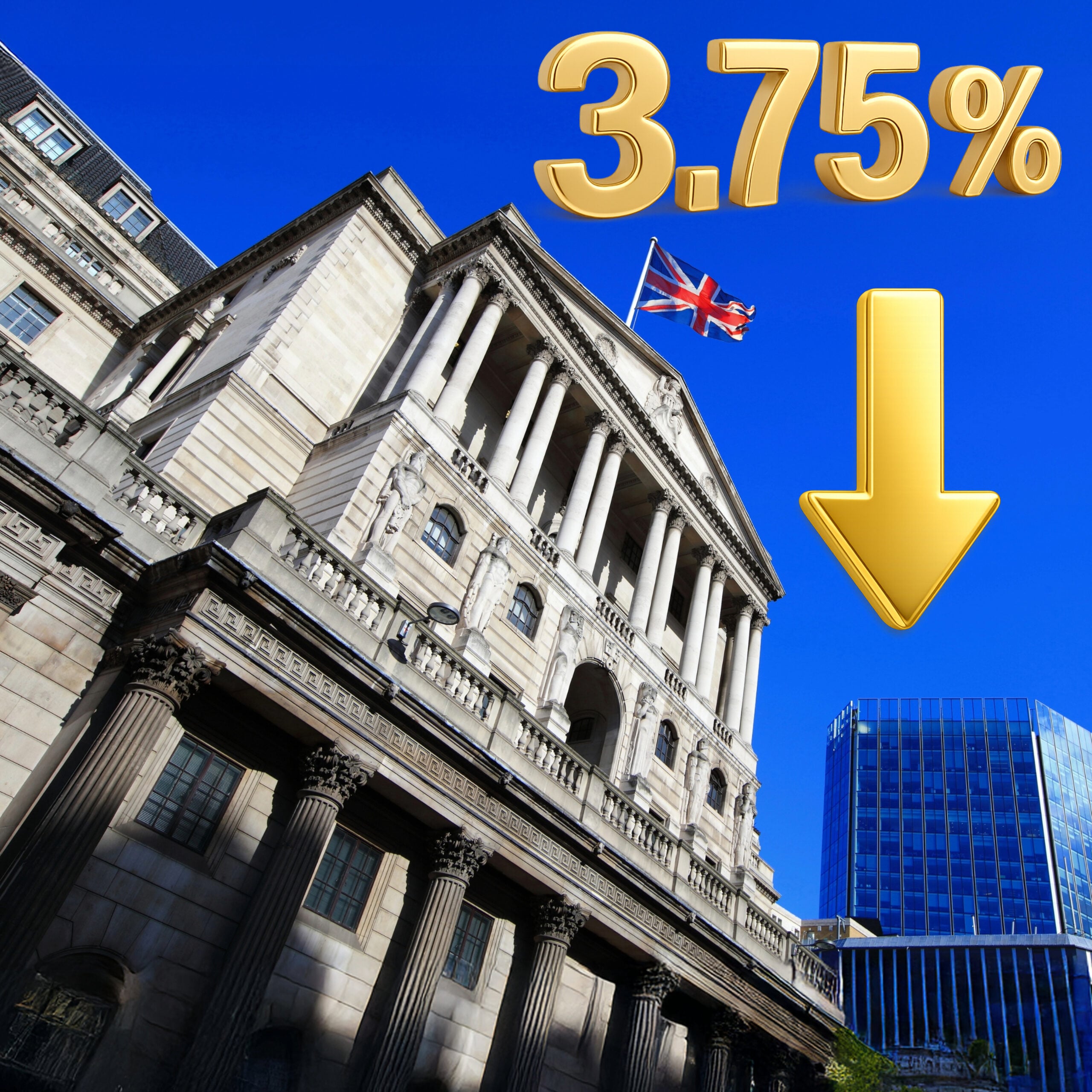
The Bank of England has kept interest rates at 3.75% due to the economic impact of the war in Iran.
The Bank of England’s Monetary Policy Committee (MPC) all voted unanimously to hold interest rates, citing the conflict in the Middle East as a key factor.
This coincides with the US Federal Reserve’s decision yesterday to also maintain their rate at the 3.5%–3.75%.
CPI inflation will be higher in the near term
The decision to hold rates was expected. Although markets had previously predicted a base rate cut in 2026, the war in Iran has pushed up oil prices and inflation, making rate cuts less likely.
The MPC report says: “Conflict in the Middle East has caused a significant increase in global energy and other commodity prices, which will affect households’ fuel and utility prices and have indirect effects via businesses’ costs. Prior to this, there had been continued disinflation in domestic prices and wages. CPI inflation will be higher in the near term as a result of the new shock to the economy.
“The MPC was also assessing the implications for inflation from the weakening in economic activity that was likely to result from higher energy costs. In contrast to the energy price shock in 2022, this shock was occurring at a point when growth was below potential and the economy was operating with a margin of spare capacity.
“Increases in household fuel and utility costs, and other prices, would squeeze real incomes. Household and business confidence could deteriorate and precautionary saving could rise, further weighing on demand.
Industry reaction to Bank of England holding interest rates
Joshua Elash, director of specialist lender MT Finance, says: “Set against the dramatic backdrop of the conflict in Iran, this was the only expected outcome. It’s time to hold. This should be a brief measure.
“It is expected that visibility on a successful conclusion to the conflict with Iran will ease concerns on the impact rising energy costs are going to have on inflation. Only then would we expect the MPC to resume its previous course of gradual reductions to the base rate.”
Kevin Shaw, National Sales Managing Director, LRG: “The Bank of England sitting on its hands today will not come as any great surprise. Only a few weeks ago, a cut looked quite likely, but the renewed instability in the Middle East and the inflationary shadow cast by higher oil prices have clearly made Threadneedle Street a little more cautious.
“That said, the housing market has so far shown a fairly British talent for keeping calm and carrying on. We are not seeing the conflict translate into any meaningful slowdown in agreed sales or new listings, and our application levels from would-be buyers are up 9% on 2025.
“For all the noise around inflation and geopolitics, plenty of people still want to move and, crucially, are willing to get deals done. The market remains price sensitive, as it has for the past two years, but demand is clearly present.”
Welcome sense of stability
Nathan Emerson, CEO of Propertymark, said: “The decision to keep base rates on hold provides a welcome sense of stability for the property market. Mortgage repayments remain predictable, which is critical for households balancing cost-of-living pressures. Stability in interest rates can support continued buyer confidence and property transactions, particularly in a market already facing supply constraints and rising house prices.
“For sellers and landlords, this environment allows for measured planning, while buyers can explore financing options without the immediate concern of rising borrowing costs.”
Geopolitican events can shift housing market expectations
Lucian Cook, head of residential research at Savills, comments: “The Bank of England’s decision to hold the base rate highlights how quickly geopolitical events can shift housing market expectations.
“Hopes of easing inflation and future rate cuts have been knocked back by renewed pressure on oil prices, with markets now contemplating that 2026 will end with the base rate at the same level, or even higher, than when the year began.
“This points to a property market that will remain price-sensitive, with the prospect that values will continue to fall in real terms over the course of this year. The extent to which this translates into nominal price falls depends on how global events play out.
“For now, lenders are expected to act more cautiously, the impact of which will be felt most keenly by first time buyers who are more reliant on higher-loan-to-value lending.”
Financial markets more volatile
Matt Smith, mortgage expert at Rightmove, said: “The decision to hold the Bank Rate was widely expected, and for most homeowners and home buyers, there’s no immediate change to worry about. For those looking to secure a new mortgage rate or coming up to remortgage, even small rises in rates can have a real impact on monthly budgets, and lenders are very aware of that.
“Recent geopolitical uncertainty has made financial markets more volatile. That volatility feeds into swap rates, which are the underlying costs lenders use to price fixed rate mortgages. As a result, some mortgage rates have nudged up slightly this week, even though the Bank Rate itself hasn’t changed.
“Lenders are being understandably cautious in this environment. Some are quicker than others to adjust rates, which can lead to uneven changes across the market.
“These recent rises are understandably concerning for anyone preparing to take out a new mortgage or remortgage. Even a small increase can make a real difference to how a monthly budget feels. For context, the average monthly mortgage payment on a new purchase has increased by around £45 so far, but is still around £70 lower than it would have been at this time last year.
“This is an unfortunate but expected pattern in the way mortgage pricing moves when markets are unsettled. For now, the Bank Rate remains stable, mortgage rates remain significantly lower than the peaks seen last year, and there continues to be strong competition among lenders, even if some buyers choose to pause while the picture settles.”
More hawkish than economists had anticipated
Simon Gammon, managing partner, Knight Frank Finance, said: “The Bank of England’s decision to hold rates at 3.75%, with a unanimous vote from the MPC, is slightly more hawkish than economists had anticipated. Consensus had pointed to some dissent.
“The shift in inflation expectations is notable. The MPC now expects CPI to sit between 3% and 3.5% over the coming quarters, rather than falling back towards target as previously forecast.
“For borrowers, there is little immediate comfort in this decision. While there is a possibility that mortgage rates begin to stabilise if energy markets settle, any prolonged geopolitical pressure is likely to keep upward pressure on pricing. We have already seen best fixed rates move from just above 3.5% a month ago to sub-4% deals disappearing quickly. Lenders are also repricing products with very little notice, which creates a challenging environment for borrowers.
“The key advice is to secure a rate as soon as possible. In most cases, these deals can be renegotiated if conditions improve, but waiting carries clear risk in the current climate.”
The post Bank of England holds interest rates as Middle East conflict fuels market uncertainty appeared first on Property118.
View Full Article: Bank of England holds interest rates as Middle East conflict fuels market uncertainty


Post comment
Categories
- Landlords (19)
- Real Estate (9)
- Renewables & Green Issues (1)
- Rental Property Investment (1)
- Tenants (21)
- Uncategorized (12,749)
Archives
- June 2026 (26)
- May 2026 (70)
- April 2026 (78)
- March 2026 (72)
- February 2026 (55)
- January 2026 (52)
- December 2025 (62)
- August 2025 (51)
- July 2025 (51)
- June 2025 (49)
- May 2025 (50)
- April 2025 (48)
- March 2025 (54)
- February 2025 (51)
- January 2025 (52)
- December 2024 (55)
- November 2024 (64)
- October 2024 (82)
- September 2024 (69)
- August 2024 (55)
- July 2024 (64)
- June 2024 (54)
- May 2024 (73)
- April 2024 (59)
- March 2024 (49)
- February 2024 (57)
- January 2024 (58)
- December 2023 (56)
- November 2023 (59)
- October 2023 (67)
- September 2023 (136)
- August 2023 (131)
- July 2023 (129)
- June 2023 (128)
- May 2023 (140)
- April 2023 (121)
- March 2023 (168)
- February 2023 (155)
- January 2023 (152)
- December 2022 (136)
- November 2022 (158)
- October 2022 (146)
- September 2022 (148)
- August 2022 (169)
- July 2022 (124)
- June 2022 (124)
- May 2022 (130)
- April 2022 (116)
- March 2022 (155)
- February 2022 (124)
- January 2022 (120)
- December 2021 (117)
- November 2021 (139)
- October 2021 (130)
- September 2021 (138)
- August 2021 (110)
- July 2021 (110)
- June 2021 (60)
- May 2021 (127)
- April 2021 (122)
- March 2021 (156)
- February 2021 (154)
- January 2021 (133)
- December 2020 (126)
- November 2020 (159)
- October 2020 (169)
- September 2020 (181)
- August 2020 (147)
- July 2020 (172)
- June 2020 (158)
- May 2020 (177)
- April 2020 (188)
- March 2020 (234)
- February 2020 (212)
- January 2020 (164)
- December 2019 (107)
- November 2019 (131)
- October 2019 (145)
- September 2019 (123)
- August 2019 (112)
- July 2019 (93)
- June 2019 (82)
- May 2019 (94)
- April 2019 (88)
- March 2019 (78)
- February 2019 (77)
- January 2019 (71)
- December 2018 (37)
- November 2018 (85)
- October 2018 (108)
- September 2018 (110)
- August 2018 (135)
- July 2018 (140)
- June 2018 (118)
- May 2018 (113)
- April 2018 (64)
- March 2018 (96)
- February 2018 (82)
- January 2018 (92)
- December 2017 (62)
- November 2017 (100)
- October 2017 (105)
- September 2017 (97)
- August 2017 (101)
- July 2017 (104)
- June 2017 (155)
- May 2017 (135)
- April 2017 (113)
- March 2017 (138)
- February 2017 (150)
- January 2017 (127)
- December 2016 (90)
- November 2016 (135)
- October 2016 (149)
- September 2016 (135)
- August 2016 (48)
- July 2016 (52)
- June 2016 (54)
- May 2016 (52)
- April 2016 (24)
- October 2014 (8)
- April 2012 (2)
- December 2011 (2)
- November 2011 (10)
- October 2011 (9)
- September 2011 (9)
- August 2011 (3)
Calendar
Recent Posts
- What recent Trustpilot reviews reveal about the challenges landlords are facing
- Leaseholders clash with lobby group over leasehold reforms
- Landlord rent incomes hit record
- The biggest obstacle stopping landlords from selling isn’t what you think
- Has your holiday home become your most expensive luxury?
