
Ground Rent Consultation hits property companies…
 admin
admin 

The Government’s plans to hold a consultation on ground rents, and possibly change the long-established leasehold rules for new-build homes, has hit share prices of some property related companies. McCarthy & Stone, the retirement specialist, London developer Berkeley, and investment trust, Ground Rents Income Fund PLC, have all been affected.
The consultation launched last week by the Government reveals that it intends to change the rules, most likely prohibiting the sale of new-build houses as leaseholds, or at least only allowing a nominal “peppercorn” (near zero) annual ground rent on all new leasehold properties, possibly including blocks of flats / apartments?
McCarthy & Stone has made a business out of selling most of their retirement homes on a leasehold basis, with grounds rents in the region of £400 to £600 per year, and these charges increase in-line with the retail prices index (RPI).
According to financial reports, around 4pc of McCarthy & Stone’s revenue each year is made by selling off freeholds to investors, who then have a claim on these charges as long-term cash flows or income similar to an investment bond. The fact that bond yields have been at historically low levels makes ground rents attractive investments.
Likewise, last year Berkeley made £51m from the sale of ground rent assets, which according to reports in The Daily Telegraph is equivalent to 9.6pc of the company’s pre-tax profit, though it does say this was due to the disposal of its historical ground rent asset portfolios, and is projected to be only 3pc of pre-tax profits in 2017.
Clearly, any proposed changes to the long-established leasehold rules introduce a degree of uncertainty to many property related businesses. Stephen Barter, KPMG UK’s chairman of real estate advisory, told The Daily Telegraph that any government changes needed to be “carefully targeted”:
“Low bond yields ‘have significantly increased investors’ appetite for the secure annuity qualities of freehold ground rent investments, which have become considerably more valuable.
“Housebuilders have found this an attractive way to make additional profit at the end of the development period by selling on the stub freehold interest, subject to the ground rent income,” says Mr Barter.
The Home Builders Federation has estimated that around 15pc of new-build houses were sold last year as leaseholds, but now this proportion is expected to drop sharply in the next three year. Other housebuilders who have largely moved away from selling leaseholds found their share prices unaffected by the move.
Leasehold reform has been expected for some time after revelations that some housebuilders had sold properties with ground rents doubling every 10 years, leading to exorbitant amounts after many years. It is yet to be seen how the proposed changes would affect traditional ground rents on blocks and ground rent investing and trading businesses.
©1999 – Present | Parkmatic Publications Ltd. All rights reserved | LandlordZONE® – Ground Rent Consultation hits property companies… | LandlordZONE.
View Full Article: Ground Rent Consultation hits property companies…
IHT Legacy Planning For Landlords – CASE STUDY
This case study explains how a couple could save their loved ones £2 million of inheritance tax for less than £10,000 in professional fees and £322.48 per month.
Paul and Shirley currently have a net worth of £1,250,000 after deducting all of their IHT nil rate band allowances and correctly structuring their wills to make maximum use of them. Therefore, their IHT liability if they were both to die today would be £500,000.
This case study looks into fixing two problems. The first being how to cap their IHT to the current level and the second being the cost to insure that liability.
Let’s suppose the majority of their current net worth is in a property company worth £5 million gross (£1.25m net after deducting £3.75m mortgage liabilities). If Paul and Shirley live for another 20 years and their portfolio doubles in value over that time their exposure to IHT would be £5 million more than it is today.
The good news is that for comparatively very little cost(under £10,000 in most cases), the entire future growth value in their property portfolio can be taken outside of their estate. This is achieved by creating a new class of company shares, which can be gifted now whilst these new shares have minimal value. All future growth then accrues to this new class of shares. However, as they are non-voting shares, Paul and Shirley can continue to run their business as they always have. If Paul and Shirley’s portfolio portfolio has doubled in value by the time they die they will still own the same value of shares as they do today but the additional class of shares owned by their beneficiaries would be worth £5 million. Paul and Shirley would have saved themselves £2 million of IHT by using this structure.
The above doesn’t solve the problem in regards to their current net worth. For that, a whole-of-life insurance policy which pays out enough money to fund the IHT on the second death may well be a viable solution. The policy should be written into trust so the payout remains outside the estate and doesn’t add to the IHT problem.
To give you an idea of costs I obtained a quote based on £500,000 of cover for myself and my wife.
My date of birth is 12/01/1968 and I am a smoker.
The date of birth of my wife is 25/10/1973 and she is a non smoker.
The premium came out at just £322.48 per month.
Remember; this is whole-of-life insurance so the policy only ends if we cancel it or when it pays out. Even if the youngest of us (my wife) lives to be 100 years old (56 years from now) the insurance premiums paid would only be just half of the value of the payout required to pay the IHT. This is a ‘no-brainer’ is it not? Especially when you consider that we could both die after paying only one premium and our beneficiaries would have all the money they need to pay the IHT due of our estate. Either way, it is good value for peace of mind if you want to leave a legacy to your loved ones.
I don’t profess to be an expert on IHT planning (YET!) but I’m getting there very quickly as a result of mixing with people who are experts and have been implementing planning of this nature for their landlord clients for decades.
My plan, over the next six to 12 months, is to integrate an IHT planning service as part of our Landlord Tax Planning consultation process. For the time-being, to test the appetite of our readers for this service, I am offering IHT planning consultations free-of-charge. I will complete initial fact-finds and then check the strategies I have in mind with the advisers I am already in contact with. They check my suggestions, complete further analysis where necessary and will then provide you with details of the savings to be made, the strategies recommended and their quotes for implementation. If necessary, they will also meet with you at no cost to fill in any gaps and help you to complete any necessary paperwork. And don’t worry about me working for nothing, I will receive commission for business resulting from my introductions. It’s a win:win scenario for everybody.
If you would like to know more please complete the short form below. I will then send you an email outlining the information I will need to begin to progress matters.
jQuery(document).bind(‘gform_post_render’, function(event, formId, currentPage){if(formId == 437) {} } );jQuery(document).bind(‘gform_post_conditional_logic’, function(event, formId, fields, isInit){} ); jQuery(document).ready(function(){jQuery(document).trigger(‘gform_post_render’, [437, 1]) } );
The post IHT Legacy Planning For Landlords – CASE STUDY appeared first on Property118.
View Full Article: IHT Legacy Planning For Landlords – CASE STUDY
Insurance company taking us to court after following their complaints procedure
We’re having a dispute with our insurance company who recently informed us they are voiding our landlord insurance policy – their reasons being that it was due to material non-disclosure and misrepresentation.
My partner, who’s first language is not English answered the policy set up questions honestly to the best of their knowledge on the broker comparison website which seems to have led to an inaccurate type of insurance due to a wrong interpretation of the wording.
My partner recalls a phone conversation with the insurer shortly after policy set up when he’d discussed HMO status and number of tenancies – I also made notes of a phone conversation with them confirming to us their awareness of the correct details. They are now denying this as none of those details were included in the policy schedule.
Since this happened, I checked through our other insurance policies on different properties to ensure all details were correct and discovered that certain information we’d made them aware of and agreed over the phone wasn’t included in the schedules. I called one of the insurers who reassured us and insisted we need not be concerned as correct insurance was in place, although I insisted they confirm HMO status specifying number of individual lets in writing which they have now done.
Upon contacting a third insurance company, where similarly the schedule wording didn’t specify it’s HMO status or number of individual lets, they initially informed me that it was insured only as a single let and cancelled our policy when the situation regarding the insurance company voiding our insurance came to light during questions for policy amendment.
They gave us a 7 day grace period while informing us they would provide an alternative insurer before that time was up, however they somehow managed to get it wrong and informed us they were unable to find a replacement at the end of the 7 day period at the end of the 7th day leaving us without insurance.
We have emails and notes of phone calls made to that particular insurer detailing how we had made them aware of property being HMO + number of tenancies during policy set up – (this is something we’re challenging them on) they have admitted to their mistake regarding the 7 day grace period and are now offering a £60 compensation for inconvenience.
With regard to the Insurer Claiming against us, we followed the correct complaints procedure in accordance with their policy and after confirmation of policy cancellation, took the complaint to the Ombudsman.
While the Ombudsman investigation was in progress we received a court claim from the Insurance company’s solicitors requesting that we declare that the Insurance company was entitled to void the policy for the above reasons, they also seek court fee costs.
The Ombudsman investigator has informed us they’re now unable to continue with our investigation as court proceedings have begun.
We believe the insurance company are taking it this far due to an ex tenant who is making a fraudulent injury claim against us and is asking for an astronomical amount, so naturally they would want to avoid making any settlements.
Has anyone else had similar issues with insurers?
What are our rights with regard to the Ombudsman taking the decision not to continue with the investigation and the insurance company’s claim against us?
On advice of solicitors we’ve spoken to with regard to defending against the insurance company in court, the outlook for us is bleak as we don’t have the funds or the time to do so effectively.
How is it acceptable or fair treatment to take legal proceedings against someone when a complaint is made?
They should have included this in their complaints procedure as per their policy … i.e: ‘feel free to complain but we’ll take you to court if you do!’
Had we been given the opportunity to be aware of this possibility, we might not have bothered complaining in the first place.
Apologies for the length of the post, any thoughts or advice are much appreciated.
Many thanks
Kev
The post Insurance company taking us to court after following their complaints procedure appeared first on Property118.
View Full Article: Insurance company taking us to court after following their complaints procedure
7 key facts identified from the English Housing Survey
English Housing Survey:
The latest report from the government’s annual English Housing Survey 2015-16 highlights some important changes in the private rented sector (PRS) relating to tenants and landlords
The Negotiator Magazine, a printed trade magazine distributed to the entire UK estate and lettings agency industry, has identified 7 key facts from the survey about the fast-changing private rented sector.
- Last year 787,000 tenants moved home within the private rented sector. Of these, 73% said they move because they wanted to, while 11% or 86,600 tenants were asked to leave by their landlord – two thirds because the landlord wanted to sell or move back in, and a third presumably for bad behaviour.
- Despite constant media coverage of rogue landlords and agents, the survey reveals that 71.4% of all tenants were satisfied with the way repairs and maintenance were carried out on their property. But the survey also says 17.7% of tenants were unhappy with how their landlord looked after their property, leaving 9.5% not sure either way.
- Being a tenant has yet to become as popular as home ownership. Just one in five renters or 21% quizzed by the report were satisfied with their status as a private tenant.
- The research also reveals that the private rented sector is now significantly larger than the social rented one. There are 4.413 million private homes in the UK compared to 3.85 million local authority and social housing ones.
- Key complaints among tenants are that their landlord doesn’t bother to carry out any repairs or maintenance, is difficult to contact, carries out shoddy repair work and that repairs are completely too slowly.
- The English Housing Survey also reveals that talk of ‘generation rent’ is not exaggerated – although younger renter tends to be over-represented in surveys, the proportion of the rented sector who are between 25 and 34 years old has nearly doubled over the past decade from 24% to 46%, while the number of families with children has risen from 30% to 36% of all renters.
- And talk of slum conditions within the private sector also looks less credible now – the proportion of non-decent homes, as the survey puts it, has dropped from 47% in 2006 to 28% in 2015.
English Housing Survey 2015-16
©1999 – Present | Parkmatic Publications Ltd. All rights reserved | LandlordZONE® – 7 key facts identified from the English Housing Survey | LandlordZONE.
View Full Article: 7 key facts identified from the English Housing Survey
Base Rate held at 0.25% but it’s not all good news
The Bank of England Monetary Policy Committee (MPC) today voted to keep the Bank Base rate at 0.25%. Good news for Buy to Let mortgage borrowers, but the reasons are less good for the economy.
2017 Growth forecasts have been reduced again from 1.9% to 1.7% with lower household demand filtering through from the drop in the value of the Pound squeezing prices and household budgets.
The Pound has fallen 0.9% so far against the Dollar after the announcement of the freeze in interest rates, which has a direct impact on foreign exchange rates.
The MPC was this month split more heavily in favour of keeping the rate the same with the “Doves” winning by an increased margin of 6 to 2.
Mark Carney, the Govenor of the Bank of England, held a press report at the announcement saying:
“The UK economy is beginning the process of adjusting to a new, as yet uncertain, economic relationship with the European Union. Monetary policy cannot prevent the weaker real incomes likely to accompany the move to new trading arrangements with the EU, but it can influence how this hit to incomes is distributed between job losses and price rises. And it can support UK households and businesses as they adjust to such profound change.
“The MPC has long emphasised that the effects on inflation of the Brexit process would be the product of its impact on demand, supply and the exchange rate. And it has consistently stressed that as a result, the implications for monetary policy would not be automatic. The August Inflation Report, released today, updates on how these and other dynamics are affecting the economic outlook.
“Since the referendum was called, UK households, businesses and financial markets have reacted at different speeds and to varying degrees to the prospects for the UK’s departure from the EU.
- Financial markets, particularly sterling, marked down the UK’s relative prospects quickly and sharply.
- Households looked through Brexit-related uncertainties initially. But more recently, as the consequences of sterling’s fall have shown up in the shops and squeezed their real incomes, they have cut back on spending, slowing the economy.
- Businesses have been somewhere in between. But since the referendum, they have invested much less aggressively than usual in response to an otherwise very favourable environment.”
To see the full speech Click Here
The official MPC summary reported:
“The MPC’s overall assessment of the outlook for inflation and activity in the August Inflation Report is broadly similar to that in May. In the MPC’s central forecast, GDP growth remains sluggish in the near term as the squeeze on households’ real incomes continues to weigh on consumption. Growth then picks up to just above its reduced potential rate over the balance of the forecast period. Net trade and business investment firm up, and consumption growth recovers in line with modestly rising household incomes. Net trade is bolstered by strong global growth and the past depreciation of sterling. The combination of high rates of profitability, especially in the export sector, the low cost of capital and limited spare capacity supports investment by UK firms over the forecast period, offsetting the effect of continued uncertainties around Brexit.
CPI inflation rose to 2.6% in June from 2.3% in March, as expected. The MPC expects inflation to rise further in coming months and to peak around 3% in October, as the past depreciation of sterling continues to pass through to consumer prices. Conditional on the current market yield curve, inflation is projected to remain above the MPC’s target throughout the forecast period. This overshoot reflects entirely the effects of the referendum-related falls in sterling. As the effect of rising import prices on inflation diminishes, domestic inflationary pressures gradually pick up over the forecast period. As slack is absorbed, wage growth is projected to recover. In addition, margins in the consumer sector, having been squeezed by the pickup in import prices, are projected to be rebuilt. Consequently, inflation remains at a level slightly above the 2% target.”
The post Base Rate held at 0.25% but it’s not all good news appeared first on Property118.
View Full Article: Base Rate held at 0.25% but it’s not all good news
Mixed Partnerships For Tax Planning Purposes
A mixed partnership is where you form a Limited Company to manage your properties and make that company a partner in your business.
This structure is particularly useful for people who manage their own properties and where the viability of full incorporation is questionable.
One of the main reasons for making the management company partner is to remove any suggestion from HMRC that you wouldn’t qualify for incorporation relief at a later date on the basis. If the company isn’t a partner HMRC might say that you don’t qualify for incorporation relief because you are not incorporating the ‘whole business’. They might also say you are not a business but rather passive investors on the basis that management is dealt with outside the partnership.
In a mixed partnership for rental property purposes the company partner can charge up to 15% of gross rental income for performing its management activity without falling foul of HMRC’s alienation of income rules. This would reduce your personal income and hence the tax you might otherwise pay at the higher or additional rates of personal taxation.
The company would pay tax on its profits at the 19% corporation tax rate (scheduled to reduce to 18% next year and 17% the year after). This is far lower than your personal tax rate as higher rate tax-payer. You would also be able to utilise your annual tax-free dividend allowance (currently £5,000 each) to draw money from the company if you need it. Any further profits in the company could be retained for further investment into the business and the company could also be utilised for further rental property acquisitions. Remember that companies are not affected by the restrictions on finance cost relief.
As you would not be transferring the legal ownership of any properties there would be no tax to pay and you wouldn’t be disturbing any of your existing mortgage arrangements.
Mark Smith at Cotswold Barristers can deal with the partnership agreement and all legal documentation relating to incorporation of the company partner and formation of the partnership in accordance with the above for a very reasonable price. Before you rush to contact him for a quote though we strongly recommend that you complete a tax consultation with Property118 to ensure this is the optimal tax planning strategy for you to consider.
Show Tax Consultation Booking Form
If the mixed partnership strategy is the right one for you then you will want to keep professional fees to an absolute minimum. There are a number of tasks you could deal with yourself in regards to formalising a mixed partnership structure. I have split these tasks into three categories of Compulsory, Strongly Recommended and Recommended.
COMPULSORY TASKS
- complete and file form SA400 with HMRC. This is an application to formally register your partnership. You will need a business trading name. Please see the link below.
- To officially appoint individual partners and register that fact with HMRC a form SA401 will need to be completed and filed for each partner. Please see the link below.
Whilst the form mentions paying Class Two National Insurance contributions, payment of National Insurance by landlords is entirely optional. The legislation in this regard is linked below.
https://www.gov.uk/hmrc-internal-manuals/national-insurance-manual/nim23800
There is also a very good write-up on the Tax Faculty website of the Institute of Chartered Accountants England & Wales which I have linked to below.
https://ion.icaew.com/taxfaculty/b/weblog/posts/propertylettingandnationalinsurance
- To officially appoint the company partner and register that fact with HMRC a form SA402 will need to be completed and filed. Please see the link below.
- Once you receive confirmation from HMRC that your application to register a partnership with HMRC has been approved you will receive a letter from them with a UTR (Unique Tax Reference) number for the partnership.
- The partnership will need to file an annual SA800 partnership tax return – see link below.
https://www.gov.uk/government/publications/self-assessment-partnership-tax-return-sa800
STRONGLY RECOMMENDED
- As soon as HMRC approve your application and provide a partnership UTR you really ought to open a business bank account in the trading name of the business and ensure that all of the business transactions of the partnership are run through that account, e.g. rent collection, mortgages and insurance payments etc. Santander are offering free business banking at the moment. All business related income and expenses should be transferred to the new business bank account as soon as possible.
RECOMMENDED
- A business website
- Business stationery including letterhead and business cards
- A business email account
- A business telephone number
- Appoint a chartered accountant who is familiar with property partnership accounting..
All of the above are helpful if/when you reach a point whereby incorporation is viable. This is because you will then need to convince HMRC that you are indeed running a business which is entitled to claim incorporation relief, as opposed to curating an investment portfolio which does not qualify for the relief.
One of the reasons for making the management company partner is to remove any suggestion from HMRC that you wouldn’t qualify for incorporation relief on the basis of not incorporating the ‘whole business’ or that you are not a business but rather passive investors on the basis that management is dealt with outside the partnership.
Show Tax Consultation Booking Form
The post Mixed Partnerships For Tax Planning Purposes appeared first on Property118.
View Full Article: Mixed Partnerships For Tax Planning Purposes
Shawbrook Bank MD Discusses Restrictions On Finance Cost Relief
In this 97 second video, Shawbrook Bank Managing Director Stephen Johnson discusses buy-to-let tax changes and their potential impact.
His key message is that if you do nothing your cashflow could be particularly hard hit, particularly if you have a large highly geared portfolio.
You can watch this short video below.
Clearly the banks are now taking this seriously and are also adjusting their lending criteria accordingly. We are hopeful that the banks will openly explain, in more simle videos like this one, how and why their lending criteria and mortgage pricing is likely to swing in favour of Limited Company lending in the coming months and years.
Show Tax Consultation Booking Form
Show Tax Consultation Booking Form
Show Tax Consultation Booking Form
Show Tax Consultation Booking Form
The post Shawbrook Bank MD Discusses Restrictions On Finance Cost Relief appeared first on Property118.
View Full Article: Shawbrook Bank MD Discusses Restrictions On Finance Cost Relief
Fire Safety Guidance – changes needed after Grenfell
The Residential Landlord’s Association (RLA) is warning that existing guidance for landlords on fire safety is “contradictory and outdated” and needs updating to better support good landlords.
At the present time, landlords are expected to follow fire safety guidance issued by LACORS, a body that no longer exists. These fire safety regulations date back to 2005 along with building regulations guidance issued in 2006.
The RLA argues that there is also “contradictory guidance” published in 2006, which covers the Housing, Health and Safety Rating System (HHSRS), used by councils to assess risks in dwellings. For example, the RLA claims, HHSRS guidance suggests a higher standard for detectors and alarms than the existing smoke detector regulations.
The RLA is calling also for a “clear agreement in England and across the devolved administrations” to ensure better enforcement and implementation of the responsibilities of councils and fire services of fire safety standards in communal areas in blocks of flats. The RLA says it “believes that there are too many inconsistencies in approaches from local authorities across the country.”
RLA Vice Chairman, Douglas Haig, said:
“Whilst establishing the cause of the devastating fire at Grenfell Tower is of paramount importance we must not, in the meantime, delay a full review of fire safety standards applying to all housing tenures, including the private rented sector.
“This means updating guidance for landlords which at present fails to reflect the realities of modern day technology and building design. This patchwork quilt of guidance is too easy to exploit for the small minority of landlords who have no place in the sector and gives unclear and inconsistent advice to landlords who wish to comply and ensure that their tenants are safe.
“We need also to ensure better and more consistent enforcement of the regulations. Tenants in any part of the country are entitled to have confidence that the approach taken by fire and local authorities is consistent and offers them the same protection regardless of tenancy type.”
The RLA represents over 50,000 private sector residential landlords in England and Wales.
- The LACORS guidance can be accessed here
- The Regulatory Reform (Fire Safety) Order 2005 is available here
- Building regulation guidance covering fire safety can be accessed here
- The Housing Health and Safety Rating System guidance is available here
©1999 – Present | Parkmatic Publications Ltd. All rights reserved | LandlordZONE® – Fire Safety Guidance – changes needed after Grenfell | LandlordZONE.
View Full Article: Fire Safety Guidance – changes needed after Grenfell
4 things Manchester’s student HMO landlords should do this summer
Summer is here and for many landlords, our student properties may be sitting empty until September! With Fallowfield and Rusholme house prices on the up, we’re looking at how can you keep your property ahead of the trend this summer!
The yearly migration of students leaving South Manchester and Salford has started and the majority won’t be back until September. In family cars packed to the brim, they’ll wave a teary farewell to their friends before posting a heartfelt “goodbye 11 Croke Close” Facebook post. But the job for you, the landlord of 11 Croke Close, is not quite done in the ever demanding world of the student HMO market.
As with many student heavy areas, the M14 postcode of Fallowfield, Rusholme and Victoria Park is positively booming, with property value up at +1.54%, where the average price for a 4 bed house is £243,000, and the average asking rent for a similar property is £1,324 pcm (Zoopla). Depending on quality and location of the property, that’s roughly an average rent of £80 per room, per week (Min. £60 – Max £120). How can you make the best of this situation?
- Security over the summer
As with many large metropolises, Mancunians have had to accept that a higher crime rate is all part of the urban package. Without sounding sensationalist, this summer you should reassess your property’s security as now is the time that criminals begin to take notice of empty properties.
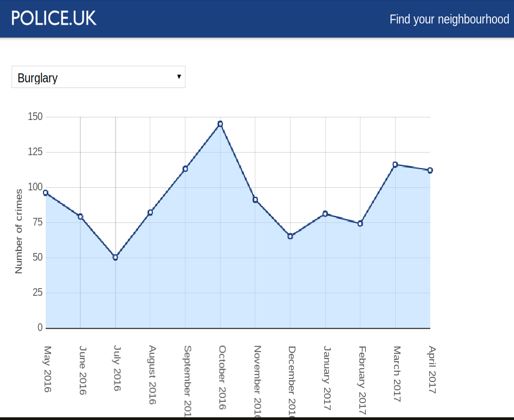
As you can see from the graph, the rate of burglaries in the Fallowfield and Rusholme area starts an upward trend from July, so now is the time to start reviewing your security measures. Many criminals know that students move back home over summer whilst leaving their belongings in their student house, this means that your property which is full of white goods and student belongings could be a prime target!
The smart solution
The most obvious is keep an eye on your property. This could be a weekly check for any tell tale markings on the walls or doors of the property; a particular tactic burglars employ to identify targets. Ideally, the best way to keep burglars away is to have evidence that someone lives there. This someone may be a student or two staying on over summer, or, failing that, lights on a timer. Depending on your budget, it may be worth installing an alarm system. Nowadays, home security systems have become so sophisticated that you can operate them from a smartphone; there’ll be no need to drive out to cancel a false alarm! CCTV may be a step too far if you have live-in tenants, but faux-cameras can deter any interest.
- Recycling
This is another nuisance for locals and landlords alike. Quite often, with students checking out at different times and frantically cleaning, unwanted items get dumped for the landlord to clear up. As annoying as it may be, Manchester students and the universities have taken note and run initiatives to clean up the streets and ensure waste is disposed of correctly. The Give It Don’t Bin It scheme was hugely successful last year, with donations to the British Heart Foundation totalling £230,723 and the non perishable food donations providing 2000 meals for the food bank.
The smart solution
If you are left with recyclable or reusable items, donating them to the British Heart Foundation can go a long way. It may also be worth providing information for future tenants, or visiting them shortly before check out so that you and they know how you expect the property to be left.
- Maintenance
Now is the time to get into the property and sort out any minor issues (major issues will hopefully have been sorted when and where they happen!).
The smart solution
- For tough to remove blue or white tack stains, try using a magic sponge.
- For any white or black damp stains, check out this video
- For any cracks in wooden surfaces, try using a good wood filler and a sanded and varnished finish.
- For carpet stains, try using a highly effective Rug Doctor.
- Gardening
There’s nothing worse for the time poor landlord to discover a completely overgrown garden come September. To keep the lawn in good shape you’ll have to mow fortnightly for great results come marketing and photo opportunities.
The smart solution
We’d all love a cheap and easy fix to a minimal effort garden but, as time consuming as popping over every two weeks may be, remember that a well kept lawn communicates to prospective tenants that you care and put effort into your property. Another solution to a more manageable garden might be a gravel grounding and potted plants. Over the non live-in months of the summer, gravel can be covered by a heavy sheet to keep weeds at bay, whilst potted plants will contain themselves to their pots. A good rosemary bush, or strawberry plant wouldn’t go amiss.
Smart property are a student and professional HMO property management and investment company. They offer their services across Manchester, Salford, Sheffield, Leicester and Nottingham.
As well as their property management services, they offer a long term rent guarantee programme that Property 118 founder Mark Alexander found ‘so impressive’ he decided to invest in the company himself. Andy welcomes private landlords, developers and investors to talk to him and his team about property management, guaranteed rent, investment opportunities and block management contracts.
jQuery(document).bind(‘gform_post_render’, function(event, formId, currentPage){if(formId == 427) {} } );jQuery(document).bind(‘gform_post_conditional_logic’, function(event, formId, fields, isInit){} ); jQuery(document).ready(function(){jQuery(document).trigger(‘gform_post_render’, [427, 1]) } );
The post 4 things Manchester’s student HMO landlords should do this summer appeared first on Property118.
View Full Article: 4 things Manchester’s student HMO landlords should do this summer
What Documents do I need when letting a property?
Lettings Document Checklist:
When setting up a new Assured Shorthold Tenancy (AST) it has always been important to pay attention to the paperwork, which provides vital evidence should there be a dispute during or after the tenancy.
But since the Deregulation Act 2015, with measures that came into force for new ASTs from 1st of October 2015, and for all ASTs from 1st October 2018, including existing tenancies, it became a whole lot more important, and a whole lot more onerous on landlord’s and agent’s admiration systems, to find the time to have comprehensive documentation.
Without evidence, (1) it is likely you won’t be able to serve a valid section 21 notice, the two-month no fault notice informing the tenant that you will be applying to the court for a possession order if they don’t vacate at the expiry of the notice, and (2) you are unlikely to be successful in your court possession claim.
What is the Paperwork you need?
Here is our recommend 20 Point Document Checklist:
1. A documented Risk Assessment, Fire Safety, Furniture, Appliances, Legionella.
2. Tenancy Agreement – your tenancy agreements should be up-to-date taking into account the latest changes in the law.
3. Telephone & Interview Checklist – used to take details during initial enquiries.
4. Tenancy Application Form – the most important document after the Tenancy Agreement – gives all the background information you should have on every adult tenant in your property.
5. Tenant Credit Checks & References – a report from a reputable referencing agency – www.tenantverify.co.uk
6. Right to Rent Check – copies of ID documents, passports, driver’s licences, visas, home office letters etc.
7. Check-in / Check-out Checklist – itemised list and checklist so that nothing is missed out when checking a tenant in and out.
8. Inventory, including all meter readings, keys etc.
9. Deposit Protection Details and s213 notice – the deposit protected within 30 days and the notice served and receipted obtained.
10. Letters to all utility providers – informing the utility providers in writing or online of tenancy change overs.
11. Tenant’s Information Pack, Instructions – copies provided to every tenant.
12. EPC – a ten year certificate which must be in place first when marketing a property to let or for sale.
13. Gas Safety Certificate – annual Gas Check carried out by a Gas Safe registered engineer and a copy issued to the tenant.
14. Government’s “How to Rent” Guide must be issued to tenants at the commencement of every new tenancy.
15. Electrical Safety Certificate (not compulsory in England as yet but recommended every 5 years)
16. Rent Book if rent is paid weekly.
17. Regular Inspection reports – landlord’s insurance policies usually specify that regular inspections are carried out.
18. Licensing Details – if the property comes under any of the local authority licensing schemes.
19. Tenant’s Journal – keep a journal for every tenancy which records every contact and tenancy event for use as evidence in the future.
20. Tenant’s File – keep a file for every tenancy / property which contains all of these documents.
• Make sure you have a good comprehensive landlord’s insurance policy in place from a reputable supplier – see: www.landlordzone.co.uk/directory/suppliers-directory/insurance
• Make sure you keep proper accounts to record all your Income and Expenses from every property you own.
Seems a whole lot to think about and quite a bit of work, but if you want things to go smoothly, and just in case there’s a problem where unfortunately you need to evict, landlords and agents now need to arm themselves with this sort of documentary evidence.
See the LandlordZONE® documents’ section for all documents cited above: www.landlordzone.co.uk/documents
©1999 – Present | Parkmatic Publications Ltd. All rights reserved | LandlordZONE® – What Documents do I need when letting a property? | LandlordZONE.
View Full Article: What Documents do I need when letting a property?
Categories
- Landlords (19)
- Real Estate (9)
- Renewables & Green Issues (1)
- Rental Property Investment (1)
- Tenants (21)
- Uncategorized (12,524)
Archives
- March 2026 (21)
- February 2026 (55)
- January 2026 (52)
- December 2025 (62)
- August 2025 (51)
- July 2025 (51)
- June 2025 (49)
- May 2025 (50)
- April 2025 (48)
- March 2025 (54)
- February 2025 (51)
- January 2025 (52)
- December 2024 (55)
- November 2024 (64)
- October 2024 (82)
- September 2024 (69)
- August 2024 (55)
- July 2024 (64)
- June 2024 (54)
- May 2024 (73)
- April 2024 (59)
- March 2024 (49)
- February 2024 (57)
- January 2024 (58)
- December 2023 (56)
- November 2023 (59)
- October 2023 (67)
- September 2023 (136)
- August 2023 (131)
- July 2023 (129)
- June 2023 (128)
- May 2023 (140)
- April 2023 (121)
- March 2023 (168)
- February 2023 (155)
- January 2023 (152)
- December 2022 (136)
- November 2022 (158)
- October 2022 (146)
- September 2022 (148)
- August 2022 (169)
- July 2022 (124)
- June 2022 (124)
- May 2022 (130)
- April 2022 (116)
- March 2022 (155)
- February 2022 (124)
- January 2022 (120)
- December 2021 (117)
- November 2021 (139)
- October 2021 (130)
- September 2021 (138)
- August 2021 (110)
- July 2021 (110)
- June 2021 (60)
- May 2021 (127)
- April 2021 (122)
- March 2021 (156)
- February 2021 (154)
- January 2021 (133)
- December 2020 (126)
- November 2020 (159)
- October 2020 (169)
- September 2020 (181)
- August 2020 (147)
- July 2020 (172)
- June 2020 (158)
- May 2020 (177)
- April 2020 (188)
- March 2020 (234)
- February 2020 (212)
- January 2020 (164)
- December 2019 (107)
- November 2019 (131)
- October 2019 (145)
- September 2019 (123)
- August 2019 (112)
- July 2019 (93)
- June 2019 (82)
- May 2019 (94)
- April 2019 (88)
- March 2019 (78)
- February 2019 (77)
- January 2019 (71)
- December 2018 (37)
- November 2018 (85)
- October 2018 (108)
- September 2018 (110)
- August 2018 (135)
- July 2018 (140)
- June 2018 (118)
- May 2018 (113)
- April 2018 (64)
- March 2018 (96)
- February 2018 (82)
- January 2018 (92)
- December 2017 (62)
- November 2017 (100)
- October 2017 (105)
- September 2017 (97)
- August 2017 (101)
- July 2017 (104)
- June 2017 (155)
- May 2017 (135)
- April 2017 (113)
- March 2017 (138)
- February 2017 (150)
- January 2017 (127)
- December 2016 (90)
- November 2016 (135)
- October 2016 (149)
- September 2016 (135)
- August 2016 (48)
- July 2016 (52)
- June 2016 (54)
- May 2016 (52)
- April 2016 (24)
- October 2014 (8)
- April 2012 (2)
- December 2011 (2)
- November 2011 (10)
- October 2011 (9)
- September 2011 (9)
- August 2011 (3)
Calendar
Recent Posts
- Should I abandon the strategy that built my wealth?
- Gen Z renters lack knowledge of credit scores and rent rules
- Google searches for Making Tax Digital hit record high
- The Property118 Housing Research Panel
- Are tenants beginning to see the problem of landlords leaving?
