
Landlord possession cases surge ahead of PRS reforms
 admin
admin 

Property118

Landlord possession cases surge ahead of PRS reforms
Landlords are accelerating possession activity ahead of the Renters’ Rights Act being implemented on 1 May, with activity rising sharply as existing routes remain open.
Figures released by Landlord Action show instructions rose by 60% in March compared with the same month last year.
Enquiries climbed 75%, the largest monthly increase the firm has recorded.
The uplift comes as the Act removes Section 21 and redirects landlord possession cases towards a court-led route.
Said this would happen
The firm’s founder, Paul Shamplina, said: “This is exactly what we said would happen. As Section 21 is phased out, landlords are acting now while they still have certainty, because many are not confident in what replaces it.
“From the conversations I have been having with landlords across the country, there is still a great deal of confusion about how possession will work in practice, alongside growing concern about compliance, court delays, rent arrears and rising mortgage costs.
“That combination is pushing landlords into making decisions earlier than they otherwise would.”
He added: “Some landlords are choosing to exit the sector altogether, while others are regaining possession now rather than risk being unable to do so later.
“While possession activity will inevitably slow once these changes come into force, much of the damage will already have been done.
“Good landlords leaving the market and tenants losing homes in circumstances where, previously, no action would have been taken.”
Possession case grow
Across the first quarter, possession instructions were up 32% year-on-year, while enquiries increased by 23%.
Instructions are rising more quickly than enquiries.
Landlord Action says that landlords who had paused are now moving, and moving faster, progressing cases that had previously been delayed.
Section 21 still dominates possession work handled by the firm and in March, it was used at almost three times the rate of Section 8.
Section 21 evictions increase
In the first three months, Section 21 instructions increased by 43% year-on-year.
This volume of cases will shift into Section 8 once Section 21 is removed, bringing more claims into the courts where many would not have required that route before.
Even a partial transfer of these cases adds to existing court workloads.
What has largely been an administrative process becomes court-driven, with longer timelines and more procedural steps for both landlords and tenants.
/* “function”==typeof InitializeEditor,callIfLoaded:function(o){return!(!gform.domLoaded||!gform.scriptsLoaded||!gform.themeScriptsLoaded&&!gform.isFormEditor()||(gform.isFormEditor()&&console.warn(“The use of gform.initializeOnLoaded() is deprecated in the form editor context and will be removed in Gravity Forms 3.1.”),o(),0))},initializeOnLoaded:function(o){gform.callIfLoaded(o)||(document.addEventListener(“gform_main_scripts_loaded”,()=>{gform.scriptsLoaded=!0,gform.callIfLoaded(o)}),document.addEventListener(“gform/theme/scripts_loaded”,()=>{gform.themeScriptsLoaded=!0,gform.callIfLoaded(o)}),window.addEventListener(“DOMContentLoaded”,()=>{gform.domLoaded=!0,gform.callIfLoaded(o)}))},hooks:{action:{},filter:{}},addAction:function(o,r,e,t){gform.addHook(“action”,o,r,e,t)},addFilter:function(o,r,e,t){gform.addHook(“filter”,o,r,e,t)},doAction:function(o){gform.doHook(“action”,o,arguments)},applyFilters:function(o){return gform.doHook(“filter”,o,arguments)},removeAction:function(o,r){gform.removeHook(“action”,o,r)},removeFilter:function(o,r,e){gform.removeHook(“filter”,o,r,e)},addHook:function(o,r,e,t,n){null==gform.hooks[o][r]&&(gform.hooks[o][r]=[]);var d=gform.hooks[o][r];null==n&&(n=r+”_”+d.length),gform.hooks[o][r].push({tag:n,callable:e,priority:t=null==t?10:t})},doHook:function(r,o,e){var t;if(e=Array.prototype.slice.call(e,1),null!=gform.hooks[r][o]&&((o=gform.hooks[r][o]).sort(function(o,r){return o.priority-r.priority}),o.forEach(function(o){“function”!=typeof(t=o.callable)&&(t=window[t]),”action”==r?t.apply(null,e):e[0]=t.apply(null,e)})),”filter”==r)return e[0]},removeHook:function(o,r,t,n){var e;null!=gform.hooks[o][r]&&(e=(e=gform.hooks[o][r]).filter(function(o,r,e){return!!(null!=n&&n!=o.tag||null!=t&&t!=o.priority)}),gform.hooks[o][r]=e)}});
/* ]]> */
Contact Landlord Action
Specialists in tenant eviction and debt collection. Regulated by The Law Society.
/* = 0;if(!is_postback){return;}var form_content = jQuery(this).contents().find(‘#gform_wrapper_110′);var is_confirmation = jQuery(this).contents().find(‘#gform_confirmation_wrapper_110′).length > 0;var is_redirect = contents.indexOf(‘gformRedirect(){‘) >= 0;var is_form = form_content.length > 0 && ! is_redirect && ! is_confirmation;var mt = parseInt(jQuery(‘html’).css(‘margin-top’), 10) + parseInt(jQuery(‘body’).css(‘margin-top’), 10) + 100;if(is_form){jQuery(‘#gform_wrapper_110′).html(form_content.html());if(form_content.hasClass(‘gform_validation_error’)){jQuery(‘#gform_wrapper_110′).addClass(‘gform_validation_error’);} else {jQuery(‘#gform_wrapper_110′).removeClass(‘gform_validation_error’);}setTimeout( function() { /* delay the scroll by 50 milliseconds to fix a bug in chrome */ }, 50 );if(window[‘gformInitDatepicker’]) {gformInitDatepicker();}if(window[‘gformInitPriceFields’]) {gformInitPriceFields();}var current_page = jQuery(‘#gform_source_page_number_110′).val();gformInitSpinner( 110, ‘https://www.property118.com/wp-content/plugins/gravityforms/images/spinner.svg’, true );jQuery(document).trigger(‘gform_page_loaded’, [110, current_page]);window[‘gf_submitting_110′] = false;}else if(!is_redirect){var confirmation_content = jQuery(this).contents().find(‘.GF_AJAX_POSTBACK’).html();if(!confirmation_content){confirmation_content = contents;}jQuery(‘#gform_wrapper_110′).replaceWith(confirmation_content);jQuery(document).trigger(‘gform_confirmation_loaded’, [110]);window[‘gf_submitting_110′] = false;wp.a11y.speak(jQuery(‘#gform_confirmation_message_110′).text());}else{jQuery(‘#gform_110′).append(contents);if(window[‘gformRedirect’]) {gformRedirect();}}jQuery(document).trigger(“gform_pre_post_render”, [{ formId: “110”, currentPage: “current_page”, abort: function() { this.preventDefault(); } }]); if (event && event.defaultPrevented) { return; } const gformWrapperDiv = document.getElementById( “gform_wrapper_110″ ); if ( gformWrapperDiv ) { const visibilitySpan = document.createElement( “span” ); visibilitySpan.id = “gform_visibility_test_110″; gformWrapperDiv.insertAdjacentElement( “afterend”, visibilitySpan ); } const visibilityTestDiv = document.getElementById( “gform_visibility_test_110″ ); let postRenderFired = false; function triggerPostRender() { if ( postRenderFired ) { return; } postRenderFired = true; gform.core.triggerPostRenderEvents( 110, current_page ); if ( visibilityTestDiv ) { visibilityTestDiv.parentNode.removeChild( visibilityTestDiv ); } } function debounce( func, wait, immediate ) { var timeout; return function() { var context = this, args = arguments; var later = function() { timeout = null; if ( !immediate ) func.apply( context, args ); }; var callNow = immediate && !timeout; clearTimeout( timeout ); timeout = setTimeout( later, wait ); if ( callNow ) func.apply( context, args ); }; } const debouncedTriggerPostRender = debounce( function() { triggerPostRender(); }, 200 ); if ( visibilityTestDiv && visibilityTestDiv.offsetParent === null ) { const observer = new MutationObserver( ( mutations ) => { mutations.forEach( ( mutation ) => { if ( mutation.type === ‘attributes’ && visibilityTestDiv.offsetParent !== null ) { debouncedTriggerPostRender(); observer.disconnect(); } }); }); observer.observe( document.body, { attributes: true, childList: false, subtree: true, attributeFilter: [ ‘style’, ‘class’ ], }); } else { triggerPostRender(); } } );} );
/* ]]> */
The post Landlord possession cases surge ahead of PRS reforms appeared first on Property118.
View Full Article: Landlord possession cases surge ahead of PRS reforms
Renters’ Rights Act sees ‘hobby landlords’ leave the sector
Property118

Renters’ Rights Act sees ‘hobby landlords’ leave the sector
Hobby landlords are increasingly leaving the PRS because of the Renters’ Rights Act, while other landlords will increase tenant checks and tighten letting criteria, raising questions about rental home access for some potential tenants.
Those are the views of Louisa Sedgwick, the managing director of mortgages at Paragon Bank, who was speaking on a podcast hosted by Tom Bill, the head of UK residential research at Knight Frank.
She said landlord behaviour is shifting ahead of the 1 May start date.
Ms Sedgwick pointed to changes around rent in advance and affordability checks, which are beginning to influence decision-making.
Landlord behaviour changes
She said: “I think what will happen without a shadow of a doubt, and you are already seeing this, is that the due diligence that landlords will do on any new tenant will be significantly higher than it has been in the past.
“A tenant can now no longer pay rent in advance, and that might have been a way to secure a property if they had a previous poor credit history or they weren’t working or relying on universal credit.”
She added: “We’ll see more vulnerable tenants not being able to secure properties as a result of the Renters’ Rights Act.”
Landlords are leaving
Ms Sedgwick said a combination of tax changes and higher stamp duty is feeding into landlord exits.
She said: “There is absolutely a move towards hobby landlords leaving the sector.
“It just becomes harder, and I think this is kind of the point where landlords say, unless I’m going to do this either as a full-time role or certainly concentrate and focus time and effort on making sure that I can make this a viable business, then I’m actually going to move out of the sector.”
Rental stock decline
Tom Bill said rental home supply continues to influence conditions.
He said: “The decline in available stock means tenants are competing more intensely in some parts of London.
“Landlords who remain are operating in a market where yields have adjusted alongside weaker sales prices.”
Ms Sedgwick also outlined her involvement in discussions with government and industry bodies during the legislative process.
More problems to come
She said: “My feeling was that this was in the Labour Party manifesto, and as such, they were going to implement it.
“So, regardless of whether or not they understood and were listening, I think that they’d reached the point where there was just no going back on this particular change in legislation.”
Further changes to rented homes will come with the Minimum Energy Efficiency Standard requirements, targeting an EPC C rating by 2030.
Ms Sedgwick said: “This particular change in legislation I think is going to be bigger and potentially more demanding because I don’t believe we’ve got the infrastructure to support it.”
Community of landlords
She continued: “We’re talking 1,800 properties per day that will need to be upgraded by October 2030.
“We don’t have the tradespeople because they’re busy building the 1.5 million homes that have been committed to from this government.”
She said the sector is shifting in structure, adding: “You’ve seen the move towards larger apartment blocks with concierges and gyms that have been built by insurance and investment companies.
“It is going to be a community of landlords that do this as part of their everyday roles as opposed to doing this just as a hobby or off the side of the desk.”
The post Renters’ Rights Act sees ‘hobby landlords’ leave the sector appeared first on Property118.
View Full Article: Renters’ Rights Act sees ‘hobby landlords’ leave the sector
Why landlord sentiment may now matter more than policy announcements
Property118

Why landlord sentiment may now matter more than policy announcements
Policy changes often dominate headlines, but their real impact depends on how landlords respond. According to the Property118 Landlord Sentiment Survey Q1 2026, landlord sentiment may now be a more immediate indicator of market direction than policy announcements alone. Based on 2,380 completed responses, 57% of landlords plan to reduce their portfolios, while only 6.8% intend to expand. You can review the full findings here.
The implication is clear: policy sets the framework, but sentiment drives behaviour.
From policy to response
Policy changes influence the environment in which landlords operate, but they do not determine outcomes directly. What matters is how landlords interpret and respond to those changes. The survey data captures those responses in real time. It reflects not just awareness of policy, but the decisions that follow. This is where sentiment becomes critical.
Behaviour reflects perception
Landlord behaviour is shaped by perception as much as by fact.
If landlords perceive the environment to be more complex, less predictable or less aligned with their long-term objectives, their behaviour will adjust accordingly. This may lead to reduced investment, increased selling or a shift towards holding.
The survey findings show that these adjustments are already underway.
Why sentiment leads
Traditional indicators such as transaction volumes or price movements are inherently backward-looking, but by the time changes appear in those metrics, the underlying decisions have already been made. Sentiment, by contrast, provides an earlier signal.
The Property118 dataset shows how landlords are thinking before those thoughts translate into action. This makes it a leading indicator.
A shift in focus
Understanding the importance of sentiment changes how the market should be analysed. Rather than focusing solely on policy announcements or retrospective data, greater attention can be given to how landlords are reacting in real time. This provides a more immediate and, in many cases, more accurate view of direction.
A more responsive measure of change
The data suggests that landlord sentiment is becoming a key measure of market movement. As the survey series continues, it has the potential to offer a consistent view of how sentiment evolves alongside policy and market conditions.
For now, one conclusion stands out: policy may define the rules, but landlord sentiment is increasingly determining how the game is played.
A conversation worth having?
If you are weighing up your own strategy, whether that’s to sell, expand, or restructure to improve profitibility, it is worth having a discussion with a Property118 consultant to take a closer look at how your portfolio is structured as a whole now, and to forecast the outcomes based on multiple scenario’s.
These conversations are typically most useful for landlords with established portfolios and relatively modest borrowing who are beginning to reflect on how their assets could work more effectively in the years ahead.
/* “function”==typeof InitializeEditor,callIfLoaded:function(o){return!(!gform.domLoaded||!gform.scriptsLoaded||!gform.themeScriptsLoaded&&!gform.isFormEditor()||(gform.isFormEditor()&&console.warn(“The use of gform.initializeOnLoaded() is deprecated in the form editor context and will be removed in Gravity Forms 3.1.”),o(),0))},initializeOnLoaded:function(o){gform.callIfLoaded(o)||(document.addEventListener(“gform_main_scripts_loaded”,()=>{gform.scriptsLoaded=!0,gform.callIfLoaded(o)}),document.addEventListener(“gform/theme/scripts_loaded”,()=>{gform.themeScriptsLoaded=!0,gform.callIfLoaded(o)}),window.addEventListener(“DOMContentLoaded”,()=>{gform.domLoaded=!0,gform.callIfLoaded(o)}))},hooks:{action:{},filter:{}},addAction:function(o,r,e,t){gform.addHook(“action”,o,r,e,t)},addFilter:function(o,r,e,t){gform.addHook(“filter”,o,r,e,t)},doAction:function(o){gform.doHook(“action”,o,arguments)},applyFilters:function(o){return gform.doHook(“filter”,o,arguments)},removeAction:function(o,r){gform.removeHook(“action”,o,r)},removeFilter:function(o,r,e){gform.removeHook(“filter”,o,r,e)},addHook:function(o,r,e,t,n){null==gform.hooks[o][r]&&(gform.hooks[o][r]=[]);var d=gform.hooks[o][r];null==n&&(n=r+”_”+d.length),gform.hooks[o][r].push({tag:n,callable:e,priority:t=null==t?10:t})},doHook:function(r,o,e){var t;if(e=Array.prototype.slice.call(e,1),null!=gform.hooks[r][o]&&((o=gform.hooks[r][o]).sort(function(o,r){return o.priority-r.priority}),o.forEach(function(o){“function”!=typeof(t=o.callable)&&(t=window[t]),”action”==r?t.apply(null,e):e[0]=t.apply(null,e)})),”filter”==r)return e[0]},removeHook:function(o,r,t,n){var e;null!=gform.hooks[o][r]&&(e=(e=gform.hooks[o][r]).filter(function(o,r,e){return!!(null!=n&&n!=o.tag||null!=t&&t!=o.priority)}),gform.hooks[o][r]=e)}});
/* ]]> */
Enquire about a free initial discussion with a Property118 consultant
-
Mr.Mrs.MissMs.Dr.Prof.Rev.
-
-
-
-
-
-
-
-
-
-
-
-
-
-
Max. file size: 500 MB.
-
 Important Notice – Scope of Planning Support
Where our recommendations touch on areas requiring regulated input, we refer clients to appropriately authorised professionals for advice and implementation.
-
-
-
/* = 0;if(!is_postback){return;}var form_content = jQuery(this).contents().find(‘#gform_wrapper_585′);var is_confirmation = jQuery(this).contents().find(‘#gform_confirmation_wrapper_585′).length > 0;var is_redirect = contents.indexOf(‘gformRedirect(){‘) >= 0;var is_form = form_content.length > 0 && ! is_redirect && ! is_confirmation;var mt = parseInt(jQuery(‘html’).css(‘margin-top’), 10) + parseInt(jQuery(‘body’).css(‘margin-top’), 10) + 100;if(is_form){form_content.find(‘form’).css(‘opacity’, 0);jQuery(‘#gform_wrapper_585′).html(form_content.html());if(form_content.hasClass(‘gform_validation_error’)){jQuery(‘#gform_wrapper_585′).addClass(‘gform_validation_error’);} else {jQuery(‘#gform_wrapper_585′).removeClass(‘gform_validation_error’);}setTimeout( function() { /* delay the scroll by 50 milliseconds to fix a bug in chrome */ }, 50 );if(window[‘gformInitDatepicker’]) {gformInitDatepicker();}if(window[‘gformInitPriceFields’]) {gformInitPriceFields();}var current_page = jQuery(‘#gform_source_page_number_585′).val();gformInitSpinner( 585, ‘https://www.property118.com/wp-content/plugins/gravityforms/images/spinner.svg’, true );jQuery(document).trigger(‘gform_page_loaded’, [585, current_page]);window[‘gf_submitting_585′] = false;}else if(!is_redirect){var confirmation_content = jQuery(this).contents().find(‘.GF_AJAX_POSTBACK’).html();if(!confirmation_content){confirmation_content = contents;}jQuery(‘#gform_wrapper_585′).replaceWith(confirmation_content);jQuery(document).trigger(‘gform_confirmation_loaded’, [585]);window[‘gf_submitting_585′] = false;wp.a11y.speak(jQuery(‘#gform_confirmation_message_585′).text());}else{jQuery(‘#gform_585′).append(contents);if(window[‘gformRedirect’]) {gformRedirect();}}jQuery(document).trigger(“gform_pre_post_render”, [{ formId: “585”, currentPage: “current_page”, abort: function() { this.preventDefault(); } }]); if (event && event.defaultPrevented) { return; } const gformWrapperDiv = document.getElementById( “gform_wrapper_585″ ); if ( gformWrapperDiv ) { const visibilitySpan = document.createElement( “span” ); visibilitySpan.id = “gform_visibility_test_585″; gformWrapperDiv.insertAdjacentElement( “afterend”, visibilitySpan ); } const visibilityTestDiv = document.getElementById( “gform_visibility_test_585″ ); let postRenderFired = false; function triggerPostRender() { if ( postRenderFired ) { return; } postRenderFired = true; gform.core.triggerPostRenderEvents( 585, current_page ); if ( visibilityTestDiv ) { visibilityTestDiv.parentNode.removeChild( visibilityTestDiv ); } } function debounce( func, wait, immediate ) { var timeout; return function() { var context = this, args = arguments; var later = function() { timeout = null; if ( !immediate ) func.apply( context, args ); }; var callNow = immediate && !timeout; clearTimeout( timeout ); timeout = setTimeout( later, wait ); if ( callNow ) func.apply( context, args ); }; } const debouncedTriggerPostRender = debounce( function() { triggerPostRender(); }, 200 ); if ( visibilityTestDiv && visibilityTestDiv.offsetParent === null ) { const observer = new MutationObserver( ( mutations ) => { mutations.forEach( ( mutation ) => { if ( mutation.type === ‘attributes’ && visibilityTestDiv.offsetParent !== null ) { debouncedTriggerPostRender(); observer.disconnect(); } }); }); observer.observe( document.body, { attributes: true, childList: false, subtree: true, attributeFilter: [ ‘style’, ‘class’ ], }); } else { triggerPostRender(); } } );} );
/* ]]> */
|
★★★★★
|
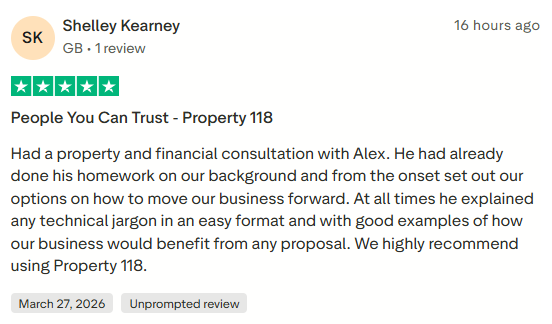
Help other landlords find Property118If you have found Property118 useful, a short Trustpilot review would make a meaningful difference. It helps other landlords decide whether our research is worth following. |

The post Why landlord sentiment may now matter more than policy announcements appeared first on Property118.
View Full Article: Why landlord sentiment may now matter more than policy announcements
Social housing landlords in Scotland warned over rising financial pressures
Property118

Social housing landlords in Scotland warned over rising financial pressures
Scottish social housing landlords could face millions of pounds in lost rental income due to growing financial pressures on the sector.
Analysis of the Scottish Housing Regulator’s (SHR) latest financial projections by Mobysoft shows the sector’s continued reliance on rent to cover rising costs.
Social housing landlords in Scotland are also facing additional pressures, including compliance with Awaab’s Law, which requires damp and mould issues to be fixed within strict timeframes.
Financial headroom is being squeezed
According to the data, between 79% and 81% of social housing landlord income is expected to come directly from rent.
The SHR’s projections up to 2029/30 assume above-inflation rent increases and consistently high collection rates. At the same time, 74% of tenants report concerns about the future affordability of rent.
Chris Magennis, Mobysoft regional director (Scotland), said: “Recent history has taught us that our operating environment can evolve quickly.
“This can have huge cost implications, as we’ve seen with damp and mould investment. Social housing landlords need to be able to adapt, and quickly.
“As financial headroom is being squeezed, we will see business models increasingly reliant on the ability to maintain very high levels of rent collection.”
Limited scope to diversify revenue
Mr Magennis added: “Rent collection performance can no longer be viewed solely as an operational issue.
“With limited scope to diversify revenue, even small fluctuations in arrears performance risk squeezing already tight financial headroom, reducing capacity to invest in existing homes and limiting resilience to future economic shocks.
“Boards and executive teams should be seeking assurance on stress-testing income under lower collection scenarios, strengthening early warning indicators for arrears, reviewing strategies for recovering former tenant debt, and ensuring income teams have the capacity and data intelligence required to respond to a rapidly evolving operating environment.”
The post Social housing landlords in Scotland warned over rising financial pressures appeared first on Property118.
View Full Article: Social housing landlords in Scotland warned over rising financial pressures
Landlords’ next move will define the direction of the rental market
Property118

Landlords’ next move will define the direction of the rental market
The latest data does more than describe current sentiment, it points directly to what may happen next. According to the Property118 Landlord Sentiment Survey Q1 2026, the private rented sector is now at a point where landlord decisions will determine its future direction.
Based on 2,380 completed responses, 57% of landlords plan to reduce their portfolios, 6.8% intend to expand and a significant proportion are choosing to hold and reassess. You can review the full findings here.
The implication is clear: the next phase of the market will be shaped by what landlords choose to do next.
A sector driven by individual decisions
The private rented sector is not controlled by a single policy or institution. It is shaped by thousands of individual decisions made by landlords across the UK. Each decision to buy, sell, hold or exit contributes to the overall direction of the market.
The survey data provides a snapshot of those intentions at scale. When viewed collectively, those intentions form a clear directional signal.
A balance that is shifting
Markets are shaped by balance. When buying and selling activity are broadly aligned, the market tends to remain stable. When that balance shifts, the direction of travel changes, and the current data suggests that this balance has moved decisively. With significantly more landlords planning to reduce portfolios than expand, the sector is likely to experience a gradual shift in structure and activity.
Multiple paths from the same starting point
Not all landlords will respond in the same way. Some will continue to invest selectively, others will hold their positions and a growing number may choose to exit. This creates multiple potential pathways for the sector. The outcome will depend on how these different responses evolve over time.
This is why the Q1 2026 survey is significant, it provides an early indication of how those pathways may develop.
Timing will play a key role
Intentions do not always translate immediately into action. As highlighted in the wider dataset, many landlords are delaying decisions, choosing to wait for greater clarity before acting. This means that changes in the market may unfold gradually rather than all at once. However, delayed decisions can still shape outcomes. Over time, as those decisions are implemented, their cumulative effect becomes visible.
A defining period ahead
The private rented sector is entering a period where direction is not being dictated from the outside, but determined from within.
Landlords are reassessing their strategies, evaluating their options and deciding how they wish to engage with the market going forward.
For now, one conclusion stands out: the future of the rental market will be shaped not by policy alone, but by the collective decisions landlords make from this point onwards.
A conversation worth having?
If you are weighing up your own strategy, whether that’s to sell, expand, or restructure to improve profitibility, it is worth having a discussion with a Property118 consultant to take a closer look at how your portfolio is structured as a whole now, and to forecast the outcomes based on multiple scenario’s.
These conversations are typically most useful for landlords with established portfolios and relatively modest borrowing who are beginning to reflect on how their assets could work more effectively in the years ahead.
/* “function”==typeof InitializeEditor,callIfLoaded:function(o){return!(!gform.domLoaded||!gform.scriptsLoaded||!gform.themeScriptsLoaded&&!gform.isFormEditor()||(gform.isFormEditor()&&console.warn(“The use of gform.initializeOnLoaded() is deprecated in the form editor context and will be removed in Gravity Forms 3.1.”),o(),0))},initializeOnLoaded:function(o){gform.callIfLoaded(o)||(document.addEventListener(“gform_main_scripts_loaded”,()=>{gform.scriptsLoaded=!0,gform.callIfLoaded(o)}),document.addEventListener(“gform/theme/scripts_loaded”,()=>{gform.themeScriptsLoaded=!0,gform.callIfLoaded(o)}),window.addEventListener(“DOMContentLoaded”,()=>{gform.domLoaded=!0,gform.callIfLoaded(o)}))},hooks:{action:{},filter:{}},addAction:function(o,r,e,t){gform.addHook(“action”,o,r,e,t)},addFilter:function(o,r,e,t){gform.addHook(“filter”,o,r,e,t)},doAction:function(o){gform.doHook(“action”,o,arguments)},applyFilters:function(o){return gform.doHook(“filter”,o,arguments)},removeAction:function(o,r){gform.removeHook(“action”,o,r)},removeFilter:function(o,r,e){gform.removeHook(“filter”,o,r,e)},addHook:function(o,r,e,t,n){null==gform.hooks[o][r]&&(gform.hooks[o][r]=[]);var d=gform.hooks[o][r];null==n&&(n=r+”_”+d.length),gform.hooks[o][r].push({tag:n,callable:e,priority:t=null==t?10:t})},doHook:function(r,o,e){var t;if(e=Array.prototype.slice.call(e,1),null!=gform.hooks[r][o]&&((o=gform.hooks[r][o]).sort(function(o,r){return o.priority-r.priority}),o.forEach(function(o){“function”!=typeof(t=o.callable)&&(t=window[t]),”action”==r?t.apply(null,e):e[0]=t.apply(null,e)})),”filter”==r)return e[0]},removeHook:function(o,r,t,n){var e;null!=gform.hooks[o][r]&&(e=(e=gform.hooks[o][r]).filter(function(o,r,e){return!!(null!=n&&n!=o.tag||null!=t&&t!=o.priority)}),gform.hooks[o][r]=e)}});
/* ]]> */
Enquire about a free initial discussion with a Property118 consultant
-
Mr.Mrs.MissMs.Dr.Prof.Rev.
-
-
Important Notice – Scope of Planning Support
Where our recommendations touch on areas requiring regulated input, we refer clients to appropriately authorised professionals for advice and implementation.
-
-
-
/* = 0;if(!is_postback){return;}var form_content = jQuery(this).contents().find(‘#gform_wrapper_585′);var is_confirmation = jQuery(this).contents().find(‘#gform_confirmation_wrapper_585′).length > 0;var is_redirect = contents.indexOf(‘gformRedirect(){‘) >= 0;var is_form = form_content.length > 0 && ! is_redirect && ! is_confirmation;var mt = parseInt(jQuery(‘html’).css(‘margin-top’), 10) + parseInt(jQuery(‘body’).css(‘margin-top’), 10) + 100;if(is_form){jQuery(‘#gform_wrapper_585′).html(form_content.html());if(form_content.hasClass(‘gform_validation_error’)){jQuery(‘#gform_wrapper_585′).addClass(‘gform_validation_error’);} else {jQuery(‘#gform_wrapper_585′).removeClass(‘gform_validation_error’);}setTimeout( function() { /* delay the scroll by 50 milliseconds to fix a bug in chrome */ }, 50 );if(window[‘gformInitDatepicker’]) {gformInitDatepicker();}if(window[‘gformInitPriceFields’]) {gformInitPriceFields();}var current_page = jQuery(‘#gform_source_page_number_585′).val();gformInitSpinner( 585, ‘https://www.property118.com/wp-content/plugins/gravityforms/images/spinner.svg’, true );jQuery(document).trigger(‘gform_page_loaded’, [585, current_page]);window[‘gf_submitting_585′] = false;}else if(!is_redirect){var confirmation_content = jQuery(this).contents().find(‘.GF_AJAX_POSTBACK’).html();if(!confirmation_content){confirmation_content = contents;}jQuery(‘#gform_wrapper_585′).replaceWith(confirmation_content);jQuery(document).trigger(‘gform_confirmation_loaded’, [585]);window[‘gf_submitting_585′] = false;wp.a11y.speak(jQuery(‘#gform_confirmation_message_585′).text());}else{jQuery(‘#gform_585′).append(contents);if(window[‘gformRedirect’]) {gformRedirect();}}jQuery(document).trigger(“gform_pre_post_render”, [{ formId: “585”, currentPage: “current_page”, abort: function() { this.preventDefault(); } }]); if (event && event.defaultPrevented) { return; } const gformWrapperDiv = document.getElementById( “gform_wrapper_585″ ); if ( gformWrapperDiv ) { const visibilitySpan = document.createElement( “span” ); visibilitySpan.id = “gform_visibility_test_585″; gformWrapperDiv.insertAdjacentElement( “afterend”, visibilitySpan ); } const visibilityTestDiv = document.getElementById( “gform_visibility_test_585″ ); let postRenderFired = false; function triggerPostRender() { if ( postRenderFired ) { return; } postRenderFired = true; gform.core.triggerPostRenderEvents( 585, current_page ); if ( visibilityTestDiv ) { visibilityTestDiv.parentNode.removeChild( visibilityTestDiv ); } } function debounce( func, wait, immediate ) { var timeout; return function() { var context = this, args = arguments; var later = function() { timeout = null; if ( !immediate ) func.apply( context, args ); }; var callNow = immediate && !timeout; clearTimeout( timeout ); timeout = setTimeout( later, wait ); if ( callNow ) func.apply( context, args ); }; } const debouncedTriggerPostRender = debounce( function() { triggerPostRender(); }, 200 ); if ( visibilityTestDiv && visibilityTestDiv.offsetParent === null ) { const observer = new MutationObserver( ( mutations ) => { mutations.forEach( ( mutation ) => { if ( mutation.type === ‘attributes’ && visibilityTestDiv.offsetParent !== null ) { debouncedTriggerPostRender(); observer.disconnect(); } }); }); observer.observe( document.body, { attributes: true, childList: false, subtree: true, attributeFilter: [ ‘style’, ‘class’ ], }); } else { triggerPostRender(); } } );} );
/* ]]> */
|
★★★★★
|
Help other landlords find Property118If you have found Property118 useful, a short Trustpilot review would make a meaningful difference. It helps other landlords decide whether our research is worth following. |
The post Landlords’ next move will define the direction of the rental market appeared first on Property118.
View Full Article: Landlords’ next move will define the direction of the rental market
Crisis to buy homes in bid to become not-for-profit landlord
Property118

Crisis to buy homes in bid to become not-for-profit landlord
A homeless charity has partnered with a bank to begin purchasing its own properties as it aims to become a not-for-profit landlord.
Crisis plans to buy its first homes by summer 2026, with a target of acquiring at least 100 properties across London and Newcastle over the next three years.
Working alongside Lloyds Banking Group, the charity warns that without further action, the housing crisis is likely to deepen.
Offer secure and affordable homes
Matt Downie, chief executive at Crisis, said: “With the support of Lloyds Banking Group, we can now kick-start our plans to become a not-for-profit landlord in the next few months.
“What this means is that we’ll be able to start to offer some of the people we support, people experiencing the very worst forms of homelessness, genuinely affordable, secure homes so that they can rebuild their lives.”
He adds: “While this intervention is only part of the picture, and more needs to be done by the UK government to deliver social housing at scale, with the ongoing support of Lloyds Banking Group and the passion and commitment of their staff, we can start to make this important shift and put homes firmly at the heart of the solution to end homelessness.
“We’re delighted to be renewing our successful partnership with Lloyds Banking Group. At a time when homelessness has reached unprecedented levels, partnerships like this enable us to innovate and do things differently to better meet the challenges we face.”
End homelessness with homes
Charlie Nunn, group chief executive officer at Lloyds Banking Group, said: “We’re so proud to support Crisis’ landmark intervention to end homelessness with homes, by making it possible for the charity to acquire and manage housing for the very first time.
“This level of ambition and imagination is an inspiration. We need more of it, with strong collaboration, across the public, business and charity sectors. And it is in everyone’s interest to help initiatives like these to succeed.
The bank has also helped fund the launch of Crisis’s Good Place Lettings, which aims to tackle housing inequality by “bringing more social purpose to the private rental market.”
The news comes as more social homes are being sold or demolished than are being built.
Data by the Ministry of Housing, Communities and Local Government reveals in England, 16,291 social homes were either sold or demolished last year, yet just 10,807 social homes were built.
The post Crisis to buy homes in bid to become not-for-profit landlord appeared first on Property118.
View Full Article: Crisis to buy homes in bid to become not-for-profit landlord
Landlords delaying decisions as uncertainty shapes next moves
Property118

Landlords delaying decisions as uncertainty shapes next moves
A defining characteristic of the current landlord landscape is not just what decisions are being made, but how many are being delayed. According to the Property118 Landlord Sentiment Survey Q1 2026, a significant proportion of landlords are choosing to hold their positions rather than commit to expansion or immediate disposal.
Based on 2,380 completed responses, while 57% plan to reduce portfolios and only 6.8% intend to expand, a substantial group are maintaining their current holdings. You can review the full findings here.
The implication is clear: uncertainty is influencing timing.
A wait-and-see approach
Holding a portfolio is not always a passive outcome. In many cases, it reflects a deliberate decision to wait for clearer conditions before acting. Landlords are choosing to observe how factors such as regulation, financing and market demand evolve before committing to their next move.
The survey data suggests that this approach is becoming more common. Rather than rushing into transactions, landlords are allowing time to assess their options.
Flexibility supports delay
The ability to delay decisions is closely linked to financial position. As highlighted elsewhere in the Property118 dataset, many landlords operate with low loan-to-value ratios and strong equity positions. This provides flexibility. Without immediate pressure from lenders or cashflow constraints, landlords can afford to wait, monitor conditions and choose their timing more carefully.
Uncertainty across multiple fronts
The current environment presents a number of variables.
Regulatory changes, tax considerations, financing conditions and broader economic factors all contribute to an uncertain outlook. In such an environment, delaying decisions can be a rational response. Rather than committing to a single course of action, landlords are preserving optionality.
This aligns with wider trends in the survey findings, including reduced appetite for expansion and increasing intentions to sell.
Implications for market activity
When a large proportion of landlords delay decisions, it can affect overall market activity. Transaction volumes may slow, particularly within the investment segment, as fewer landlords commit to buying or selling in the short term. At the same time, delayed decisions can build up over time, potentially leading to more concentrated activity later. This creates a different rhythm within the market and periods of relative inactivity may be followed by more pronounced shifts as decisions are eventually implemented.
A sector pausing before its next move
The data points towards a sector that is not static, but temporarily paused. Landlords are reassessing their position, considering their options and waiting for greater clarity before acting.
This is often a transitional phase.
For now, one conclusion stands out: many landlords are not choosing inaction, they are choosing timing, waiting for the right moment to act.
A conversation worth having?
If you are weighing up your own strategy, whether that’s to sell, expand, or restructure to improve profitibility, it is worth having a discussion with a Property118 consultant to take a closer look at how your portfolio is structured as a whole now, and to forecast the outcomes based on multiple scenario’s.
These conversations are typically most useful for landlords with established portfolios and relatively modest borrowing who are beginning to reflect on how their assets could work more effectively in the years ahead.
/* “function”==typeof InitializeEditor,callIfLoaded:function(o){return!(!gform.domLoaded||!gform.scriptsLoaded||!gform.themeScriptsLoaded&&!gform.isFormEditor()||(gform.isFormEditor()&&console.warn(“The use of gform.initializeOnLoaded() is deprecated in the form editor context and will be removed in Gravity Forms 3.1.”),o(),0))},initializeOnLoaded:function(o){gform.callIfLoaded(o)||(document.addEventListener(“gform_main_scripts_loaded”,()=>{gform.scriptsLoaded=!0,gform.callIfLoaded(o)}),document.addEventListener(“gform/theme/scripts_loaded”,()=>{gform.themeScriptsLoaded=!0,gform.callIfLoaded(o)}),window.addEventListener(“DOMContentLoaded”,()=>{gform.domLoaded=!0,gform.callIfLoaded(o)}))},hooks:{action:{},filter:{}},addAction:function(o,r,e,t){gform.addHook(“action”,o,r,e,t)},addFilter:function(o,r,e,t){gform.addHook(“filter”,o,r,e,t)},doAction:function(o){gform.doHook(“action”,o,arguments)},applyFilters:function(o){return gform.doHook(“filter”,o,arguments)},removeAction:function(o,r){gform.removeHook(“action”,o,r)},removeFilter:function(o,r,e){gform.removeHook(“filter”,o,r,e)},addHook:function(o,r,e,t,n){null==gform.hooks[o][r]&&(gform.hooks[o][r]=[]);var d=gform.hooks[o][r];null==n&&(n=r+”_”+d.length),gform.hooks[o][r].push({tag:n,callable:e,priority:t=null==t?10:t})},doHook:function(r,o,e){var t;if(e=Array.prototype.slice.call(e,1),null!=gform.hooks[r][o]&&((o=gform.hooks[r][o]).sort(function(o,r){return o.priority-r.priority}),o.forEach(function(o){“function”!=typeof(t=o.callable)&&(t=window[t]),”action”==r?t.apply(null,e):e[0]=t.apply(null,e)})),”filter”==r)return e[0]},removeHook:function(o,r,t,n){var e;null!=gform.hooks[o][r]&&(e=(e=gform.hooks[o][r]).filter(function(o,r,e){return!!(null!=n&&n!=o.tag||null!=t&&t!=o.priority)}),gform.hooks[o][r]=e)}});
/* ]]> */
Enquire about a free initial discussion with a Property118 consultant
-
Mr.Mrs.MissMs.Dr.Prof.Rev.
-
-
Important Notice – Scope of Planning Support
Where our recommendations touch on areas requiring regulated input, we refer clients to appropriately authorised professionals for advice and implementation.
-
-
-
/* = 0;if(!is_postback){return;}var form_content = jQuery(this).contents().find(‘#gform_wrapper_585′);var is_confirmation = jQuery(this).contents().find(‘#gform_confirmation_wrapper_585′).length > 0;var is_redirect = contents.indexOf(‘gformRedirect(){‘) >= 0;var is_form = form_content.length > 0 && ! is_redirect && ! is_confirmation;var mt = parseInt(jQuery(‘html’).css(‘margin-top’), 10) + parseInt(jQuery(‘body’).css(‘margin-top’), 10) + 100;if(is_form){jQuery(‘#gform_wrapper_585′).html(form_content.html());if(form_content.hasClass(‘gform_validation_error’)){jQuery(‘#gform_wrapper_585′).addClass(‘gform_validation_error’);} else {jQuery(‘#gform_wrapper_585′).removeClass(‘gform_validation_error’);}setTimeout( function() { /* delay the scroll by 50 milliseconds to fix a bug in chrome */ }, 50 );if(window[‘gformInitDatepicker’]) {gformInitDatepicker();}if(window[‘gformInitPriceFields’]) {gformInitPriceFields();}var current_page = jQuery(‘#gform_source_page_number_585′).val();gformInitSpinner( 585, ‘https://www.property118.com/wp-content/plugins/gravityforms/images/spinner.svg’, true );jQuery(document).trigger(‘gform_page_loaded’, [585, current_page]);window[‘gf_submitting_585′] = false;}else if(!is_redirect){var confirmation_content = jQuery(this).contents().find(‘.GF_AJAX_POSTBACK’).html();if(!confirmation_content){confirmation_content = contents;}jQuery(‘#gform_wrapper_585′).replaceWith(confirmation_content);jQuery(document).trigger(‘gform_confirmation_loaded’, [585]);window[‘gf_submitting_585′] = false;wp.a11y.speak(jQuery(‘#gform_confirmation_message_585′).text());}else{jQuery(‘#gform_585′).append(contents);if(window[‘gformRedirect’]) {gformRedirect();}}jQuery(document).trigger(“gform_pre_post_render”, [{ formId: “585”, currentPage: “current_page”, abort: function() { this.preventDefault(); } }]); if (event && event.defaultPrevented) { return; } const gformWrapperDiv = document.getElementById( “gform_wrapper_585″ ); if ( gformWrapperDiv ) { const visibilitySpan = document.createElement( “span” ); visibilitySpan.id = “gform_visibility_test_585″; gformWrapperDiv.insertAdjacentElement( “afterend”, visibilitySpan ); } const visibilityTestDiv = document.getElementById( “gform_visibility_test_585″ ); let postRenderFired = false; function triggerPostRender() { if ( postRenderFired ) { return; } postRenderFired = true; gform.core.triggerPostRenderEvents( 585, current_page ); if ( visibilityTestDiv ) { visibilityTestDiv.parentNode.removeChild( visibilityTestDiv ); } } function debounce( func, wait, immediate ) { var timeout; return function() { var context = this, args = arguments; var later = function() { timeout = null; if ( !immediate ) func.apply( context, args ); }; var callNow = immediate && !timeout; clearTimeout( timeout ); timeout = setTimeout( later, wait ); if ( callNow ) func.apply( context, args ); }; } const debouncedTriggerPostRender = debounce( function() { triggerPostRender(); }, 200 ); if ( visibilityTestDiv && visibilityTestDiv.offsetParent === null ) { const observer = new MutationObserver( ( mutations ) => { mutations.forEach( ( mutation ) => { if ( mutation.type === ‘attributes’ && visibilityTestDiv.offsetParent !== null ) { debouncedTriggerPostRender(); observer.disconnect(); } }); }); observer.observe( document.body, { attributes: true, childList: false, subtree: true, attributeFilter: [ ‘style’, ‘class’ ], }); } else { triggerPostRender(); } } );} );
/* ]]> */
|
★★★★★
|
Help other landlords find Property118If you have found Property118 useful, a short Trustpilot review would make a meaningful difference. It helps other landlords decide whether our research is worth following. |
The post Landlords delaying decisions as uncertainty shapes next moves appeared first on Property118.
View Full Article: Landlords delaying decisions as uncertainty shapes next moves
Landlords juggle multiple buy to let loans
Property118

Landlords juggle multiple buy to let loans
Landlords with buy to let borrowing are now managing multiple mortgages across different lenders, with portfolios increasingly shaped by layered finance arrangements.
Pegasus Insight’s latest data shows that landlords with BTL loans hold an average of 6.5 mortgages, and these are typically spread across 2.1 lenders.
Total borrowing sits at £714,000, pointing to the scale of exposure across many portfolios.
The firm’s Landlord Trends Q4 2025 report also highlights that borrowing is rarely concentrated with a single provider.
Instead, landlords are operating across a mix of products, often with differing terms, maturity dates and refinancing points, sometimes overlapping.
Landlord borrowing structure
The firm’s founder and chief executive, Mark Long, said: “What stands out from the data is the degree to which landlord borrowing is structured across multiple products and lenders.
“For many, managing finance is no longer a one-off decision, but an ongoing process.”
He added: “What’s interesting here is not just the number of loans, but what that says about how landlords are operating.
“Managing multiple mortgages across different lenders requires a level of coordination and forward planning that simply wasn’t part of the model for many landlords historically.
“That creates both opportunity and exposure for borrowers.
“When financing is structured across several products, decisions in one part of the portfolio can have knock-on effects elsewhere, particularly around refinancing and cashflow timing.”
Tracking BTL repayments
Landlords with several lenders means their borrowing structure brings added demands around timing and coordination.
Managing several loans at once means tracking repayment schedules, product expiries and refinancing windows, often at the same time, across a portfolio.
There is also evidence of early action around refinancing.
Seven in 10 landlords began their most recent remortgage process at least three months before product maturity, suggesting preparation well ahead of deadlines.
Broker involvement continues to feature, particularly where borrowing spans multiple lenders or products.
Intermediaries remain widely used, especially among landlords with larger or more complex holdings.
The post Landlords juggle multiple buy to let loans appeared first on Property118.
View Full Article: Landlords juggle multiple buy to let loans
Portfolio landlords driving market direction, not small-scale investors
Property118

Portfolio landlords driving market direction, not small-scale investors
A key takeaway from the latest data is not just what landlords are doing, but who is shaping those decisions. According to the Property118 Landlord Sentiment Survey Q1 2026, the private rented sector is increasingly driven by experienced portfolio landlords rather than small-scale or occasional investors.
Based on 2,380 completed responses covering 23,098 rental properties, the average landlord now owns 9.7 properties. You can review the full findings here.
The implication is clear: decisions made by portfolio landlords are shaping the direction of the market.
A different type of landlord
Public perception often centres on the idea of the small, part-time landlord with one or two properties, but the survey data presents a different reality.
With an average portfolio approaching 10 properties, many landlords operate at a scale that requires structured decision making, long-term planning and a clear understanding of financing and risk. These are not incidental investments, they are established property businesses.
Why scale matters
Portfolio size influences behaviour.
Larger landlords are more likely to:
- take a strategic view of their holdings
- assess long-term market trends
- consider financing structures in detail
- plan for succession and continuity
This is reflected in broader findings from the Property118 dataset, including a tendency towards lower leverage, a focus on simplification and a growing inclination to reduce or rebalance portfolios.
A concentration of influence
When a relatively small group of portfolio landlords controls a large number of properties, their collective decisions carry significant weight.
If such landlords choose to reduce exposure, hold rather than expand or exit entirely, the impact on supply and market activity can be substantial.
This creates a different dynamic from one driven by a large number of smaller investors.
The market becomes more sensitive to the strategic decisions of experienced operators.
Implications for policy and lending
Understanding who drives the market is important for those shaping it. Policy decisions, lending criteria and regulatory frameworks are often designed with a broad landlord base in mind. The data suggests that a significant proportion of the sector operates at a more advanced level. This raises questions about whether current frameworks fully reflect how the market functions in practice.
A sector defined by its decision makers
The survey reinforces a simple point; the future of the private rented sector is not determined solely by external conditions, but by the decisions of those who control the majority of its assets.
When those decision makers are experienced portfolio landlords, their actions set the direction.
For now, one conclusion stands out: the UK rental market is increasingly shaped by portfolio landlords, and their strategic choices are driving its evolution.
A conversation worth having?
If you are weighing up your own strategy, whether that’s to sell, expand, or restructure to improve profitibility, it is worth having a discussion with a Property118 consultant to take a closer look at how your portfolio is structured as a whole now, and to forecast the outcomes based on multiple scenario’s.
These conversations are typically most useful for landlords with established portfolios and relatively modest borrowing who are beginning to reflect on how their assets could work more effectively in the years ahead.
/* “function”==typeof InitializeEditor,callIfLoaded:function(o){return!(!gform.domLoaded||!gform.scriptsLoaded||!gform.themeScriptsLoaded&&!gform.isFormEditor()||(gform.isFormEditor()&&console.warn(“The use of gform.initializeOnLoaded() is deprecated in the form editor context and will be removed in Gravity Forms 3.1.”),o(),0))},initializeOnLoaded:function(o){gform.callIfLoaded(o)||(document.addEventListener(“gform_main_scripts_loaded”,()=>{gform.scriptsLoaded=!0,gform.callIfLoaded(o)}),document.addEventListener(“gform/theme/scripts_loaded”,()=>{gform.themeScriptsLoaded=!0,gform.callIfLoaded(o)}),window.addEventListener(“DOMContentLoaded”,()=>{gform.domLoaded=!0,gform.callIfLoaded(o)}))},hooks:{action:{},filter:{}},addAction:function(o,r,e,t){gform.addHook(“action”,o,r,e,t)},addFilter:function(o,r,e,t){gform.addHook(“filter”,o,r,e,t)},doAction:function(o){gform.doHook(“action”,o,arguments)},applyFilters:function(o){return gform.doHook(“filter”,o,arguments)},removeAction:function(o,r){gform.removeHook(“action”,o,r)},removeFilter:function(o,r,e){gform.removeHook(“filter”,o,r,e)},addHook:function(o,r,e,t,n){null==gform.hooks[o][r]&&(gform.hooks[o][r]=[]);var d=gform.hooks[o][r];null==n&&(n=r+”_”+d.length),gform.hooks[o][r].push({tag:n,callable:e,priority:t=null==t?10:t})},doHook:function(r,o,e){var t;if(e=Array.prototype.slice.call(e,1),null!=gform.hooks[r][o]&&((o=gform.hooks[r][o]).sort(function(o,r){return o.priority-r.priority}),o.forEach(function(o){“function”!=typeof(t=o.callable)&&(t=window[t]),”action”==r?t.apply(null,e):e[0]=t.apply(null,e)})),”filter”==r)return e[0]},removeHook:function(o,r,t,n){var e;null!=gform.hooks[o][r]&&(e=(e=gform.hooks[o][r]).filter(function(o,r,e){return!!(null!=n&&n!=o.tag||null!=t&&t!=o.priority)}),gform.hooks[o][r]=e)}});
/* ]]> */
Enquire about a free initial discussion with a Property118 consultant
-
Mr.Mrs.MissMs.Dr.Prof.Rev.
-
-
Important Notice – Scope of Planning Support
Where our recommendations touch on areas requiring regulated input, we refer clients to appropriately authorised professionals for advice and implementation.
-
-
-
/* = 0;if(!is_postback){return;}var form_content = jQuery(this).contents().find(‘#gform_wrapper_585′);var is_confirmation = jQuery(this).contents().find(‘#gform_confirmation_wrapper_585′).length > 0;var is_redirect = contents.indexOf(‘gformRedirect(){‘) >= 0;var is_form = form_content.length > 0 && ! is_redirect && ! is_confirmation;var mt = parseInt(jQuery(‘html’).css(‘margin-top’), 10) + parseInt(jQuery(‘body’).css(‘margin-top’), 10) + 100;if(is_form){jQuery(‘#gform_wrapper_585′).html(form_content.html());if(form_content.hasClass(‘gform_validation_error’)){jQuery(‘#gform_wrapper_585′).addClass(‘gform_validation_error’);} else {jQuery(‘#gform_wrapper_585′).removeClass(‘gform_validation_error’);}setTimeout( function() { /* delay the scroll by 50 milliseconds to fix a bug in chrome */ }, 50 );if(window[‘gformInitDatepicker’]) {gformInitDatepicker();}if(window[‘gformInitPriceFields’]) {gformInitPriceFields();}var current_page = jQuery(‘#gform_source_page_number_585′).val();gformInitSpinner( 585, ‘https://www.property118.com/wp-content/plugins/gravityforms/images/spinner.svg’, true );jQuery(document).trigger(‘gform_page_loaded’, [585, current_page]);window[‘gf_submitting_585′] = false;}else if(!is_redirect){var confirmation_content = jQuery(this).contents().find(‘.GF_AJAX_POSTBACK’).html();if(!confirmation_content){confirmation_content = contents;}jQuery(‘#gform_wrapper_585′).replaceWith(confirmation_content);jQuery(document).trigger(‘gform_confirmation_loaded’, [585]);window[‘gf_submitting_585′] = false;wp.a11y.speak(jQuery(‘#gform_confirmation_message_585′).text());}else{jQuery(‘#gform_585′).append(contents);if(window[‘gformRedirect’]) {gformRedirect();}}jQuery(document).trigger(“gform_pre_post_render”, [{ formId: “585”, currentPage: “current_page”, abort: function() { this.preventDefault(); } }]); if (event && event.defaultPrevented) { return; } const gformWrapperDiv = document.getElementById( “gform_wrapper_585″ ); if ( gformWrapperDiv ) { const visibilitySpan = document.createElement( “span” ); visibilitySpan.id = “gform_visibility_test_585″; gformWrapperDiv.insertAdjacentElement( “afterend”, visibilitySpan ); } const visibilityTestDiv = document.getElementById( “gform_visibility_test_585″ ); let postRenderFired = false; function triggerPostRender() { if ( postRenderFired ) { return; } postRenderFired = true; gform.core.triggerPostRenderEvents( 585, current_page ); if ( visibilityTestDiv ) { visibilityTestDiv.parentNode.removeChild( visibilityTestDiv ); } } function debounce( func, wait, immediate ) { var timeout; return function() { var context = this, args = arguments; var later = function() { timeout = null; if ( !immediate ) func.apply( context, args ); }; var callNow = immediate && !timeout; clearTimeout( timeout ); timeout = setTimeout( later, wait ); if ( callNow ) func.apply( context, args ); }; } const debouncedTriggerPostRender = debounce( function() { triggerPostRender(); }, 200 ); if ( visibilityTestDiv && visibilityTestDiv.offsetParent === null ) { const observer = new MutationObserver( ( mutations ) => { mutations.forEach( ( mutation ) => { if ( mutation.type === ‘attributes’ && visibilityTestDiv.offsetParent !== null ) { debouncedTriggerPostRender(); observer.disconnect(); } }); }); observer.observe( document.body, { attributes: true, childList: false, subtree: true, attributeFilter: [ ‘style’, ‘class’ ], }); } else { triggerPostRender(); } } );} );
/* ]]> */
|
★★★★★
|
Help other landlords find Property118If you have found Property118 useful, a short Trustpilot review would make a meaningful difference. It helps other landlords decide whether our research is worth following. |
The post Portfolio landlords driving market direction, not small-scale investors appeared first on Property118.
View Full Article: Portfolio landlords driving market direction, not small-scale investors
April drives landlord maintenance spend surge
Property118

April drives landlord maintenance spend surge
April 2025 accounted for 11.5% of the annual landlord maintenance spend, placing it just behind July’s figure of 11.6%, research reveals.
According to Rushbrook & Rathbone, its internal data shows April made up only 7.8% of total work orders, ranking it eighth by volume across the year.
The property management specialist says the average spend per work order hit £797 in April, the highest monthly figure recorded.
In other months, more jobs were logged but at lower individual cost highlighting a concentration of larger or more complex maintenance tasks during the spring period.
Repair damage
The firm’s founder, Sarah Rushbrook, said: “Many of us seize on the early spring months as an opportunity to get our homes ship shape and repair any damage caused during the longer and colder winter months.
“It is no different when it comes to rental property maintenance.
“Whilst the number of maintenance jobs carried out in April is lower than in many other months, the average spend per job is the highest of the year.”
She added: “This highlights that landlords are using the spring period to get their properties back to full working order by tackling fewer, but more substantial, tasks.”
The post April drives landlord maintenance spend surge appeared first on Property118.
View Full Article: April drives landlord maintenance spend surge
Categories
- Landlords (19)
- Real Estate (9)
- Renewables & Green Issues (1)
- Rental Property Investment (1)
- Tenants (21)
- Uncategorized (12,634)
Archives
- April 2026 (59)
- March 2026 (72)
- February 2026 (55)
- January 2026 (52)
- December 2025 (62)
- August 2025 (51)
- July 2025 (51)
- June 2025 (49)
- May 2025 (50)
- April 2025 (48)
- March 2025 (54)
- February 2025 (51)
- January 2025 (52)
- December 2024 (55)
- November 2024 (64)
- October 2024 (82)
- September 2024 (69)
- August 2024 (55)
- July 2024 (64)
- June 2024 (54)
- May 2024 (73)
- April 2024 (59)
- March 2024 (49)
- February 2024 (57)
- January 2024 (58)
- December 2023 (56)
- November 2023 (59)
- October 2023 (67)
- September 2023 (136)
- August 2023 (131)
- July 2023 (129)
- June 2023 (128)
- May 2023 (140)
- April 2023 (121)
- March 2023 (168)
- February 2023 (155)
- January 2023 (152)
- December 2022 (136)
- November 2022 (158)
- October 2022 (146)
- September 2022 (148)
- August 2022 (169)
- July 2022 (124)
- June 2022 (124)
- May 2022 (130)
- April 2022 (116)
- March 2022 (155)
- February 2022 (124)
- January 2022 (120)
- December 2021 (117)
- November 2021 (139)
- October 2021 (130)
- September 2021 (138)
- August 2021 (110)
- July 2021 (110)
- June 2021 (60)
- May 2021 (127)
- April 2021 (122)
- March 2021 (156)
- February 2021 (154)
- January 2021 (133)
- December 2020 (126)
- November 2020 (159)
- October 2020 (169)
- September 2020 (181)
- August 2020 (147)
- July 2020 (172)
- June 2020 (158)
- May 2020 (177)
- April 2020 (188)
- March 2020 (234)
- February 2020 (212)
- January 2020 (164)
- December 2019 (107)
- November 2019 (131)
- October 2019 (145)
- September 2019 (123)
- August 2019 (112)
- July 2019 (93)
- June 2019 (82)
- May 2019 (94)
- April 2019 (88)
- March 2019 (78)
- February 2019 (77)
- January 2019 (71)
- December 2018 (37)
- November 2018 (85)
- October 2018 (108)
- September 2018 (110)
- August 2018 (135)
- July 2018 (140)
- June 2018 (118)
- May 2018 (113)
- April 2018 (64)
- March 2018 (96)
- February 2018 (82)
- January 2018 (92)
- December 2017 (62)
- November 2017 (100)
- October 2017 (105)
- September 2017 (97)
- August 2017 (101)
- July 2017 (104)
- June 2017 (155)
- May 2017 (135)
- April 2017 (113)
- March 2017 (138)
- February 2017 (150)
- January 2017 (127)
- December 2016 (90)
- November 2016 (135)
- October 2016 (149)
- September 2016 (135)
- August 2016 (48)
- July 2016 (52)
- June 2016 (54)
- May 2016 (52)
- April 2016 (24)
- October 2014 (8)
- April 2012 (2)
- December 2011 (2)
- November 2011 (10)
- October 2011 (9)
- September 2011 (9)
- August 2011 (3)
Calendar
Recent Posts
- Sky News Section 21 story suggests a deeper problem to me
- Selling one poor performer can beat keeping three average ones
- Why low debt is not always the low-risk strategy landlords think it is
- Hidden leaks outside homes raise landlord costs
- Landlords increasingly prioritising simplicity over expansion
