
The EICR time bomb: your first mandatory electrical report may have expired already
 admin
admin 

Property118
The EICR time bomb: your first mandatory electrical report may have expired already
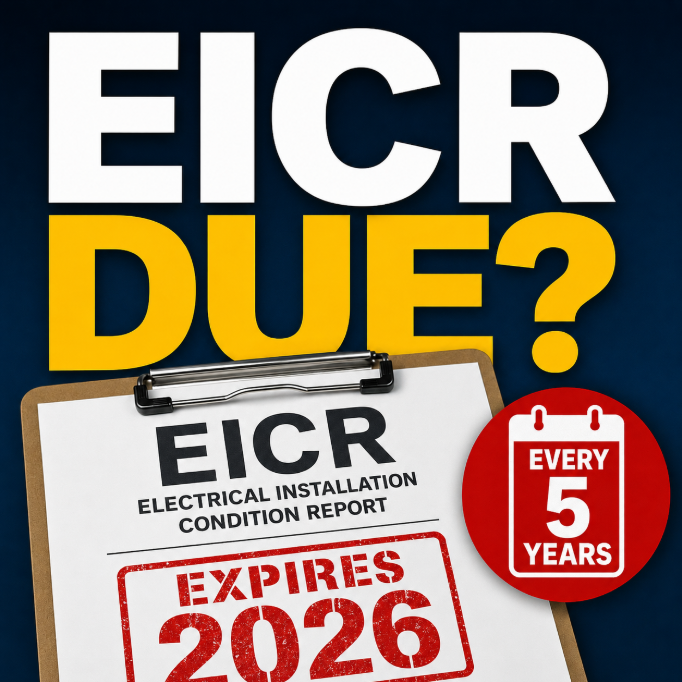
The first wave of compulsory electrical safety reports is now hitting its five-year expiry date, and renewing them in 2026 comes with a new sting in the tail, courtesy of the Renters’ Rights Act.
When mandatory electrical checks landed on the private rented sector back in 2020, they were the talk of the Property118 readership, our coverage of the new rules and the Electrical Safety Installations Act 2020 drew hundreds of comments from landlords trying to work out what they actually had to do, and by when.
Five years on, that “by when” has come back around. The Electrical Installation Condition Reports (EICRs) that landlords rushed to obtain in 2020 and 2021 are valid for a maximum of five years, which means a huge cohort of them are expiring right now (or may have already expired), through 2025 and into 2026. If you got yours done to beat the original deadline, it’s time to check the expiry date on page one.
A reminder of where the rules came from
The Electrical Safety Standards in the Private Rented Sector (England) Regulations 2020 required every landlord in England to:
- have all fixed electrical installations inspected and tested by a qualified person at least every five years;
- ensure a satisfactory EICR was in place for new tenancies from 1 July 2020, and for all existing tenancies by 1 April 2021;
- supply the report to existing tenants within 28 days, to new tenants before they move in, and to the local authority within 7 days of a written request;
- carry out any remedial or further investigative work flagged as C1, C2 or FI within 28 days (or sooner, if the report says so).
When the regulations were first introduced, landlords faced penalties of up to £30,000 for non-compliance. Following amendments that came into force in late 2025, local authorities can now impose financial penalties of up to £40,000.
Why this matters again now
Two things have put electrical safety back on the agenda. First, the maths: a property first certified in spring 2021 needs re-testing by spring 2026. The “one-off” job many landlords ticked off five years ago is now a recurring obligation, and a lapsed EICR is exactly the kind of paperwork gap a local authority, or a tenant’s solicitor, will seize on.
Second, the rules have just been extended to social housing. From this month, social landlords face mandatory five-year checks of their own, backed by fines of up to £40,000. As Steven Devine of Electrical Safety First put it, with “more than half of accidental domestic fires across England caused by electricity,” the direction of travel is only towards tighter enforcement, not looser.
What’s changed since your last report
Don’t assume a renewal will be a formality just because you passed last time. The standard EICRs are assessed against (BS 7671) has moved on, with Amendment 2 of the 18th Edition in force since 2022. Practical consequences landlords are seeing on re-inspection include:
- Tighter coding. Inspectors are increasingly classifying older installations as C2 (“potentially dangerous”), which makes the whole report unsatisfactory and triggers the 28-day remedial clock.
- Arc Fault Detection Devices (AFDDs) now recommended for higher-risk premises such as HMOs.
- EV charge points and heat pumps adding load to consumer units that were never designed for them.
- Rising costs and patchy availability of qualified engineers in some regions, so booking early matters.
The Renters’ Rights Act twist: getting through the front door
Here’s the part that’s genuinely new. To carry out the inspection, you need access — and from 1 May 2026, Section 21 ‘no-fault’ evictions have been abolished under the Renters’ Rights Act. The blunt instrument some landlords once relied on to deal with a tenant who repeatedly refused entry is gone.
The good news is that the original 2020 regulations anticipated this: a landlord is not in breach if a tenant prevents access, provided they can show they took “all reasonable steps”, and the rules are explicit that you are not required to take legal action to force entry. The catch is evidential. If a tenant stonewalls you, the burden is now firmly on you to document every attempt, letters, emails, texts, offered appointment dates, so you can prove reasonable steps to the council if challenged. With no-fault possession off the table, that paper trail is your protection.
What to do now
- Dig out your EICR and check the expiry date on every property — prioritise anything certified in 2020 or 2021.
- Book renewals early, especially in areas where qualified engineers are stretched.
- Budget for remedial work — coding standards have tightened, so a clean pass last time is no guarantee.
- Keep your distribution trail: report to tenants within 28 days, to the council within 7 days of a request.
- Log every access request in writing — your defence if a tenant refuses entry now that Section 21 has gone.
Five years ago this was a brand-new obligation that caught thousands of landlords on the hop. The difference now is that there’s no “first time” excuse left, and a lapsed certificate now sits alongside a much tougher enforcement and possession regime.
Over to you:
Have your renewal EICRs come back with new C2 codes that passed last time?
How are you handling tenants who won’t grant access now that Section 21 is gone?
Share your experience in the comments.
The post The EICR time bomb: your first mandatory electrical report may have expired already appeared first on Property118.
View Full Article: The EICR time bomb: your first mandatory electrical report may have expired already
Landlords given clarity on reforms as Renters’ Rights Act takes effect
Property118

Landlords given clarity on reforms as Renters’ Rights Act takes effect
The government has given landlords further information on notice periods and rent paid in advance under the Renters’ Rights Act, which came into force on 1 May 2026.
In response to a written parliamentary question, Housing Minister Matthew Pennycook clarified how tenancies where rent is paid in advance are being treated under the new periodic tenancy system.
The news comes as industry experts warn the reforms could cause disruption in the student rental market.
Cannot be longer than one month
In a written question, Liberal Democrat MP Joshua Reynolds asked how the rental period of converted assured periodic tenancies would be determined for notice purposes where rent had been paid in advance in non-monthly instalments, and whether guidance would be issued on setting and revising payment dates.
In response, Housing Minister Matthew Pennycook confirmed tenancy and rent periods cannot exceed one month, with longer or irregular arrangements moving to monthly cycles.
He said: “From 1 May, under the Renters’ Rights Act, the tenancy and rent periods of an Assured Periodic Tenancy must be the same and cannot be longer than one month.
“Where a transferring periodic tenancy was mid-period on 1 May 2026, the tenancy will have transferred across to the new tenancy system, but the new period structure will not apply until the period in progress is completed.
“Once transitioned, the tenancy would retain the period length, as long as this was one month or below. If the period length was longer than one month (including irregular periods) the tenancy will automatically change to monthly periods once the period straddling the 1 May has completed.”
Tenants can end tenancy by providing two months’ notice
He added: “Tenants can end the tenancy by providing at least two months’ notice and aligning that notice to expire at the end of a period. If the landlord agrees in writing, or if there is a shorter notice period already included in an existing tenancy agreement, then the tenant can give less than two months’ notice.
“Under the act, tenancies with a fixed term that transitioned on 1 May 2026 will now have monthly tenancy periods.”
Mr Pennycook added more support was available on the government website to help landlords and tenants.
As previously reported by Property118, university students could quit tenancies early under the Renters’ Rights Act.
Many university students who study humanities have no lectures in the summer term, and that the period between April and June is used for revision, exams and submitting final essays.
If students hand in their notice in May, they could finish their contracts in July, rather than August or September.
The post Landlords given clarity on reforms as Renters’ Rights Act takes effect appeared first on Property118.
View Full Article: Landlords given clarity on reforms as Renters’ Rights Act takes effect
Government launches PRS data drive to track Renters’ Rights Act impact
Property118

Government launches PRS data drive to track Renters’ Rights Act impact
The government has announced a new data collection strategy to monitor the private rented sector (PRS).
In a policy paper published by the government, ministers said the strategy is intended to assess how the Renters’ Rights Act will affect the PRS following the legislation coming into force.
The data will also monitor the PRS Database and the PRS Ombudsman.
How reforms are landing in practice
The government claims the core principles of the data will be underlined by understanding the problems renters face and evaluating the impact of legislative changes.
The paper explains: “To deliver the ambition of a fairer, safer and more secure PRS, it is important that the department is able to see clearly how the sector is functioning, how reforms are landing in practice, and how renters, landlords, agents and local authorities are experiencing change on the ground.
“Achieving this requires development in the quality, coherence and transparency of the data we collect, use and share.”
“Our vision is to establish an integrated PRS data system that enables robust, timely and granular insight.
“Where appropriate, the department will publish PRS data to support transparency and enable government, Parliament, researchers and other stakeholders to better understand how the market is operating and how reforms are shaping behaviours and outcomes.”
Identify pressures emerging in the tribunal system
The government have also announced it will introduce systems to monitor data on First-Tier Tribunal cases.
The government explains: “His Majesty’s Courts and Tribunals Service is ensuring that robust data about private rented sector cases in the First-tier Tribunal (Property Chamber), including applications to challenge a rent increase, can be collected and monitored.
“These data sources will enable the department to monitor how disputes, possession activity and rent challenges are changing over time, identify pressures emerging in the tribunal system, and assess whether reforms are improving access to justice and fairer outcomes in the private rented sector.”
The news comes after the government admitted it does not know how long the rent appeals system takes to process cases, raising concerns the Tribunal could be flooded with challenges now the Renters’ Rights Act has come into force.
Potential to provide useful information
The government add they will also use the PRS Database and the PRS Ombudsman to collect and monitor data.
The policy paper says: “We anticipate that we will begin collecting operational, administrative and management data through the PRS Database during Phase 2 of implementation of the Renters’ Rights Act.
“Over time, the database has the potential to provide a useful additional source of information on the private rented sector, including the size and distribution of PRS properties, patterns of ownership, selected property characteristics, and some aspects of compliance and enforcement, subject to the final scope of data collected and data quality considerations.
“In addition, linking property data from the PRS database using UPRNs could allow cross-referencing to other sources of property information such as the English Housing Survey to provide a more holistic picture of a property.”
The government adds: “The Ombudsman will provide a dedicated redress service for private rented sector tenants. They will publish annual reports to highlight emerging trends and issues across the sector.
“This will help embed lessons learned from real complaints, promote consistent standards, and set clear expectations for good practice across the sector.”
Findings of an evaluation of the act will be published in May 2028 and May 2031.
The post Government launches PRS data drive to track Renters’ Rights Act impact appeared first on Property118.
View Full Article: Government launches PRS data drive to track Renters’ Rights Act impact
Categories
- Landlords (19)
- Real Estate (9)
- Renewables & Green Issues (1)
- Rental Property Investment (1)
- Tenants (21)
- Uncategorized (12,732)
Archives
- June 2026 (9)
- May 2026 (70)
- April 2026 (78)
- March 2026 (72)
- February 2026 (55)
- January 2026 (52)
- December 2025 (62)
- August 2025 (51)
- July 2025 (51)
- June 2025 (49)
- May 2025 (50)
- April 2025 (48)
- March 2025 (54)
- February 2025 (51)
- January 2025 (52)
- December 2024 (55)
- November 2024 (64)
- October 2024 (82)
- September 2024 (69)
- August 2024 (55)
- July 2024 (64)
- June 2024 (54)
- May 2024 (73)
- April 2024 (59)
- March 2024 (49)
- February 2024 (57)
- January 2024 (58)
- December 2023 (56)
- November 2023 (59)
- October 2023 (67)
- September 2023 (136)
- August 2023 (131)
- July 2023 (129)
- June 2023 (128)
- May 2023 (140)
- April 2023 (121)
- March 2023 (168)
- February 2023 (155)
- January 2023 (152)
- December 2022 (136)
- November 2022 (158)
- October 2022 (146)
- September 2022 (148)
- August 2022 (169)
- July 2022 (124)
- June 2022 (124)
- May 2022 (130)
- April 2022 (116)
- March 2022 (155)
- February 2022 (124)
- January 2022 (120)
- December 2021 (117)
- November 2021 (139)
- October 2021 (130)
- September 2021 (138)
- August 2021 (110)
- July 2021 (110)
- June 2021 (60)
- May 2021 (127)
- April 2021 (122)
- March 2021 (156)
- February 2021 (154)
- January 2021 (133)
- December 2020 (126)
- November 2020 (159)
- October 2020 (169)
- September 2020 (181)
- August 2020 (147)
- July 2020 (172)
- June 2020 (158)
- May 2020 (177)
- April 2020 (188)
- March 2020 (234)
- February 2020 (212)
- January 2020 (164)
- December 2019 (107)
- November 2019 (131)
- October 2019 (145)
- September 2019 (123)
- August 2019 (112)
- July 2019 (93)
- June 2019 (82)
- May 2019 (94)
- April 2019 (88)
- March 2019 (78)
- February 2019 (77)
- January 2019 (71)
- December 2018 (37)
- November 2018 (85)
- October 2018 (108)
- September 2018 (110)
- August 2018 (135)
- July 2018 (140)
- June 2018 (118)
- May 2018 (113)
- April 2018 (64)
- March 2018 (96)
- February 2018 (82)
- January 2018 (92)
- December 2017 (62)
- November 2017 (100)
- October 2017 (105)
- September 2017 (97)
- August 2017 (101)
- July 2017 (104)
- June 2017 (155)
- May 2017 (135)
- April 2017 (113)
- March 2017 (138)
- February 2017 (150)
- January 2017 (127)
- December 2016 (90)
- November 2016 (135)
- October 2016 (149)
- September 2016 (135)
- August 2016 (48)
- July 2016 (52)
- June 2016 (54)
- May 2016 (52)
- April 2016 (24)
- October 2014 (8)
- April 2012 (2)
- December 2011 (2)
- November 2011 (10)
- October 2011 (9)
- September 2011 (9)
- August 2011 (3)
Calendar
Recent Posts
- The ability to adapt is the ability to succeed: landlording the smarter way
- Council’s landlord licensing schemes begin after landlords lose legal fight
- Government pushes action on overheating fears in social housing
- “I should have done this two years ago” – what one landlord said after selling a problem property
- Surge in demand for guarantors under Renters’ Rights Act
